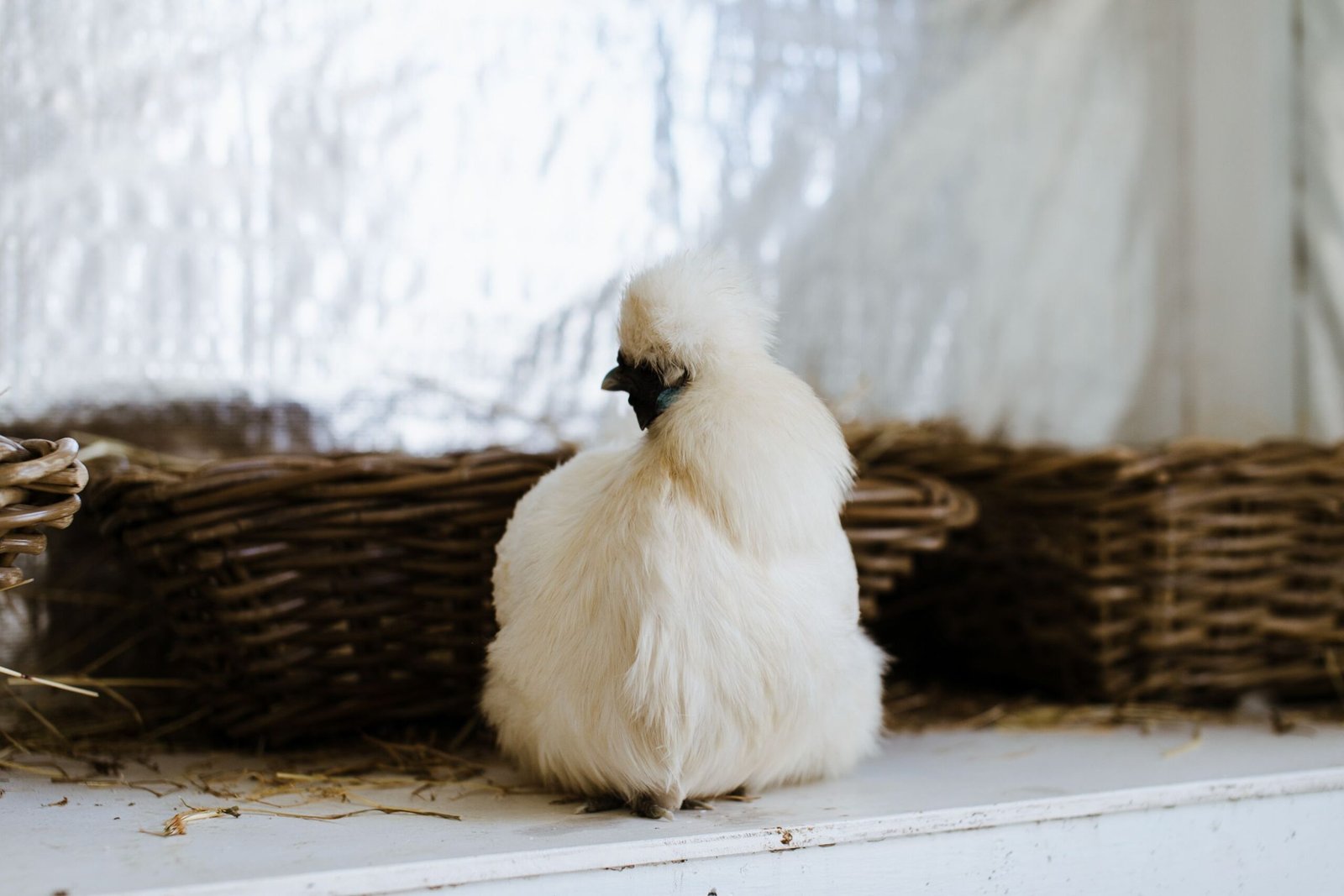
If you are wondering, how loud is a silkie rooster? Silkie roosters may be smaller and softer looking than many other roosters, but they are still capable of producing a surprisingly noticeable crow. Their small size does not make them silent, and anyone considering keeping a Silkie rooster should expect regular crowing, particularly around the early morning.
There is no reliable universal decibel measurement specifically for Silkie roosters. Individual birds vary in the volume, pitch, frequency, and duration of their crowing. However, research on domestic roosters shows that crowing in general can be very loud at close range, which means a Silkie should never be chosen on the assumption that it will be a quiet alternative to a larger rooster.
Are Silkie Roosters Quieter Than Other Roosters?
A Silkie rooster can be loud enough to be clearly heard around a backyard and potentially beyond the property, particularly during quiet early-morning hours. Although Silkies are relatively small chickens, body size alone is not a reliable way to predict whether an individual rooster will cause a noise problem.
Scientific research illustrates just how powerful rooster vocalizations can be. A study indexed by PubMed notes previous measurements of rooster crowing at approximately 100 decibels from one meter away and found very high sound-pressure levels close to the birds’ ears. These measurements were not specific to Silkies, so they should not be presented as a Silkie decibel rating. Instead, they demonstrate why even a relatively small rooster should be treated as a potentially loud animal.
Silkies themselves are distinctive small chickens. Oklahoma State University’s Silkie breed profile notes that Silkies are considered bantams in the United States and lists an American Poultry Association standard weight of 36 ounces for a Silkie cock. Their compact size is one reason they may appeal to people with limited space, but it does not eliminate the fundamental crowing behavior of a rooster.
Are Silkie Roosters Quieter Than Other Roosters?
Silkies are often described informally as relatively quiet or manageable chickens, but it is important to distinguish the general temperament of a breed from the crowing behavior of an individual male.
There is not enough breed-specific scientific evidence to guarantee that a Silkie rooster will crow at a lower sound level than another breed. A particular Silkie may have a softer or higher-pitched crow than a larger rooster, while another may be persistent and easily heard from neighboring properties.
Breed characteristics can provide useful guidance when choosing chickens, but they cannot predict every individual bird. The Livestock Conservancy’s guidance on choosing chicken breeds emphasizes considering factors such as climate, housing, purpose, and breed characteristics. Noise should be treated similarly: breed can be part of the decision, but the behavior of the individual rooster matters.
For anyone whose main concern is avoiding complaints from neighbors, the safest approach is not to assume that a Silkie will be quiet enough simply because it is a bantam.
What Does a Silkie Rooster Crow Sound Like?
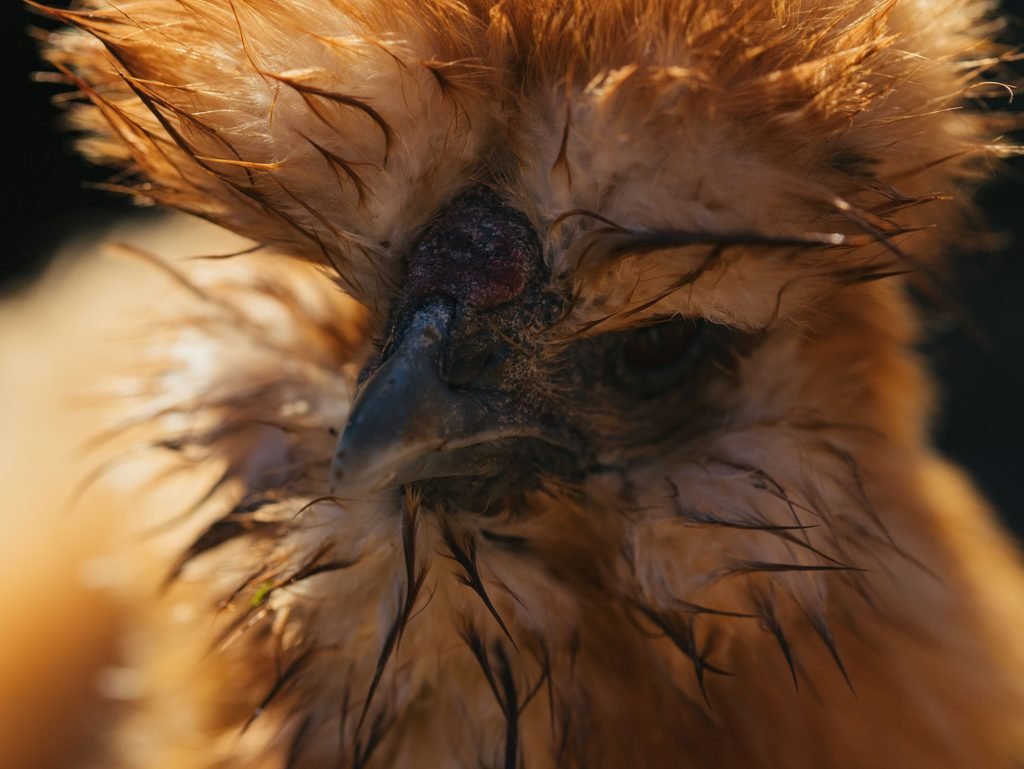
A Silkie rooster produces the recognizable multi-part crow associated with male chickens, although the exact tone varies between individuals. Because Silkies are relatively small, their crows may sound higher in pitch or less deep than those of some large-bodied roosters.
Pitch and loudness are not the same thing, however. A higher-pitched crow can still be conspicuous, especially outdoors when there is little background noise.
The character of the crow also matters when evaluating how disruptive it may be. A rooster that produces a moderately loud crow only occasionally may be easier to live around than one that repeatedly crows over an extended period. For neighbors, repetition and timing can matter just as much as the sound of an individual crow.
How Often Do Silkie Roosters Crow?
There is no fixed number of times that a Silkie rooster will crow each day. Some males crow relatively infrequently, while others may produce repeated crowing sessions throughout the day.
Morning crowing is particularly important to consider. Research published in Current Biology found that predawn crowing is influenced by the rooster’s internal circadian clock rather than being caused solely by the appearance of daylight. External factors such as light and hearing other roosters can also stimulate crowing. The study is available through PubMed.
This means simply keeping a rooster somewhere dark until morning does not guarantee complete silence. Light management may influence the environment, but crowing is a natural behavior with an internal biological component.
Silkie roosters can also crow later in the day. Activity around the flock, other chickens, nearby roosters, changes in the environment, and individual behavioral patterns can all coincide with additional crowing.
Why Do Silkie Roosters Crow?
Crowing is normal rooster behavior rather than a problem unique to Silkies. It serves several social and behavioral functions within a flock.
Roosters may crow as part of territorial and social communication, in response to other roosters, or during periods of increased activity. Crowing can therefore occur even when there is no obvious disturbance nearby.
A rooster that begins crowing before sunrise is not necessarily reacting to something its owner has done wrong. Research into rooster circadian rhythms demonstrates that the timing of predawn crowing has an internal biological basis.
For prospective owners, this is an important distinction. Crowing can sometimes be managed, but expecting to eliminate it completely is unrealistic.
Are Silkie Roosters Suitable for Urban Areas?
Silkies may appear attractive for smaller properties because of their compact size, but rooster suitability depends on considerably more than the physical size of the bird.
Noise is often the bigger issue. A rooster that can be heard beyond the property boundary may create problems even when its coop occupies very little space. Closely spaced houses, apartments, townhouses, shared yards, and neighborhoods with quiet early mornings can make repeated crowing particularly noticeable.
Local regulations are equally important. Rules governing poultry and roosters vary between cities, counties, municipalities, homeowners associations, rental properties, and other jurisdictions. Some places allow hens but prohibit roosters, while others impose property, setback, flock-size, or nuisance requirements.
Always check the rules that apply to the specific property before obtaining a rooster. A Silkie’s small size does not exempt it from local animal or noise regulations.
Can You Keep a Silkie Rooster Indoors?
A Silkie rooster can physically spend time indoors, but keeping one inside does not solve the fundamental issue of crowing. Indoor walls may reduce how far some sound travels, but a rooster can still be extremely noticeable inside a home and potentially audible outside it.
Indoor keeping also creates responsibilities beyond noise. Chickens produce droppings, dust, feathers, and dander, and they require suitable ventilation, sanitation, exercise, nutrition, and opportunities to perform normal behaviors.
For those considering a small-space setup, noise should therefore be evaluated alongside welfare, hygiene, ventilation, space, local regulations, and the long-term practicality of caring for the bird.
Can You Make a Silkie Rooster Crow Less?
You may be able to reduce unnecessary triggers or manage when and where crowing is most noticeable, but there is no responsible method that guarantees a healthy rooster will stop crowing altogether.
A well-designed coop can help reduce the amount of sound reaching surrounding properties, particularly when the rooster is inside during sensitive early-morning hours. Coop placement also matters. Increasing the distance between the rooster and neighboring bedrooms or property boundaries can make a meaningful practical difference.
Reducing unnecessary nighttime disturbances and avoiding sudden early-morning light may also help create a more predictable environment. However, because crowing is influenced by the rooster’s internal biological clock, environmental management should be viewed as a way to manage noise rather than eliminate natural behavior.
Owners should also be cautious about products or methods marketed as simple solutions to crowing. Any approach that could interfere with breathing, feeding, drinking, movement, or normal welfare deserves particular scrutiny.
Does a Smaller Rooster Mean a Quieter Rooster?
Not necessarily. Smaller body size may affect the character or pitch of a crow, but it should not be treated as a guarantee of low volume.
This distinction is particularly important with bantams. The Livestock Conservancy explains that bantams are small chickens, but being physically smaller does not mean a male loses the normal vocal behavior associated with roosters.
If noise is the deciding factor, it is better to evaluate the individual bird, the surrounding environment, the distance to neighbors, and local restrictions rather than relying solely on breed size.
Silkie Rooster Noise in a Small Backyard
A Silkie rooster may be easier to house physically than a much larger bird, but a small backyard can amplify the practical importance of crowing because neighboring homes may be close.
Before keeping one, consider where the coop will sit in relation to bedrooms, neighboring properties, fences, and hard surfaces that may reflect sound. A location that seems acceptable during a busy afternoon may feel very different when a rooster begins crowing before normal waking hours.
It is also worth speaking with nearby neighbors when appropriate. Addressing concerns before they become complaints is generally easier than trying to solve an established noise dispute.
Most importantly, make the decision based on the assumption that the rooster will crow regularly, rather than hoping you will obtain an unusually quiet individual.
How Silkie Rooster Noise Compares With Hens
Silkie hens and Silkie roosters should not be treated as equivalent from a noise perspective. Hens make a variety of normal chicken vocalizations, including contact calls, alarm sounds, and noises associated with laying, but they do not produce the characteristic repeated crow of a mature rooster.
That distinction is one reason local poultry rules sometimes treat hens and roosters differently. A small flock of hens can still make noise, but rooster crowing has a different sound profile and may occur at times when surrounding neighborhoods are otherwise quiet.
If someone likes Silkies but lives somewhere with strict noise limitations, keeping hens rather than a rooster may be considerably easier, provided local rules allow chickens.
Frequently Asked Questions
Are Silkie roosters loud?
Yes. Silkie roosters can produce clearly audible crows and should not be considered silent or reliably quiet birds. Individual volume and crowing frequency vary, and there is no dependable Silkie-specific decibel figure that applies to every bird.
Do Silkie roosters crow every day?
A healthy mature Silkie rooster will generally be expected to crow regularly, although frequency varies between individuals. Crowing commonly occurs around the morning but can also happen throughout the day.
What time do Silkie roosters start crowing?
There is no exact time that applies to every Silkie. Roosters commonly crow around dawn and may begin before sunrise. Research has shown that predawn rooster crowing is influenced by an internal circadian clock.
Are Silkie roosters quieter because they are bantams?
Not necessarily. Their smaller size may affect the character and pitch of their crow, but bantam size does not guarantee that a rooster will be quiet enough for close neighbors.
Can neighbors hear a Silkie rooster?
They potentially can. How far a crow travels depends on the individual bird, distance, buildings, coop construction, terrain, background noise, and other environmental conditions.
Can you stop a Silkie rooster from crowing?
You should not expect to eliminate crowing completely from a healthy rooster. Housing, coop placement, light exposure, and environmental management may help reduce when noise is most disruptive, but crowing is a natural behavior.
Final Thoughts
Silkie roosters are small, distinctive birds, but their compact size should not be mistaken for silence. A Silkie may have a different pitch or less imposing crow than some larger roosters, yet individual birds vary considerably and there is no scientifically established decibel level that applies specifically to every Silkie rooster.
Anyone considering a Silkie should plan on regular crowing, including the possibility of predawn noise. The practical question is therefore not whether a Silkie rooster will crow, but whether its natural vocal behavior can be responsibly accommodated on the property without compromising the bird’s welfare or creating unreasonable problems for nearby residents.
Before bringing one home, consider the distance to neighbors, housing design, local rooster and noise regulations, and whether your living situation can realistically accommodate a vocal male chicken. Planning for normal rooster behavior from the beginning is far more reliable than choosing a Silkie and hoping it happens to stay quiet.