Affiliate Disclosure: As an Amazon Associate I earn from qualifying purchases. This article contains affiliate links, which may earn us a commission at no additional cost to you.
An automatic coop door can make daily rooster care more convenient, particularly when opening and closing the coop at consistent times is difficult. But choosing the right door involves more than finding a model with a timer. The entrance must accommodate your rooster comfortably, the mechanism needs to operate safely, and the door must work with the rest of your coop’s security and ventilation arrangements.
The best automatic chicken coop doors for roosters are not necessarily the most expensive models. A dependable door with suitable dimensions, practical controls, and a secure installation can be more useful than one with advanced features that do not suit your setup.
This guide explains how to compare automatic coop doors, what to check before buying, and how different features affect everyday rooster keeping. It also includes a product comparison section to help you identify the right type of door for your coop.
Best Automatic Chicken Coop Doors for Roosters: Product Comparison
Automatic coop doors differ in opening size, operating mechanism, power supply, safety features, and installation requirements. Before comparing prices, identify which of these features matters most for your rooster and the space available around your coop entrance.
The product categories below cover common buying needs. Each recommendation should be evaluated against the manufacturer’s specifications rather than assuming that every automatic door will suit every rooster breed.
1. RUN-CHICKEN T50: Battery-Powered Option
A strong all-around choice should offer an adequately sized entrance, dependable opening and closing controls, a clearly documented safety mechanism, and a practical way to operate the door manually if necessary. Ease of installation and access for routine maintenance also matter.
The RUN-CHICKEN T50 Automatic Chicken Coop Door is a battery-powered aluminum door advertised with app and timer controls. Its combination of programmable operation and a complete door assembly makes it worth considering for owners who want to automate daily coop access.
Before buying, confirm the clear opening dimensions against your rooster’s size and check the manufacturer’s instructions for installation, battery maintenance, and closing safety. Although the product is advertised as weatherproof and predator proof, its effectiveness depends on correct installation and the security of the surrounding coop.
2. FarmLite: Timer and Light-Sensor Option
A suitable door should fit the available wall area without reducing the opening so much that the rooster struggles to pass through. The control unit and moving parts should also remain accessible after installation.
The FarmLite Automatic Chicken Coop Door Opener is an option worth considering for backyard owners who prefer a powered system with timer and light-sensor controls. These settings can help manage when the coop entrance opens and closes without requiring someone to operate the door manually every day.
Before choosing this model for a small backyard coop, check its clear opening dimensions, the space required for installation, and the electrical supply needed for the exact version being sold. The door should provide comfortable clearance for your rooster without interfering with the coop’s ventilation, access panels, or surrounding structure.
3. JVR: Timer and Anti-Pinch Option
The JVR Automatic Chicken Coop Door is worth considering for owners who want programmable opening and closing times. The product is advertised with timer controls, an anti-pinch feature, and aluminum construction, making it a relevant option for managing daily coop access.
Its advertised anti-pinch feature is particularly worth investigating, although buyers should check the manufacturer’s instructions to understand exactly how the mechanism responds to an obstruction. Before purchasing, confirm the clear opening dimensions, power requirements, and installation compatibility with your rooster’s coop. The door’s predator resistance also depends on secure mounting and the condition of the surrounding enclosure.
4. Solar-Powered Option for Off-Grid Coops
For coops without a nearby electrical outlet, the Solar-Powered Automatic Chicken Coop Door with Timer and Light Sensor is an option worth investigating. The product is advertised with solar-powered operation, programmable timer controls, and a light sensor, which may make it convenient for backyard coops located away from mains electricity.
Before purchasing, check whether the solar panel and rechargeable battery are included with the exact model. Review the manufacturer’s guidance on charging, operation during extended cloudy weather, and manual access if power runs low. As with any automatic door, confirm that the opening is large enough for your rooster and that the closing mechanism includes appropriate safety measures.
How to Choose an Automatic Coop Door That Fits Your Rooster
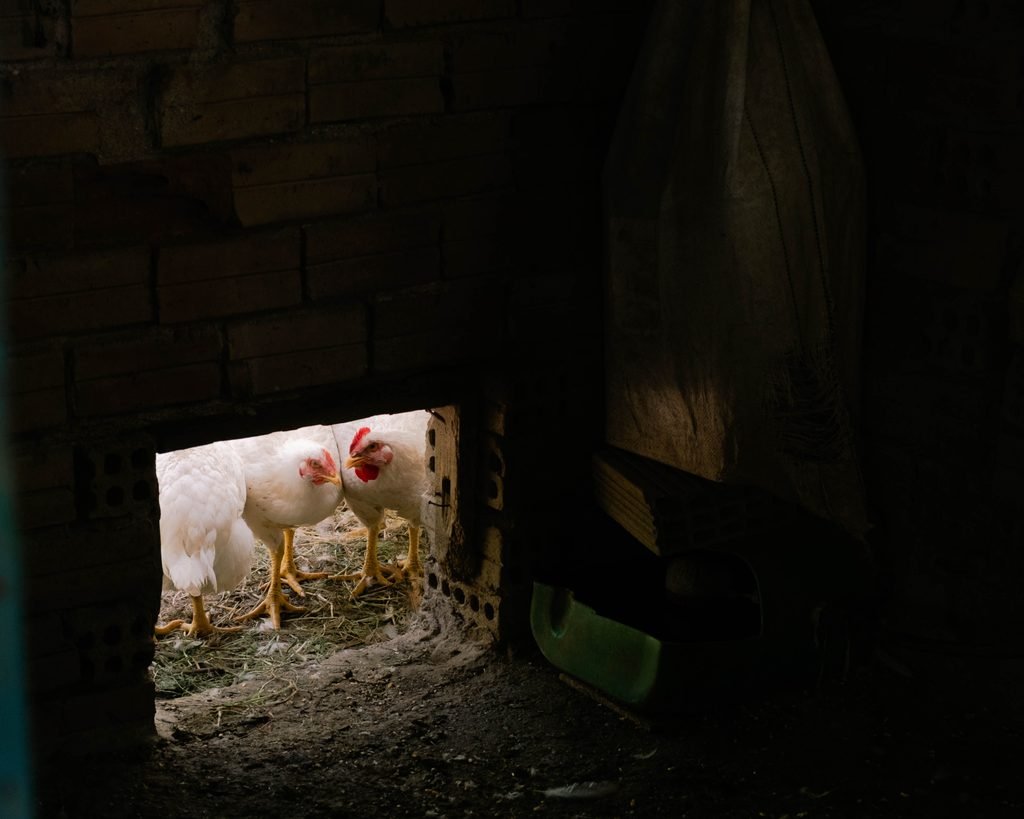
Most automatic poultry doors are marketed for chickens generally rather than roosters specifically. That does not make them unsuitable, but it means buyers should pay close attention to the usable opening instead of relying on the product’s overall dimensions.
Adult roosters vary considerably in size. A bantam may pass comfortably through an entrance that is awkward for a large standard-breed rooster. Body width, standing posture, comb size, and the height of the threshold can all affect how easily a bird enters and exits.
Measure your rooster and compare those measurements with the manufacturer’s stated clear opening. The bird should be able to walk through naturally without squeezing against the frame or repeatedly catching its comb. If a listing provides only the external dimensions of the unit, request the actual opening measurements before buying.
It is also worth considering the approach to the door. A slippery ramp, high threshold, or cramped turning area can make an otherwise adequate opening difficult to use. The entrance should be easy for the rooster to approach from both inside and outside the coop.
Timer or Light Sensor: Which Is Better?
Automatic coop doors commonly use a timer, a light sensor, or both. The best control method depends on your routine, the coop’s location, and how your rooster behaves around dawn and dusk.
A timer follows a schedule selected by the owner. It can provide predictable opening and closing times, although those settings may need adjusting as daylight hours change. A light sensor responds to ambient brightness, potentially following seasonal changes without frequent manual adjustments.
However, light sensors can be affected by the position of the coop, surrounding trees, nearby artificial lights, and the sensor’s placement. A model offering both timer and light-based operation may provide additional flexibility, but the available settings vary between products.
Whichever control method you choose, observe the birds’ routine before relying on automatic closing. A door that shuts while a rooster remains outside can leave him exposed to predators overnight.
Safety Features That Deserve Attention
Automatic doors use moving parts, so closing safety should be considered before convenience features. Some products advertise obstruction detection, automatic stopping, or reversing mechanisms. The way these systems work differs between models, and buyers should read the manufacturer’s instructions rather than assuming all safety features provide the same protection.
Check what happens if the door encounters resistance, whether manual operation is available, and how the system responds to low power. The mechanism should also be protected from bedding, loose feathers, dirt, and other debris that could interfere with movement.
The Merck Veterinary Manual’s guidance on backyard poultry management problems identifies injuries from equipment and entrapment among the hazards poultry owners need to consider. This makes careful installation and regular inspection important even when a product includes an advertised safety feature.
After installation, test the mechanism according to the manufacturer’s directions and observe several normal operating cycles. Never place a bird deliberately in the path of a closing door to test its safety system.
Predator Resistance Matters Beyond the Automatic Door
A secure automatic door can improve control over access to the sleeping coop, but it cannot compensate for weaknesses elsewhere in the structure. Loose framing, gaps around the door assembly, flimsy mesh, and unprotected ventilation openings can still create opportunities for predators.
The Small and Backyard Poultry Extension’s housing guidance discusses secure enclosures, predator protection, and automatic door-closing systems as parts of poultry housing management. The broader lesson is that the door should work within a properly protected enclosure rather than serve as the only security measure.
Before installing a motorized door, inspect the surrounding wall and make sure the mounting surface is sound. Check that the door closes without leaving significant gaps and that the mechanism cannot easily be forced open. The appropriate level of protection will depend on the predators found in your area.
For a more complete approach to enclosure security, including hardware cloth, door latches, feeding equipment, and watering arrangements, see our guide to the best rooster coop setup for a small backyard.
Power Options: Battery, Mains, and Solar
Power requirements can influence both installation and long-term maintenance. Battery-powered doors may be convenient where electricity is unavailable, but the batteries need monitoring and eventual replacement. Mains-powered models can be practical when a suitable protected electrical supply is nearby.
Solar-supported systems may be attractive for remote coops, although their performance depends on the design, charging conditions, battery capacity, and backup arrangements. A product described as solar-powered should not be assumed to operate indefinitely without maintenance.
Check which power accessories are included in the exact listing. A solar panel, adapter, rechargeable battery, or mounting kit may be included with one version of a product but sold separately with another.
Before purchasing, establish how the door behaves when power becomes low or fails. Clear warning indicators and an accessible manual override are useful considerations, particularly for owners who are away from home during the day.
Can an Automatic Coop Door Help With Early-Morning Crowing?
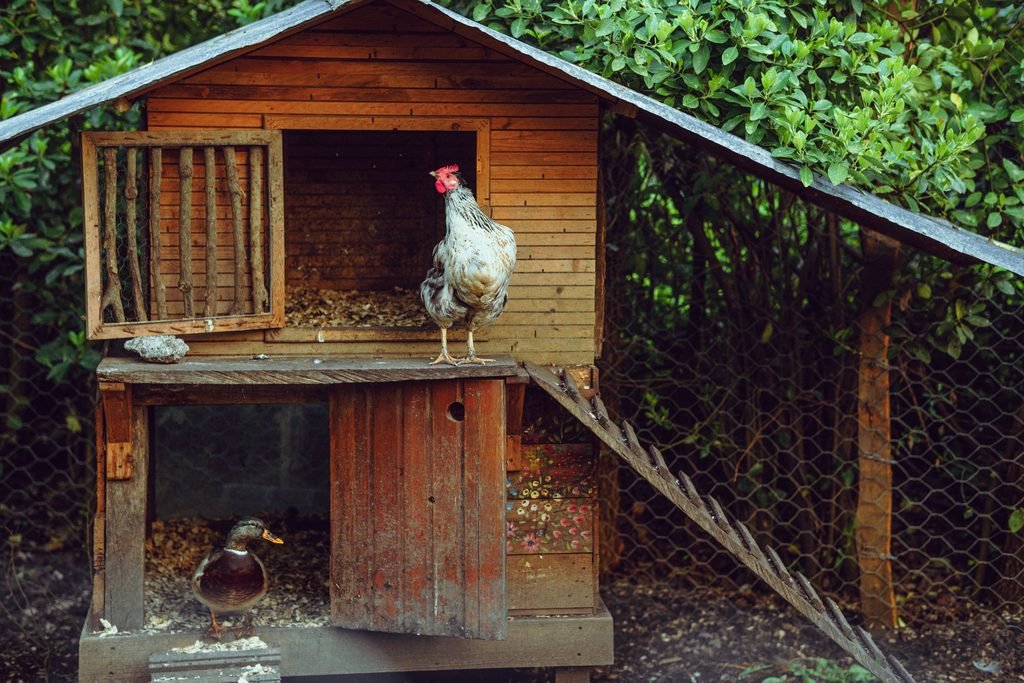
Some rooster owners are interested in automatic doors because they want more control over when their birds enter the outdoor run. A timer can manage access, but it does not prevent a rooster from crowing while he is still inside the coop.
For this reason, automatic chicken coop doors for roosters should be viewed primarily as access-management equipment rather than noise-control products. A rooster may crow before sunrise, respond to sounds from other birds, or continue vocalizing after the door opens.
Delaying outdoor access also requires consideration of the conditions inside the coop. A rooster needs adequate space, ventilation, and access to essential resources. Keeping him enclosed longer simply to reduce noise can be inappropriate when the indoor environment is unsuitable.
If noise is a concern, our article on how to soundproof a rooster coop safely explains practical ways to address sound leakage without sacrificing essential airflow.
We also cover the closely related issue of reducing coop noise without blocking ventilation, which is particularly relevant if you plan to keep the automatic door closed during the early morning.
Ventilation and Coop Conditions Still Come First
An automatic door changes access to the run, but it does not replace proper coop design. Birds may spend extended periods indoors during bad weather, overnight, or while waiting for a scheduled opening time. During those periods, air quality, temperature, moisture, and available space remain important.
The University of Maryland Extension’s small-flock housing guidance emphasizes ventilation, shelter, and protection from predators as essential features of a suitable poultry house.
When choosing an automatic door, check that its installation will not interfere with existing ventilation, cleaning access, or safe movement inside the coop. If the current structure is too cramped or poorly ventilated, improving the housing should take priority over adding automation.
Installation Checks Before You Buy
Before ordering, measure the existing entrance and the surrounding wall. Vertical sliding doors may require clearance above the opening, while horizontal sliding designs need space to one side. Some products require a flat mounting surface or additional support around the frame.
Review the installation instructions for the exact model, especially if your coop has thin panels, an irregular wall, or a nonstandard doorway. Confirm whether cutting, drilling, or structural reinforcement will be necessary.
The Virginia Tech Extension guide to small-scale poultry housing discusses the importance of protecting poultry from weather and predators through appropriate housing design. A secure, properly fitted door should support those goals rather than introduce new gaps or weak points.
Once installed, test the door’s full movement, programmed schedule, manual controls, and any safety features according to the product instructions. Watch your rooster approach and pass through the entrance during normal supervised activity, then continue inspecting the system as part of routine coop maintenance.
Common Mistakes When Comparing Automatic Coop Doors
A frequent mistake is selecting a product based on its outer dimensions rather than the clear passage available to the bird. Another is choosing a model because it offers smart controls without checking whether the door itself fits the coop or the rooster.
It is also easy to overlook accessories. A listing may show a complete installation in its photographs even when the purchased package excludes certain power components or mounting materials. Always check the package contents rather than relying on promotional images.
Finally, avoid treating claims such as predator-proof, weatherproof, or maintenance-free as absolute guarantees. Look for specific construction details, operating limitations, warranty information, and installation requirements.
Are Automatic Chicken Coop Doors Worth Buying?
For owners with suitable housing, automatic chicken coop doors for roosters can reduce the need to open and close the coop manually at exactly the same time every day. That convenience may be valuable when work schedules vary or when the coop is located away from the house.
However, the benefits depend on selecting a door that fits properly, operates reliably, and integrates with the existing enclosure. An inexpensive model that meets those requirements may offer better practical value than a more complicated system with features you rarely use.
Think about long-term maintenance as well as the initial purchase. Battery replacement, cleaning, weather exposure, and access to replacement parts can all affect how convenient a door remains after installation.
Final Thoughts
When comparing automatic chicken coop doors for roosters, prioritize a comfortable opening, reliable controls, appropriate closing safety, secure installation, and a power system you can maintain. These practical considerations matter more than a long list of optional features.
Measure your rooster and coop carefully, review the exact product specifications, and remember that automation does not replace regular animal checks. The right door can simplify daily management while remaining part of a safe, comfortable, and well-maintained rooster enclosure.