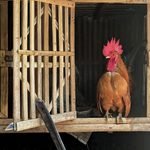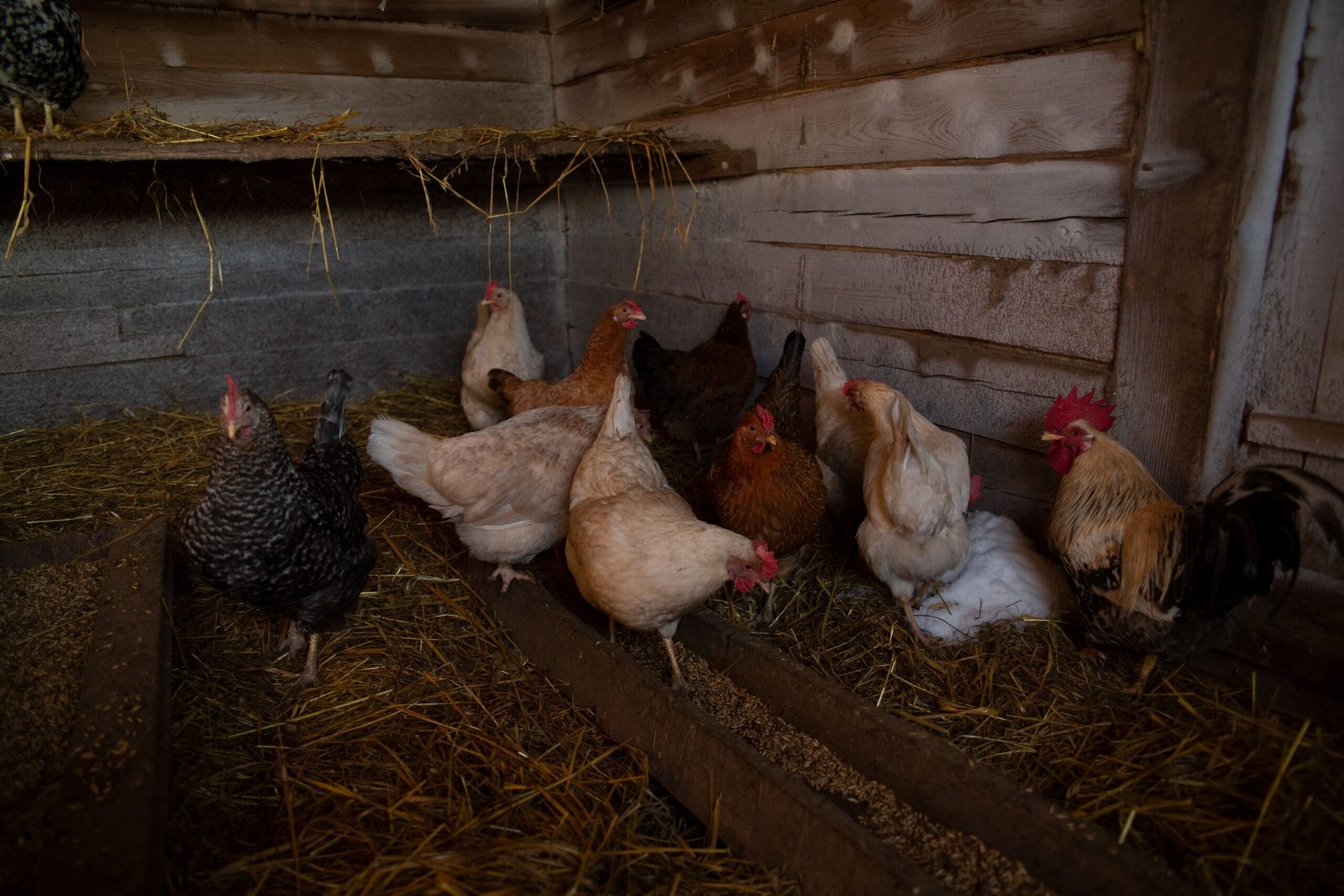
Can you soundproof a rooster coop without blocking ventilation? Yes, you can reduce the amount of crowing noise escaping from a coop while preserving airflow, but complete6 soundproofing is not a realistic goal for a naturally ventilated animal enclosure. The safer objective is to reduce direct sound transmission while maintaining the fresh air exchange your rooster needs.
This requires a different approach from simply covering vents with foam, blankets, boards, or insulation. Instead, focus on solid construction, the location and direction of openings, indirect sound paths, appropriate acoustic treatment, and the overall position of the coop.
Why Ventilation Matters in a Rooster Coop
A chicken coop cannot be treated like a sealed soundproof box. Birds produce heat and moisture, while manure contributes to the air-quality conditions inside poultry housing. Fresh-air exchange helps remove excess moisture, heat, odors, gases, and stale air.
Penn State Extension’s small-scale poultry housing guidance explains that ventilation is used to bring fresh air into poultry housing and remove moisture, ammonia, carbon dioxide, and stale air.
That means the openings responsible for ventilation cannot simply be eliminated because they also allow some rooster noise to escape.
Why Soundproofing and Ventilation Conflict
Sound isolation generally becomes easier when an enclosure is heavy, solid, and well sealed. Ventilation requires air to move between the inside and outside.
That creates an unavoidable design conflict: wherever air can travel through an opening, sound may also have a path through that opening.
The solution is not to choose soundproofing instead of ventilation. It is to reduce unnecessary sound transmission through the rest of the structure and, where practical, design ventilation so that sound does not have the simplest possible direct path toward noise-sensitive areas.
Can You Keep Airflow Without Letting All the Sound Escape?
You cannot expect an open ventilation path to contain sound as effectively as a completely solid wall. However, the way the opening is positioned can affect the path that sound takes after leaving the coop.
For example, a large vent facing directly toward a nearby bedroom creates a more direct path than an appropriately designed opening facing toward a less sensitive part of the property.
Acoustic engineering also uses silencers, lined ducts, and other methods to allow air movement while reducing sound transmission in buildings. Backyard poultry housing is much simpler, but the underlying principle is useful: airflow does not always require a completely straight acoustic path.
The Whole Building Design Guide provides an overview of building-acoustic principles, including the importance of controlling sound transmission through the complete building system.
1. Never Seal the Coop to Control Crowing
The first rule is also the most important: do not attempt to solve rooster noise by making the enclosure airtight.
Blocking vents with boards, plastic sheets, blankets, foam, or other solid materials may reduce one route through which sound escapes, but it can also reduce the air exchange those openings were designed to provide.
A quieter coop is not an improvement if it becomes excessively hot, humid, or poorly ventilated.
Our complete guide on how to soundproof a rooster coop safely covers the broader construction and sound-control principles that should be considered before modifying a rooster’s housing.
2. Improve the Solid Parts of the Coop First
Before trying to alter the vents, examine the rest of the structure. Thin wall panels, poorly fitted doors, cracks around frames, lightweight roofing, and unnecessary construction gaps may all provide paths for sound transmission. Improving those areas allows you to address noise without interfering with intentional ventilation.
More substantial wall construction can generally resist airborne sound better than very lightweight construction. The exact performance depends on the entire wall assembly rather than one material alone.
This is a safer starting point than immediately covering ventilation openings.
3. Separate Necessary Vents From Unnecessary Gaps
Not every opening in a coop serves the same purpose. An intentional vent exists to help exchange air. A poorly fitted gap around a door or an unfinished opening between wall panels may simply be a construction defect.
Identify which openings are actually required for ventilation before making changes. Unnecessary gaps may be addressed without deliberately reducing the designed airflow.
This simple distinction prevents one of the most common soundproofing mistakes: treating every hole in the structure as something that should be sealed.
4. Think Carefully About Vent Direction
The direction in which a vent faces can matter when nearby people are affected by crowing. If a rooster’s sleeping area is close to another home, placing a major opening directly toward that home may provide a relatively unobstructed sound path.
Where the coop design, weather protection, airflow requirements, and local conditions allow, orienting openings toward less noise-sensitive areas may help reduce the practical impact.
This is easiest when designing a new coop. Retrofitting an existing enclosure requires more care because moving or modifying ventilation can change how effectively the structure exchanges air.
5. Consider Indirect Ventilation Paths Carefully
An indirect path can potentially make sound transmission less straightforward than a completely open, straight-through hole.
In professional acoustic systems, ventilation noise can be managed with devices such as attenuators, silencers, lined ducts, and baffles. These systems are engineered so that airflow remains adequate while acoustic energy is reduced.
A DIY rooster coop should not be assumed to perform like an engineered acoustic ventilation system. Adding random baffles can increase resistance to airflow, collect dust, become difficult to clean, or reduce the effective ventilation area.
If you experiment with an indirect vent design, preserving adequate airflow must remain the priority.
6. Be Careful With DIY Sound Baffles
Sound baffles are frequently suggested as a way to allow air through while forcing sound around corners. The basic acoustic concept is reasonable, but execution matters.
A baffle placed too close to an opening can restrict airflow. Multiple narrow turns can add resistance. Porous acoustic material can collect dust and moisture, while exposed materials may be accessible to the birds.
There is no universal DIY baffle angle, spacing, or number of turns that can be guaranteed to work safely for every rooster coop.
The appropriate design depends on the size of the enclosure, vent area, climate, natural or mechanical airflow, bird numbers, and the construction of the building.
7. Do Not Fill Vents With Acoustic Foam
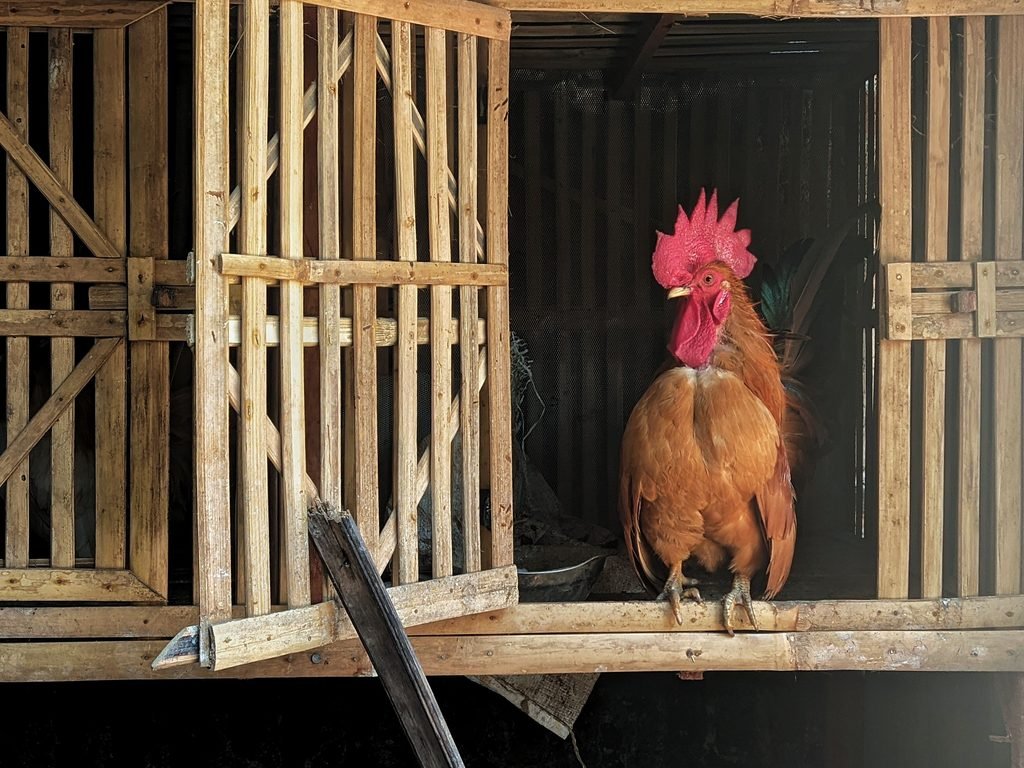
Acoustic foam is designed primarily to absorb reflected sound rather than act as a complete sound barrier. Stuffing foam into a ventilation opening can reduce the free area available for airflow while providing no guarantee of meaningful sound isolation.
Foam can also be problematic in poultry housing if birds can peck it or if the material collects dust and moisture. If acoustic absorption is used as part of a protected construction system, it should not obstruct the required air path or remain exposed where chickens can damage it.
8. Keep Acoustic Materials Away From the Birds
Many materials sold for acoustic applications are designed for homes, offices, studios, vehicles, or industrial environments rather than chicken housing. Before installing any material, consider whether the rooster can peck it, pull pieces from it, or otherwise damage it. Also consider moisture, dust, cleaning, pests, durability, and fire safety.
Fibrous insulation, foam, mass-loaded materials, and other building products should not simply be attached within reach of the birds because they have good acoustic properties.
Where suitable materials are incorporated into walls, they should form part of a properly constructed and protected assembly.
9. Use Wall Mass Instead of Sacrificing Ventilation
If the existing walls are extremely lightweight, improving the solid portions of the enclosure may be more sensible than trying to eliminate airflow openings.
In general building acoustics, increasing wall mass can help resist airborne sound transmission. Multiple-layer wall assemblies and separated construction can also perform differently from a single thin panel.
However, the real-world result depends on the complete structure, including doors, roof, vents, joints, and workmanship. The goal is not to make every wall as heavy as possible. Structural capacity, moisture, cost, cleaning, and local weather conditions must also be considered.
10. Improve the Coop Door
The door can become a major sound path if it is thin or fits poorly. Improving a poorly constructed door may reduce unnecessary leakage without touching the ventilation system. Appropriate weatherstripping around unwanted door gaps may also help, provided those gaps are not intentionally serving as ventilation.
A door should still be easy to operate and should never compromise emergency access to the birds.
11. Use Distance as Part of the Noise Strategy
Sound control does not have to occur entirely within the walls of the coop. Where the property and local regulations permit, increasing the distance between the rooster and nearby bedrooms or neighboring houses can reduce the practical impact of crowing.
Coop orientation also matters. Doors and vents do not necessarily need to face directly toward the closest noise-sensitive location. These planning decisions can reduce reliance on aggressive modifications to the ventilation system.
12. Consider External Barriers
A solid external barrier can sometimes interrupt the direct path between a sound source and a receiver. Existing buildings, solid fences, walls, and terrain can all influence how sound travels across a property.
Barrier effectiveness depends on height, length, mass, position, gaps, and the relative locations of the rooster and listener. A small decorative panel should not be expected to make a loud rooster disappear acoustically.
Still, considering the area outside the coop allows you to manage sound without restricting the rooster’s air supply.
13. Keep Ventilation Above the Roost in Mind
High-level ventilation is commonly used in chicken housing because warm, moisture-laden air rises. However, ventilation design must account for climate and avoid creating inappropriate drafts directly on roosting birds.
Airflow patterns can change with wind, temperature differences, building design, and the size and position of openings.
This is another reason not to relocate or drastically reduce vents solely for acoustic reasons without considering how the modification affects the complete housing environment.
14. Natural and Mechanical Ventilation Are Different
Many backyard coops rely primarily on natural ventilation, where air movement is influenced by wind and temperature differences. These systems depend heavily on appropriately sized and positioned openings.
Mechanical ventilation uses fans to move air. This can provide greater control in appropriately engineered poultry buildings, but fans introduce additional requirements involving power, maintenance, airflow capacity, backup planning, and sometimes additional mechanical noise.
Adding a small fan does not automatically make it safe to close the existing vents. Ventilation requirements should be considered as a complete system rather than assuming one fan can replace passive airflow.
Can You Use a Sound Maze for a Rooster Coop Vent?
A so-called sound maze or labyrinth vent attempts to create an indirect route through which air can travel while reducing a straight path for sound.
The concept resembles acoustic baffling used in more sophisticated ventilation systems, but DIY versions need caution. Every obstruction placed in an airflow path can increase resistance, and complicated passages can accumulate dust and become difficult to inspect or clean.
There is also no responsible universal claim that a particular homemade maze will reduce rooster crowing by a specific number of decibels while maintaining a particular percentage of airflow.
Those figures would require testing of the actual design under defined conditions.
Can You Put Insulation Around Coop Vents?
Insulation can be useful within properly constructed walls, but it should not be packed into the ventilation opening itself.
If an indirect vent passage is professionally or appropriately designed with acoustic absorption, any material needs to be protected, suitable for the environment, and installed without reducing airflow below what the birds require.
Loose insulation should never be left exposed where chickens can reach it.
How Much Ventilation Does a Rooster Coop Need?
There is no single vent dimension that can responsibly be recommended for every rooster coop without considering the building, climate, flock size, housing style, and other conditions.
Ventilation needs also change with weather. Hot conditions may require substantial heat removal, while cold conditions still require enough fresh-air exchange to control moisture and air quality.
For this reason, do not reduce an existing ventilation system based only on a generic online formula intended for a different climate or coop design.
Established poultry-housing guidance should take priority over an acoustic modification when the two conflict.
How Can You Tell If Soundproofing Has Reduced Ventilation Too Much?
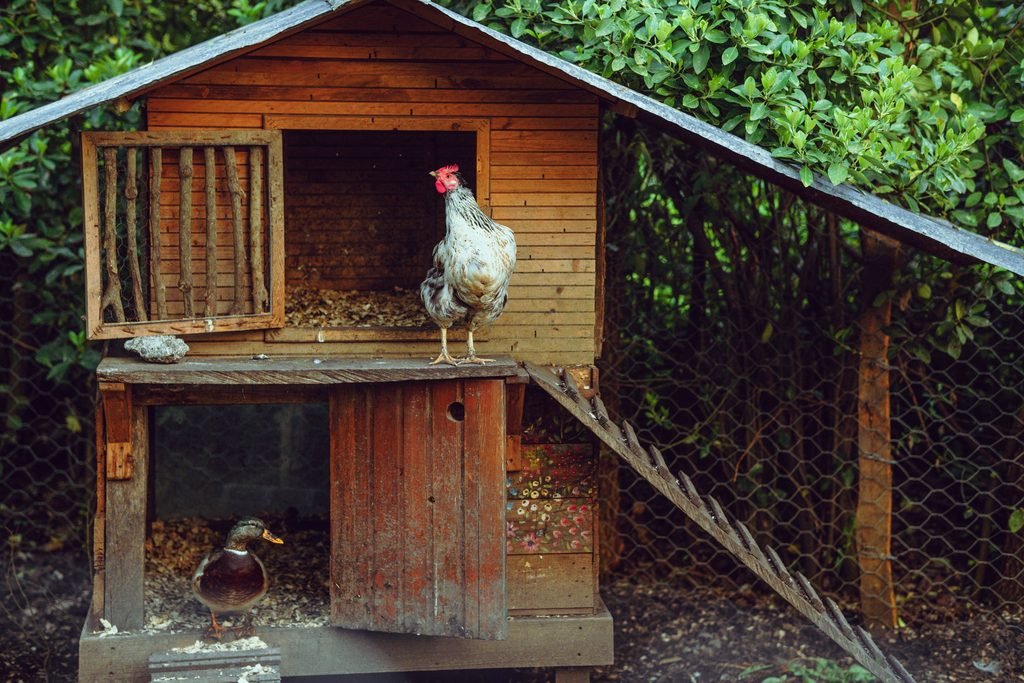
Do not wait for an obvious problem before reconsidering a modification. Excessive moisture, condensation, persistent strong odors, deteriorating air quality, or excessive heat can indicate that the housing environment needs attention.
Ammonia is particularly important in poultry housing. The Merck Veterinary Manual discusses ammonia among environmental factors that can damage the respiratory system and increase susceptibility to respiratory disease in poultry.
If an acoustic modification makes the coop noticeably more humid, hotter, or poorly ventilated, the modification needs to be reconsidered regardless of how much quieter the enclosure seems.
Will a Ventilation Baffle Stop a Rooster’s Crow Completely?
No. A ventilation baffle should not be expected to eliminate a rooster’s crow. Sound can still pass through ventilation paths and through other parts of the structure. The effectiveness of a baffle also depends on its construction, dimensions, lining, airflow, and surrounding building assembly.
A better objective is reducing a direct sound path while maintaining the ventilation performance required by the coop.
Can You Soundproof the Walls and Leave the Vents Open?
Yes, improving the solid portions of the structure while preserving intentional ventilation is one of the more logical approaches to safer noise reduction.
Better wall construction, a more substantial door, correction of unnecessary gaps, appropriate protected insulation, and thoughtful coop orientation can all be considered without simply covering the vents.
The open ventilation paths will still allow some sound to escape, which is why this approach should be described as sound reduction rather than complete soundproofing.
Will a Darker Coop Help With the Noise?
Darkness addresses a different part of the problem. Reducing unnecessary artificial light may remove one environmental stimulus, but it does not reliably prevent normal predawn crowing.
A rooster’s circadian rhythm allows him to anticipate dawn even when the environment remains dim.
Our guide asking whether a dark coop can stop early rooster crowing explains why blocking light should not be confused with soundproofing.
What If Several Roosters Use the Same Coop?
Multiple roosters introduce additional potential sources of crowing. Social hierarchy can influence which bird crows first and how frequently individual males call, so the relationship is not as simple as doubling the number of roosters and automatically doubling the noise.
However, several males can create longer or more noticeable sequences of calls.
Our article on whether multiple roosters make crowing more frequent explains how dominance and social rank affect these patterns.
A Practical Approach to Ventilated Rooster Coop Sound Reduction
Start with the coop’s location and orientation. Identify the nearby homes, bedrooms, or other areas most affected by crowing and note which doors and vents face those locations.
Next, inspect the solid structure. Improve unnecessarily thin or poorly fitted areas where appropriate, fix construction gaps that are not required for airflow, and ensure doors close correctly.
Then identify the actual ventilation system and leave the required airflow capacity intact. If changing the direction or path of ventilation is being considered, make sure the new design does not create excessive resistance or difficult-to-clean passages.
Finally, consider external barriers and distance before making increasingly complicated modifications inside the coop. This approach recognizes the basic reality of rooster housing: some sound will escape from a properly ventilated enclosure.
Soundproofing Methods to Avoid
Do not stuff acoustic foam into vents. Do not cover ventilation openings with blankets or plastic. Do not fill air passages with insulation. Do not seal every crack without first identifying which openings are part of the ventilation design.
Avoid homemade baffle systems that dramatically narrow the airflow path without any consideration of ventilation performance. Do not assume a small fan automatically compensates for vents that have been closed.
Most importantly, do not accept claims that a DIY modification can guarantee both near-total sound isolation and unrestricted airflow without evidence supporting that specific design.
Frequently Asked Questions
Can you soundproof a rooster coop without blocking ventilation completely?
Can you soundproof a rooster coop without blocking ventilation completely? You can reduce sound transmission while maintaining ventilation by improving solid walls, doors, unnecessary gaps, orientation, external barriers, and potentially carefully designed indirect air paths. Complete soundproofing is not a realistic goal for a naturally ventilated coop.
Can I cover rooster coop vents at night?
Do not cover required ventilation simply to contain crowing. Chickens continue producing heat, moisture, carbon dioxide, and waste-related air contaminants while roosting, so nighttime ventilation remains important.
Can air pass through a soundproof vent?
Engineered acoustic ventilation systems can reduce sound transmission while allowing airflow, but they are not acoustically invisible and can introduce resistance. A DIY coop vent should not be assumed to perform like a professionally engineered acoustic silencer.
Will a baffle make my rooster coop quieter?
A properly designed indirect sound path may reduce some direct transmission, but results depend on the design. A poorly designed baffle can restrict airflow, accumulate dust, and create maintenance problems.
Can I use acoustic foam over a coop vent?
Do not block a required ventilation opening with acoustic foam. Foam can reduce the open airflow area and is not a substitute for a properly designed sound-isolating structure.
Is it possible to make a rooster completely silent from outside the coop?
A normal ventilated backyard coop should not be expected to contain every rooster crow. The safer and more realistic objective is reducing the impact of the sound while maintaining appropriate housing conditions.
Final Thoughts on Soundproofing Without Blocking Airflow
Can you soundproof a rooster coop without blocking ventilation? You can make meaningful improvements to sound control without sealing the enclosure, but the objective should be sound reduction rather than total soundproofing.
Start with the parts of the structure that do not need to be open: walls, doors, unnecessary gaps, construction quality, orientation, and external sound paths. Treat required ventilation differently because those openings serve an essential purpose.
Indirect ventilation paths and acoustic concepts may offer additional options, but they must be designed carefully so that noise reduction does not come at the expense of airflow, temperature control, cleanliness, or the rooster’s health.
The safest design is not necessarily the quietest enclosure possible. It is the one that achieves a useful reduction in crowing noise while continuing to provide a healthy, ventilated environment for the birds inside.