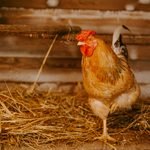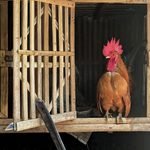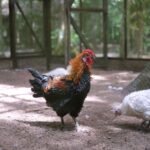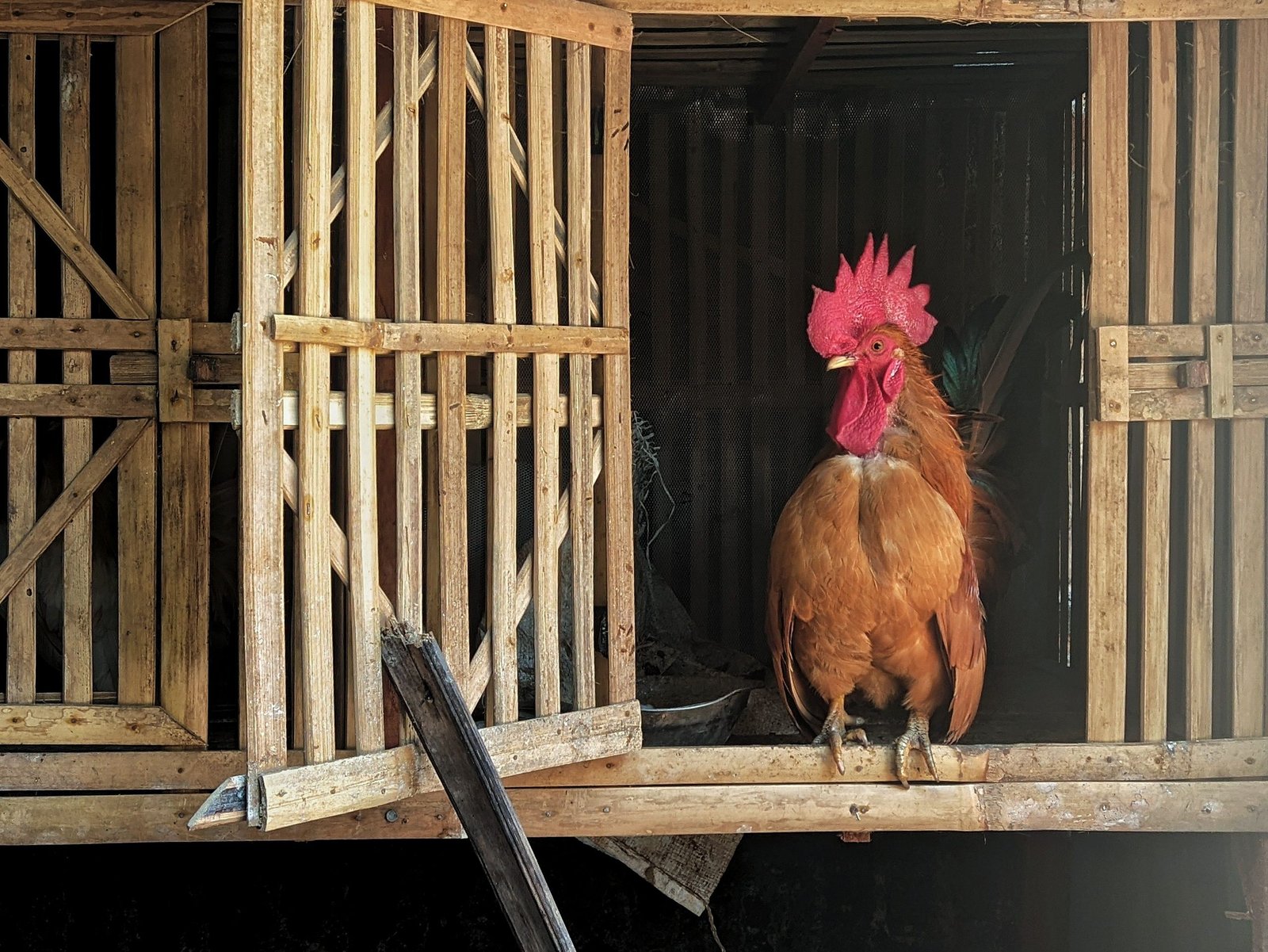
The best rooster coop setup for a small backyard combines enough usable space with a secure outdoor run, good ventilation, appropriate roosting, easy cleaning, weather protection, and thoughtful placement. A compact setup can work well, but the goal should be efficient use of space rather than making the rooster’s enclosure as small as possible.
Noise also deserves more attention when neighboring homes are close. The position and construction of the coop can influence how much early-morning crowing reaches nearby residents, although no ordinary backyard coop will make a rooster silent. Local rules should therefore be checked before the enclosure is built or a rooster is brought home.
Affiliate Disclosure: This article contains affiliate links. We may earn a commission from qualifying purchases at no additional cost to you.
Start With the Location, Not the Coop
Before choosing a coop, decide where poultry housing can realistically go. On a small property, the wrong location can create problems that a better coop cannot completely solve.
Check local rules for rooster restrictions, poultry housing, property-boundary setbacks, sanitation, and nuisance noise. Once unsuitable or prohibited locations have been eliminated, compare the remaining areas for drainage, shade, airflow, weather exposure, predator security, neighbor proximity, and convenient access.
Do not automatically place the coop at the farthest point from your own house. On a compact lot, that may put the rooster directly beside a neighbor’s bedroom. Our guide on where to put a rooster coop to reduce noise explains this placement decision in more detail.
How Much Space Should the Coop Provide?
There is no universal rooster-specific floor-space requirement. General backyard poultry recommendations vary according to bird size, outdoor access, climate, housing design, and the amount of time birds spend confined.
For one standard-sized rooster with regular access to an outdoor area, around 3–4 square feet of usable indoor coop floor provides a practical planning starting point. A large rooster or a bird that regularly remains inside for extended periods should be given more room.
The word usable matters. Feeders, waterers, internal structures, awkward corners, and other equipment can reduce the area the rooster can actually move through. Our guide on how much space one rooster needs covers indoor and outdoor space considerations separately.
If you want to automate when your rooster enters and leaves the coop, our guide to automatic chicken coop doors for roosters explains what to look for in door size, timer controls, safety features, and power options.
Don’t Build the Smallest Coop That Will Fit
A small backyard creates an understandable temptation to minimize the coop footprint, but extremely compact housing can become difficult to ventilate, clean, and use. It also leaves little flexibility when poor weather or other circumstances keep the rooster indoors longer than expected.
A better approach is to build a compact coop that comfortably accommodates the bird and the equipment you actually need. Efficient design can save backyard space without restricting normal movement.
Before buying a prefabricated coop, look at the internal dimensions rather than relying only on claims about how many chickens it can hold. Manufacturer capacity labels do not always tell you how much unobstructed floor and roosting space each bird receives.
Give the Rooster a Proper Outdoor Run
In a small backyard, a secure run is often more practical than unrestricted free-ranging. It keeps the rooster within a defined area, protects gardens and neighboring properties, and makes predator protection easier to manage.
For a standard-sized rooster, around 8–10 square feet of outdoor run space provides a useful planning starting point, with additional room preferable when the rooster spends most of his waking hours there. Larger breeds and birds with no access to additional outdoor areas benefit from more usable space.
Penn State Extension’s small-scale poultry housing guidance provides general indoor and outdoor space recommendations for different sizes of chickens and emphasizes appropriate housing conditions rather than treating the enclosure as simply a place to contain birds.
Make the Coop and Run Work as One System
The indoor coop and outdoor run should function together rather than as two unrelated structures. The rooster needs a protected place to roost and shelter as well as an outdoor area where he can walk, scratch, forage, stretch, and perform other normal behaviors.
A direct, secure connection between the two areas makes daily management easier. The opening should be large enough for the rooster to use comfortably, particularly if you keep a large breed.
Ramps should provide secure footing and should not be unnecessarily steep. Heavy roosters may be less comfortable with designs that require repeated jumping or awkward climbing simply to move between the coop and run.
Ventilation Is Essential in a Small Rooster Coop
Good ventilation is one of the most important features of any compact poultry house. Chickens produce moisture, heat, dust, and waste, and a small enclosed structure can develop poor conditions when fresh-air exchange is inadequate.
Ventilation should remove moisture and stale air without creating a poorly protected opening that exposes the rooster directly to severe weather. High-level ventilation can help air exchange while allowing the sleeping area to remain sheltered.
University of Minnesota Extension’s poultry housing guidance emphasizes ventilation as a fundamental requirement of small-flock housing.
Never seal the coop simply because you want to contain crowing. Our article on soundproofing a rooster coop without blocking ventilation explains how noise management and airflow need to work together.
Position Ventilation Carefully When Neighbors Are Close
Ventilation openings are necessary, but they can also provide relatively direct paths for sound. On a small property, their location deserves consideration during the design stage.
Where the building and climate allow it, avoid unnecessarily directing large openings straight toward the nearest noise-sensitive area. This does not mean shrinking or blocking required ventilation. It means considering airflow and sound together before cutting openings into the structure.
Any more complicated acoustic vent or baffle design should preserve adequate airflow and remain easy to inspect and clean. A quieter coop is not an improvement if the resulting air quality becomes unsuitable for the bird.
Use Solid Construction Where Practical
A substantial coop generally offers better opportunities for controlling sound than a lightweight structure with large gaps and thin, rattling panels. Solid walls, a properly fitting door, a secure roof, and good construction can improve weather protection, predator security, and noise management at the same time.
This does not require turning the coop into a sealed acoustic room. Required ventilation must remain open, and materials inside the enclosure should be safe, durable, and protected from pecking or damage where necessary.
If noise control is a major priority, read our guide on how to soundproof a rooster coop safely before adding insulation or acoustic materials.
Choose a Coop Door That Closes Properly
A large, poorly fitting door can undermine otherwise solid construction. Gaps around the door can admit drafts, predators, rain, and sound, depending on the design and conditions.
The door should close securely and reliably while remaining easy to operate during everyday care. Hardware should be appropriate for the predators found in your area rather than relying on a simple closure that an animal can manipulate.
For vulnerable openings, consider using ½-inch galvanized hardware cloth instead of lightweight chicken wire. This 19-gauge mesh can help create a stronger barrier when properly fastened to the coop framing. Choose the roll dimensions based on the areas you need to protect.
Regularly inspect hinges, latches, frames, and timber because movement and weathering can create gaps over time.
Give the Rooster an Appropriate Roost
A rooster needs a stable perch that allows comfortable nighttime roosting. The bar should provide sufficient length and should be suitable for the bird’s body and foot size.
For a single rooster, there is usually little reason to make the perch barely long enough. Providing additional length gives the bird freedom to choose his position and makes the arrangement more adaptable.
Height also matters. Very heavy roosters may be better suited to lower roosting arrangements that do not require large jumps to the floor. A high perch is not automatically a better perch.
A Single Rooster Does Not Need a Nesting Box
If the setup houses only a rooster, a nesting box is unnecessary because he does not lay eggs. Leaving it out can make a compact coop simpler and preserve more usable space.
If hens may be added later, nesting facilities can be incorporated into a future expansion plan. There is no need to occupy valuable floor or wall space immediately for equipment the current bird will not use.
This is one advantage of planning a rooster-specific setup rather than automatically copying a coop layout designed for a flock of laying hens.
Make Cleaning Easy From the Beginning
A small coop should be easy to clean without requiring major disassembly. Large access doors, removable components where appropriate, and surfaces that can be reached easily make routine maintenance considerably simpler.
Think about manure placement when positioning the roost. A removable tray or easily cleaned area beneath it can simplify regular maintenance because chickens deposit substantial waste while roosting overnight.
Good access also makes it easier to inspect for moisture, damaged materials, parasites, rodent activity, and other problems before they become severe.
Keep the Coop Dry
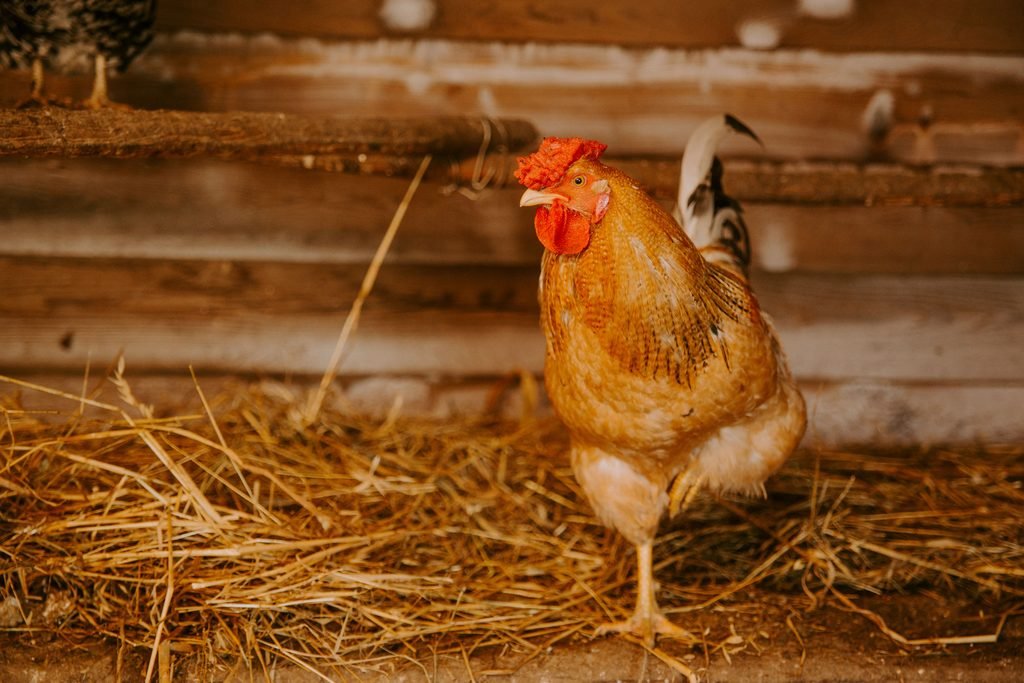
Moisture can turn an otherwise well-designed compact coop into an unhealthy environment. Roof leaks, spilled water, poor drainage, condensation, and inadequate ventilation can all contribute.
Position the structure on a site that does not routinely collect standing water. The roof should shed rain effectively, and runoff should not be directed into the run or toward neighboring property.
Waterers should be managed so that spills do not continually saturate bedding. Dry housing is easier to maintain and helps control odors, which is particularly important when neighboring homes are close.
Plan the Run Surface for Heavy Use
A small run receives concentrated traffic. Grass may disappear quickly as the rooster scratches and repeatedly uses the same ground, particularly when the available area is limited.
Do not design the setup around the assumption that a small run will remain a perfect lawn. Instead, plan for drainage, cleaning, and replacement or maintenance of the surface as conditions require.
A persistently muddy run creates sanitation problems and can make everyday care unpleasant. Roofed sections or other weather protection may help keep part of the enclosure usable during wet conditions, provided the overall design still has suitable airflow.
Include a Dry Dust-Bathing Area
Chickens naturally dust bathe, so a useful small-backyard setup should provide an appropriate dry area where the rooster can perform this behavior.
If the run naturally contains suitable dry soil, the rooster may create his own preferred location. Where the entire run becomes wet or the surface is unsuitable, a protected dust-bathing area can provide a more reliable option.
Place it where it will not continually fill with rainwater or become contaminated by runoff from the coop.
Provide Shade Without Blocking Airflow
Shade becomes particularly important during hot weather. A small enclosure exposed to direct sun can heat rapidly, especially when roofing and walls absorb substantial solar heat.
Natural shade, appropriate roofing, or purpose-built shade can help, but do not create a stagnant enclosed space in the process. Air movement remains important during warm conditions.
The best design depends on climate. A setup built for a hot region may require different priorities from one intended for prolonged cold, snow, or strong winter winds.
Protect the Coop From Local Weather
A compact rooster coop should provide a dry sheltered sleeping area and protection appropriate to the weather conditions where it is used. Roof overhangs, orientation, drainage, shade, and wall design can all contribute.
Avoid copying a design solely because it looks attractive online. A coop developed for a dry climate may perform poorly in persistent rain, while a heavily enclosed cold-weather design may require significant changes in a hot environment.
Local climate should influence construction materials, ventilation strategy, roof design, and the amount of covered outdoor space.
Predator Protection Should Be Built In
Predator security is easier to address during construction than after an attack. The specific threats vary by region, but weak doors, large unprotected openings, flimsy mesh, and gaps around the structure can create obvious vulnerabilities.
Use suitable materials and secure fastening methods for the predators present where you live. Inspect the enclosure regularly because corrosion, digging, weather damage, and movement can create new weak points over time.
Coop doors also need dependable hardware. A heavy-duty sliding gate latch with a padlock hole can help secure a suitable wooden coop door when properly installed. Make sure the latch fits the door and frame and use an appropriate secondary locking method where local predators may manipulate simple closures.
The run also needs protection appropriate to local risks. A secure sleeping coop does not protect a rooster from a daytime predator while he is using an inadequately protected run.
Store Feed Carefully in a Small Backyard
Spilled and poorly stored feed can attract rodents and other animals. On a compact residential property, that can quickly become a problem for both the rooster keeper and nearby households.
Keep feed in suitable secure containers and clean spills rather than allowing grain to accumulate around the enclosure. Feeders should also be positioned to reduce unnecessary waste.
For a compact backyard setup, a four-port DIY chicken feeder kit can be a practical option for converting a suitable bucket into a poultry feeder. The feeding ports are designed to help reduce scattered feed, while a properly fitted container lid helps protect stored feed. Check bucket compatibility, installation instructions, and feeding-port height to ensure adult roosters can access the feed comfortably.
A covered waterer can help keep a small backyard coop organized and make water management easier. The RentACoop 2 Gallon High Rise Chicken Waterer with Cups & Nipples offers a covered reservoir with different drinking options. Position it where your rooster can reach it comfortably, clean the drinking components regularly, and check water levels frequently, especially during hot weather.
Rodent management, odor control, and cleanliness are important parts of keeping poultry responsibly near other homes, not merely cosmetic concerns.
Think About Crowing Before You Build
Noise management is easier when considered during site planning rather than after complaints begin. Roosters can crow before sunrise, and early calls may be especially noticeable when surrounding homes and streets are quiet.
The coop’s distance from neighboring bedrooms, its construction, the direction of major openings, surrounding buildings, barriers, and the rooster’s morning routine can all influence the practical impact.
Our article on whether neighbors can hear a rooster inside a coop explains why ordinary poultry housing can reduce some sound without making crowing inaudible.
Can You Keep the Rooster Inside Until Later in the Morning?
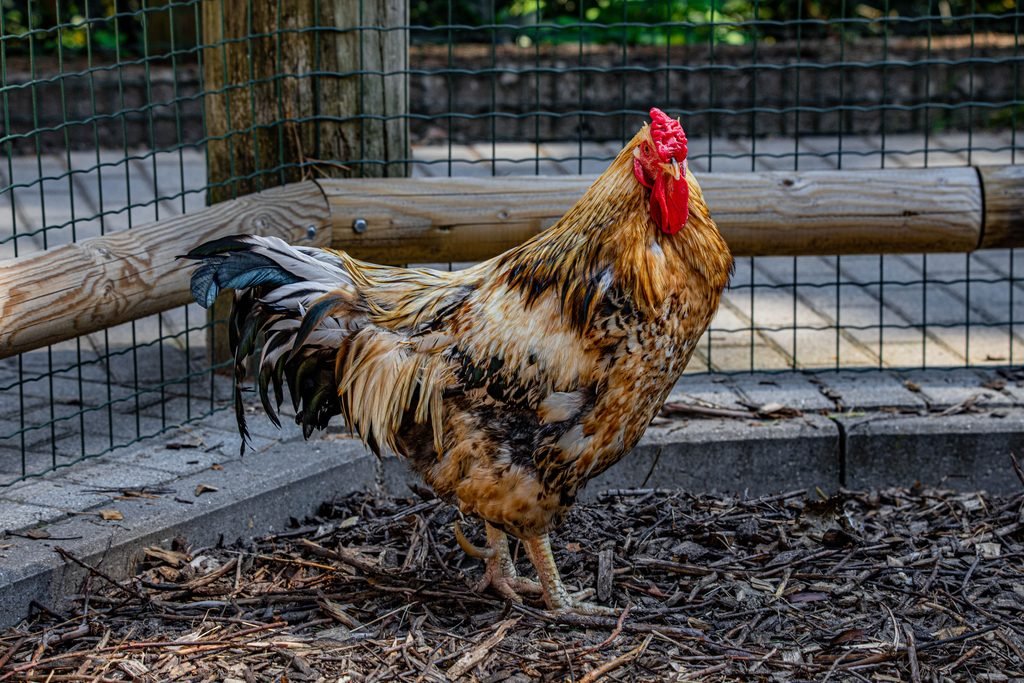
If the coop is substantial and provides some sound reduction, keeping the rooster inside for a reasonable period during the early morning may reduce how much predawn crowing reaches nearby residents. It does not prevent the rooster from crowing inside.
The coop must remain suitable while occupied. Space, ventilation, temperature, food and water access, cleanliness, and weather conditions need to be considered before extending the time the bird remains indoors.
Our guide on whether keeping a rooster in the coop longer reduces noise covers the advantages and limitations of this approach.
Is an Automatic Coop Door Worth Considering?
An automatic door can make a small-backyard setup more convenient by controlling access between the coop and run on a schedule or through another supported mechanism. It can be particularly useful when you want a consistent morning routine.
It should be treated as a management tool rather than a cure for crowing. A rooster can still crow before the door opens, and the device does not replace suitable coop construction or neighbor-conscious placement.
Any automatic door should operate reliably and safely for the birds using it. Check it regularly rather than assuming that automation removes the need for daily inspection.
Should You Put Acoustic Foam Inside the Coop?
Exposed acoustic foam is not an automatic solution for a rooster coop. Poultry can peck accessible materials, and porous products can become difficult to maintain in a dusty environment.
Noise control is better approached as part of the building assembly. Solid construction, controlled gaps, a properly fitting door, thoughtful placement, and safe enclosed materials can all contribute without covering the interior with exposed acoustic products.
Any material used inside or around the coop should be evaluated for fire safety, moisture performance, durability, cleanliness, and whether the rooster can access or damage it.
Use Barriers Strategically
Existing buildings, substantial fences, and other solid structures may influence how sound travels across a small property. A barrier is most useful acoustically when it interrupts the direct path between the source and receiver.
Federal Highway Administration guidance on noise barriers explains the basic principle that effective barriers interrupt the line of sight between a noise source and receiver.
A backyard fence should not be expected to make a rooster inaudible, and vegetation alone should not be treated as soundproofing. Barriers are one part of a broader placement and housing strategy.
Don’t Sacrifice Ventilation for Soundproofing
One of the most important rules in a small-backyard rooster setup is that noise control should never require an airtight coop. Sealing the bird into a poorly ventilated box can create heat, moisture, dust, and air-quality problems.
Improve the parts of the building that can safely be improved while preserving the airflow the housing requires. If a properly ventilated coop remains too noisy for the surrounding property, the solution may need to involve placement or whether the location is suitable for a rooster at all.
Sound management should work around the rooster’s housing requirements rather than overriding them.
Plan for Easy Daily Access
The best location acoustically is not useful if reaching the coop becomes difficult every morning and evening. You need convenient access for feeding, watering, cleaning, inspections, opening and closing doors, and responding quickly when something is wrong.
Leave enough working room around access panels and doors. A structure squeezed tightly between a fence and shed may technically fit but become frustrating to maintain.
Good access encourages regular cleaning and inspection, which is particularly valuable in a compact enclosure where problems can develop quickly.
What If You Want to Add Hens Later?
If hens are a realistic future possibility, design with expansion in mind. Additional birds require additional indoor and outdoor space, roosting capacity, feeding and watering access, and nesting facilities for the hens.
Do not buy a one-rooster coop and assume several hens can simply be added later without changing the enclosure. Planning a possible run extension or larger coop from the beginning may be easier than rebuilding the entire setup.
The same applies if another rooster may eventually be added. Our guide on whether two roosters can live together without hens explains why multiple males require more than simply doubling a floor-space calculation.
A Practical Layout for One Rooster
For one standard-sized rooster, start with a substantial, well-ventilated coop providing around 3–4 square feet or more of usable indoor floor space, connected directly to a secure run providing at least 8–10 square feet of outdoor space. Increase these areas for large breeds, long periods of confinement, or whenever the property comfortably allows it.
Inside the coop, provide an appropriately sized low-to-moderate roost, dry bedding or another suitable flooring system, ventilation above the occupied area, and easy cleaning access. A nesting box is unnecessary if no hens are kept.
Outside, prioritize usable run area, drainage, shade, a dry dust-bathing location, secure boundaries, and protection appropriate to local predators. Position the entire setup with both the rooster and nearby residents in mind.
Common Small-Backyard Coop Mistakes
Several problems begin with trying to squeeze too much into too little space. An undersized coop, tiny run, poor drainage, inadequate ventilation, difficult cleaning access, and a location immediately beside a neighboring home can make everyday management unnecessarily difficult.
Another mistake is trying to solve crowing after construction by blocking ventilation or confining the rooster more severely. Noise should be considered when choosing the location and building the structure, not used as a reason to compromise basic housing.
Finally, do not assume that an attractive prefabricated coop is automatically suitable. Measure the actual usable space, examine the ventilation, check the materials and security, and decide whether you can clean and maintain it easily.
Is a Small Backyard Actually Suitable for a Rooster?
A good coop cannot overcome every property limitation. Before building, confirm that rooster keeping is legal and that enough usable space remains after required setbacks and other property uses are considered.
Nearby homes can also make crowing difficult to manage even when the physical enclosure fits comfortably. A small rural yard with substantial separation from other residences may present a very different situation from a similarly sized urban yard surrounded by bedroom windows.
Our guide on whether you can keep a rooster in a small backyard covers the broader decision before you commit to the housing itself.
Frequently Asked Questions
What is the best rooster coop setup for a small backyard?
The best rooster coop setup for a small backyard combines a well-ventilated and secure sleeping coop with a suitably sized outdoor run, appropriate roosting, good drainage, shade, predator protection, and easy cleaning access. The setup should also be positioned with neighboring homes and local regulations in mind.
How big should a coop be for one rooster?
For a standard rooster with regular outdoor access, around 3–4 square feet of usable indoor floor space provides a practical starting point. Larger birds and roosters that spend substantial time confined should have more room.
How big should a run be for one rooster?
Around 8–10 square feet provides a useful outdoor starting point for a standard-sized rooster, with additional space preferable when the bird spends most of the day in the run.
Does one rooster need a nesting box?
No. A rooster does not lay eggs and therefore does not need a nesting box for himself. If hens are added later, suitable nesting facilities will need to be provided for them.
Should a rooster coop be soundproof?
The goal should be safe sound reduction rather than complete soundproofing. A poultry coop requires ventilation and should never be sealed simply to contain crowing.
Where should a rooster coop go in a small backyard?
Choose a legal location that balances distance from neighboring bedrooms with drainage, airflow, shade, weather protection, predator security, and convenient daily access. The farthest corner of the yard is not automatically best if it places the rooster closer to another home.
Can a rooster stay inside the coop until later in the morning?
Potentially, if the coop remains spacious, clean, appropriately ventilated, and thermally safe while occupied. Delayed release may reduce how much early crowing reaches nearby people, but it does not stop the rooster from crowing inside.
Can you keep a rooster in a small backyard?
Potentially, provided rooster keeping is legal and the property has enough usable space for appropriate housing, movement, sanitation, and noise-conscious placement. Some small residential properties may be unsuitable because of local rules or extremely close neighboring homes.
Final Thoughts
The best rooster coop setup for a small backyard is not necessarily the smallest coop you can buy. A better setup uses the available property efficiently while still providing the rooster with suitable indoor space, a useful outdoor run, ventilation, roosting, weather protection, predator security, and an environment that is straightforward to keep clean.
Location deserves just as much attention as construction. Consider neighboring homes, local regulations, drainage, shade, airflow, and daily access before deciding where the coop will sit. If noise is likely to be an issue, incorporate safe sound-reduction principles during construction rather than trying to seal the coop afterward.
A well-planned compact setup can be practical and easy to maintain. Build around the rooster’s actual needs first, then optimize the layout for the space available. That approach produces a much better small-backyard coop than designing around the absolute minimum dimensions the property can accommodate.