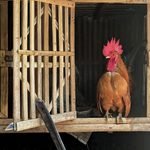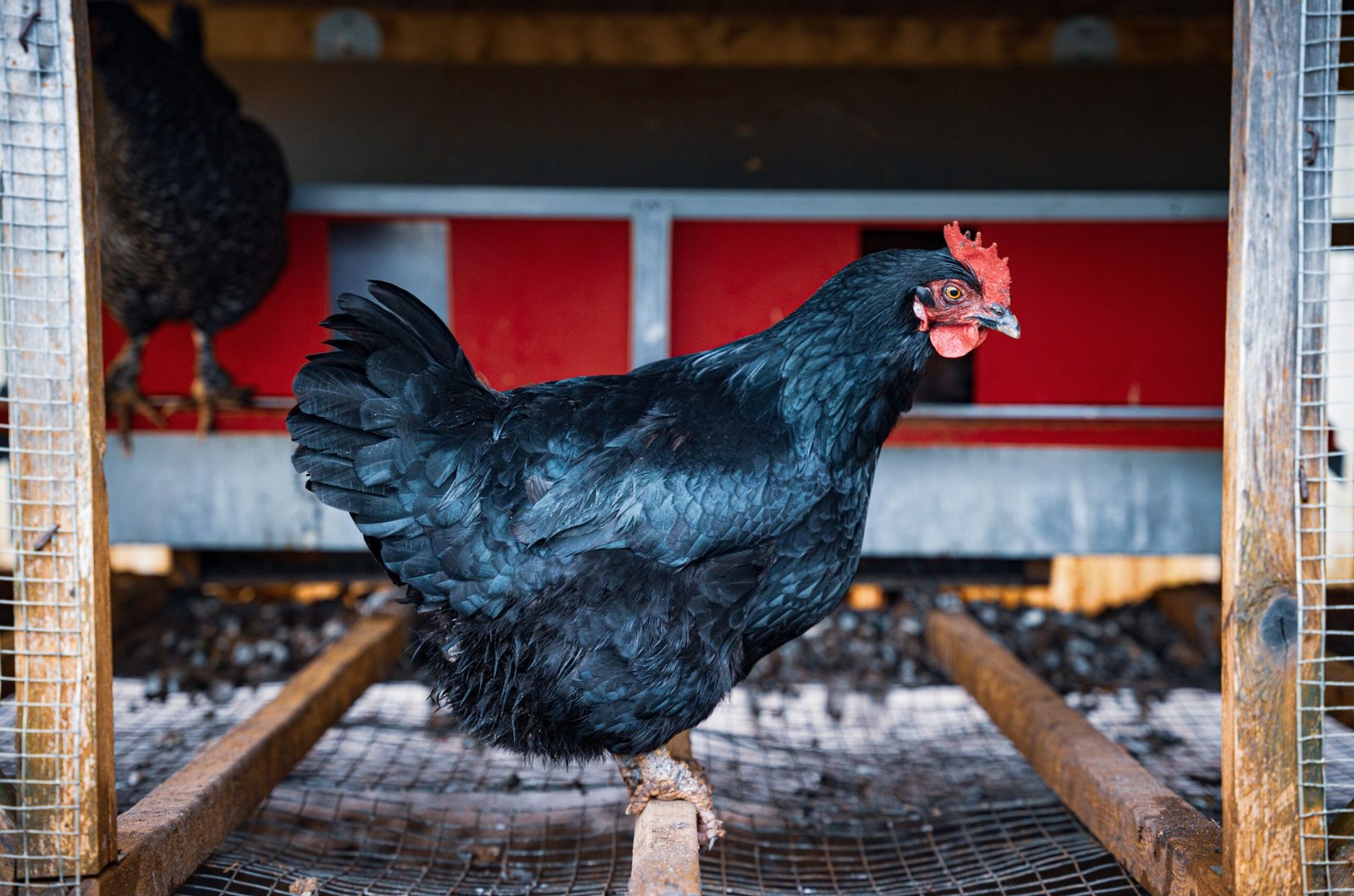
Can neighbors hear a rooster inside a coop? Yes, they may still hear him. A solid enclosed coop can reduce how much crowing reaches the surrounding area compared with a rooster calling outdoors, but an ordinary chicken coop should not be expected to make a rooster inaudible.
How noticeable the crowing is depends on the rooster, the construction of the coop, doors and ventilation openings, distance from neighboring homes, surrounding buildings or barriers, and background noise. Even a well-built coop has to exchange fresh air, and those ventilation paths can also allow sound to escape.
Why Can You Still Hear a Rooster Through a Coop?
A rooster’s crow produces airborne sound. When he crows inside an enclosure, that sound reaches the walls, roof, door, windows, ventilation openings, and other parts of the structure.
Some sound energy is reflected inside the enclosure, some is absorbed, and some is transmitted through or around the building components.
A coop therefore acts as a barrier, but it is not automatically a soundproof barrier.
Thin walls, large openings, lightweight doors, gaps, and ventilation paths can all allow crowing to remain clearly audible outside.
Does a Coop Make a Rooster Quieter?
It can make the rooster sound quieter to someone outside without actually changing the volume of the rooster’s voice at the source.
This distinction is important. The rooster may produce essentially the same type of crow inside the building, while the enclosure reduces some of the sound that reaches a listener farther away.
How effective this is depends on the complete structure rather than one feature.
A substantial enclosed coop with solid walls and a properly fitted door can behave very differently from an open-sided shelter or a lightweight structure containing large areas of wire mesh.
How Much Quieter Is a Rooster Inside a Coop?
There is no responsible universal decibel reduction that can be given for every rooster coop.
The result depends on wall mass, construction, insulation, doors, roof materials, gaps, ventilation openings, distance, surroundings, and where the sound is measured.
For that reason, claims that putting a rooster inside a particular type of coop will always reduce his crow by a specific number of decibels should be treated cautiously unless that exact structure has been tested under defined conditions.
Our guide on how to soundproof a rooster coop safely explains which parts of the structure are worth considering when the goal is to reduce sound transmission.
Why Coop Construction Makes Such a Difference
Sound isolation depends heavily on what separates the sound source from the listener.
A very lightweight wall generally provides less resistance to airborne sound than a more substantial wall assembly. Gaps and openings can also undermine otherwise solid construction.
The Whole Building Design Guide’s overview of acoustic comfort explains fundamental concepts involved in controlling sound transmission through buildings.
Although a backyard chicken coop is much simpler than a professionally designed acoustic building, the same basic principle applies: the entire enclosure matters.
Solid Walls Can Help Reduce Crowing Noise
Solid construction provides a physical barrier between the rooster and the surrounding area.
If the coop consists primarily of substantial wall panels, less sound may pass directly through those sections than through large open areas.
However, improving the walls alone does not guarantee a quiet result. Sound may simply find easier routes through doors, windows, vents, roof gaps, or other openings.
Noise reduction therefore needs to be considered as a complete-building problem.
Why the Coop Door Matters
A large open doorway creates a relatively direct path from the rooster to the outside environment.
When a substantial door is closed, that direct opening is replaced by another building component that sound must pass through or around.
This is one reason keeping a rooster inside during part of the early morning can sometimes make his crowing less noticeable outside.
Our article on whether keeping a rooster in the coop longer reduces noise explains the benefits and limitations of that approach.
Closing the door should never mean eliminating the ventilation the birds require.
Ventilation Is Usually a Weak Point for Sound
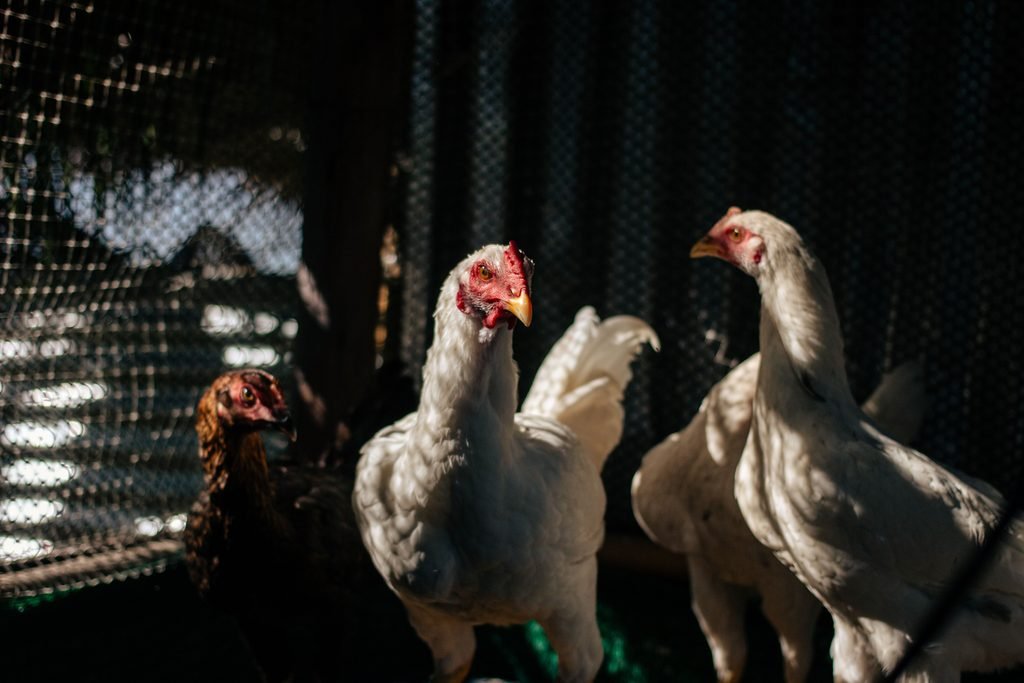
A ventilation opening has to allow air to move between the inside and outside of the enclosure. That same opening can provide a route for sound.
This creates one of the fundamental challenges of rooster-coop noise control.
You could theoretically make an enclosure more resistant to sound by sealing openings, but a living animal requires suitable fresh-air exchange. The solution cannot simply be to cover every vent.
Penn State Extension’s poultry housing guidance explains the importance of ventilation for removing moisture, ammonia, carbon dioxide, and stale air from poultry housing.
Necessary ventilation therefore takes priority over maximum sound isolation.
Can You Reduce Sound Escaping Through the Vents?
Potentially, but this needs more care than simply putting foam over an opening.
Vent placement, orientation, and appropriately designed indirect airflow paths can be considered when planning a coop. More advanced acoustic systems use methods such as silencers and baffled paths to permit airflow while reducing direct sound transmission.
A homemade system should not be assumed to provide the same performance as an engineered acoustic ventilation system. Poorly designed baffles can restrict airflow or collect dust.
Our detailed guide on soundproofing a rooster coop without blocking ventilation covers this problem specifically.
Does Insulation Stop Neighbors Hearing a Rooster?
Insulation can contribute to the performance of a properly constructed wall assembly, but insulation alone is not a guarantee that neighbors will no longer hear crowing.
The acoustic performance of a wall depends on its complete construction. Doors, vents, windows, roof assemblies, and gaps remain important.
Any insulation also needs to be appropriate for the building and protected from direct access by the birds. Loose fibrous material should not be left exposed where chickens can peck or damage it.
Can Neighbors Hear a Rooster Through a Wooden Coop?
Yes. Wood does not automatically block a rooster’s crow.
A thin timber structure can still transmit considerable sound, particularly if it contains large ventilation openings, gaps, or lightweight doors.
A more substantial wall assembly may perform better, but the word “wooden” alone tells us very little about the acoustic performance of a coop.
Thickness, layers, cavities, openings, joints, and the rest of the construction all matter.
Can Neighbors Hear a Rooster Through a Metal Coop?
They can. Metal construction does not automatically make a coop soundproof either.
Thin sheet materials can transmit sound and may also create additional rattling if panels are loose. The complete wall and roof assembly matters more than simply whether the exterior surface is metal or timber.
Loose components should be secured so the structure itself does not contribute unnecessary noise.
Does Distance From the Neighbor Matter?
Yes. The distance between the rooster and the listener is an important part of outdoor noise exposure.
A neighbor immediately beside the coop is in a very different situation from someone substantially farther away.
Distance should therefore be considered before trying increasingly complicated acoustic modifications.
The Federal Highway Administration’s environmental noise guidance discusses the broader principles of distance, barriers, and outdoor sound propagation.
Although transportation noise differs from rooster crowing, the physical principle that source-to-receiver geometry matters remains relevant.
Where the Coop Sits on the Property Matters
Putting the rooster at the far end of your yard does not necessarily solve the problem if that location places him immediately beside someone else’s bedroom.
The entire surrounding area should be considered. Look at your own house, neighboring houses, bedroom windows, patios, property boundaries, existing buildings, and substantial barriers before choosing the location.
Our guide on where to put a rooster coop to reduce noise explains how to evaluate these factors before building or relocating the enclosure.
Do Fences Help Stop Rooster Noise?
A substantial solid barrier may alter the path between a noise source and receiver, particularly when it interrupts direct line of sight.
However, not every fence is an effective acoustic barrier. Height, length, mass, placement, and gaps all influence performance. A lightweight open fence or wire fence should not be expected to provide the same effect as a continuous solid barrier.
A fence is therefore best considered one possible part of a broader noise-management strategy rather than a guaranteed solution.
Do Trees and Hedges Keep Neighbors From Hearing Crowing?
Ordinary landscaping should not be treated as soundproofing. Trees and shrubs can provide visual screening and may influence outdoor sound under certain conditions, particularly when vegetation is dense and extends across substantial depth.
But a single row of shrubs should not be expected to make a rooster inaudible to a nearby neighbor.
Distance, substantial barriers, coop construction, and orientation are generally more useful considerations when evaluating the practical noise problem.
Does It Matter Which Way the Coop Faces?
Orientation can matter, particularly for major openings. A large doorway or vent facing directly toward a nearby bedroom creates a more direct sound path than the same opening facing toward a less noise-sensitive part of the property.
This does not mean the rooster’s voice travels in only one direction. Sound can still pass through the rest of the structure and around obstacles.
But when designing a new coop, there is little reason to ignore the orientation of its largest openings.
Why Is a Rooster More Noticeable Early in the Morning?
Roosters commonly begin crowing around the predawn period, when many people are still sleeping.
The surrounding environment can also be relatively quiet at this time compared with later in the day, when traffic, machinery, conversation, and other background sounds become more common.
A crow that attracts little attention during a busy afternoon may therefore be much more intrusive during the early morning. This is one reason neighbor concerns frequently focus on when the rooster crows rather than simply whether he crows.
Will Keeping the Coop Dark Stop Neighbors Hearing the Rooster?
No. Darkness is not soundproofing, and it does not reliably prevent a rooster from producing predawn calls. Research has demonstrated that roosters possess an internal circadian rhythm involved in the timing of predawn crowing.
Research published in Current Biology found that roosters continued anticipatory predawn crowing under controlled constant dim-light conditions, supporting the role of an internal biological clock. Our guide asking whether a dark coop can stop early crowing covers this issue in more detail.
Can Neighbors Hear Crowing With the Coop Door Closed?
Yes, they still may.
A closed door removes one large direct opening, but sound can continue passing through the door itself, walls, roof, ventilation openings, windows, and construction gaps. The result depends on how substantial the structure is and how far the listener is from it.
Closing a solid door can be part of noise management, but it should not be presented as a guarantee that nearby people will hear nothing.
Will Soundproofing Make a Rooster Completely Inaudible?
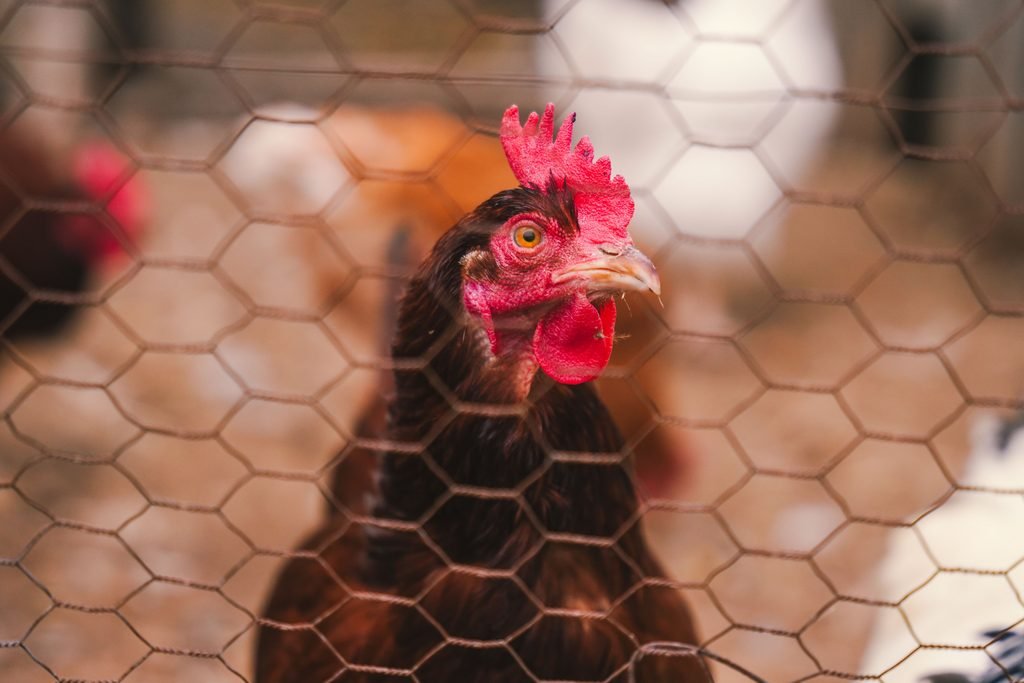
A normally ventilated backyard coop should not be expected to make a rooster completely inaudible outside.
Complete acoustic isolation becomes particularly difficult because the enclosure requires airflow. Professional sound-isolated spaces can use engineered mechanical ventilation systems specifically designed to manage both air and noise.
Most backyard chicken coops do not contain such systems. The realistic objective is therefore reducing the impact of crowing rather than promising silence.
What If the Neighbor Is Very Close?
Close spacing makes noise management more difficult. Even a reasonably substantial coop may not provide enough isolation to prevent a nearby person from hearing a rooster, particularly during quiet predawn hours.
This is one reason rooster keeping can be difficult on small residential lots. Before relying on soundproofing, check whether roosters are permitted at the property and whether local rules specify setbacks, animal numbers, or nuisance-noise requirements.
How Far Away Can Someone Hear a Rooster?
There is no universal scientifically defensible distance at which a rooster becomes inaudible. How far a crow can be heard depends on the individual bird, surroundings, terrain, buildings, wind, background noise, enclosure, and the hearing environment at the receiver.
Avoid claims that every rooster can be heard a specific number of feet, yards, or miles away. Such figures oversimplify outdoor sound propagation.
Do Bantam Roosters Solve the Neighbor Problem?
Choosing a smaller rooster does not guarantee that neighbors will not hear him. Bantams still crow, and individual vocal characteristics vary. A smaller bird should not automatically be described as neighbor-safe or apartment-quiet.
If you’re considering smaller breeds specifically because of noise, see our guides on whether bantam roosters crow loudly and quiet bantam rooster breeds and what to consider.
What If Your Neighbor Can Still Hear the Rooster?
First, identify when the noise is most disruptive and whether the rooster is primarily being heard while inside or after release.
Then examine the practical sound paths. Is the coop immediately beside the neighboring property? Does a large opening face their home? Are the walls extremely lightweight? Are there unnecessary gaps? Is the rooster being released during the earliest predawn period?
Addressing a specific weakness is more useful than randomly covering the enclosure with acoustic products.
Also consider communication with affected neighbors where appropriate. Understanding when the disturbance occurs can help identify whether a realistic management change would make a meaningful difference.
Can You Guarantee That Neighbors Won’t Hear Your Rooster?
No responsible housing modification can guarantee that a nearby neighbor will never hear a rooster.
Even after improving the coop, the rooster will eventually spend time outside unless the management system is designed otherwise, and normal outdoor crowing can remain clearly audible.
Sound management should therefore aim to reduce unnecessary disturbance, particularly during sensitive early-morning periods, rather than promise complete silence.
What About Local Noise Rules?
Local regulations are critical because rooster rules vary dramatically between jurisdictions. Some places allow roosters subject to general nuisance rules. Others impose property-size requirements, setbacks, animal-number restrictions, or specific prohibitions.
Soundproofing does not make an otherwise prohibited rooster legal. Always check the current rules for the specific property before investing heavily in coop modifications intended to solve a neighbor-noise issue.
A Practical Strategy for Reducing What Neighbors Hear
Start with location. Determine how close the coop is to neighboring bedrooms and whether another legal and suitable location would provide better separation. Next, inspect the structure. Look at the walls, roof, doors, unnecessary gaps, and major openings. Improve obvious weaknesses without blocking required ventilation.
Consider the direction of doors and vents and use existing substantial barriers where appropriate. If the coop safely reduces sound, a reasonable delayed morning release may keep some of the earliest calls inside the enclosure. Finally, maintain realistic expectations. The objective is to reduce disturbance rather than make a naturally vocal animal completely silent.
Frequently Asked Questions
Can neighbors hear a rooster inside a coop at night or early in the morning?
Can neighbors hear a rooster inside a coop during quiet periods? Yes. A coop may reduce the amount of sound reaching them, but crowing can still pass through walls, doors, roofing, gaps, and necessary ventilation openings.
Will closing the coop door make my rooster quiet enough for neighbors?
A substantial closed door may reduce one direct sound path, but it cannot guarantee that the rooster will become inaudible. The rest of the coop construction and the distance to neighboring homes matter.
Can I block the coop vents in the morning?
No. Do not block necessary ventilation simply to contain crowing. Birds still require suitable fresh-air exchange while they remain inside the enclosure.
Will insulating the coop stop neighbors hearing crowing?
Insulation can form part of an improved wall assembly, but it does not guarantee silence. Doors, vents, roofing, gaps, wall construction, and distance all affect the final result.
Is a rooster quieter inside than outside?
To a listener outside, a rooster may be less noticeable when solid building components stand between the bird and listener. The rooster himself has not necessarily become quieter; the structure is reducing some sound transmission.
Can I completely soundproof a rooster coop?
Complete sound isolation is not a realistic objective for most naturally ventilated backyard coops. Safe sound reduction is a better goal because the birds still require adequate airflow.
Final Thoughts
Can neighbors hear a rooster inside a coop? Yes, particularly when homes are close or the enclosure has lightweight walls, large openings, substantial gaps, or direct ventilation paths toward nearby properties.
A well-designed enclosure can reduce the amount of crowing that reaches the surrounding area, especially compared with unrestricted outdoor crowing. Distance, coop location, solid construction, door design, orientation, and external barriers can all contribute.
But the objective should remain realistic. A safe rooster coop requires ventilation, and a rooster remains a naturally vocal animal. Instead of trying to guarantee silence, focus on reducing unnecessary sound transmission and limiting disturbance during the times when crowing is most likely to affect nearby people.