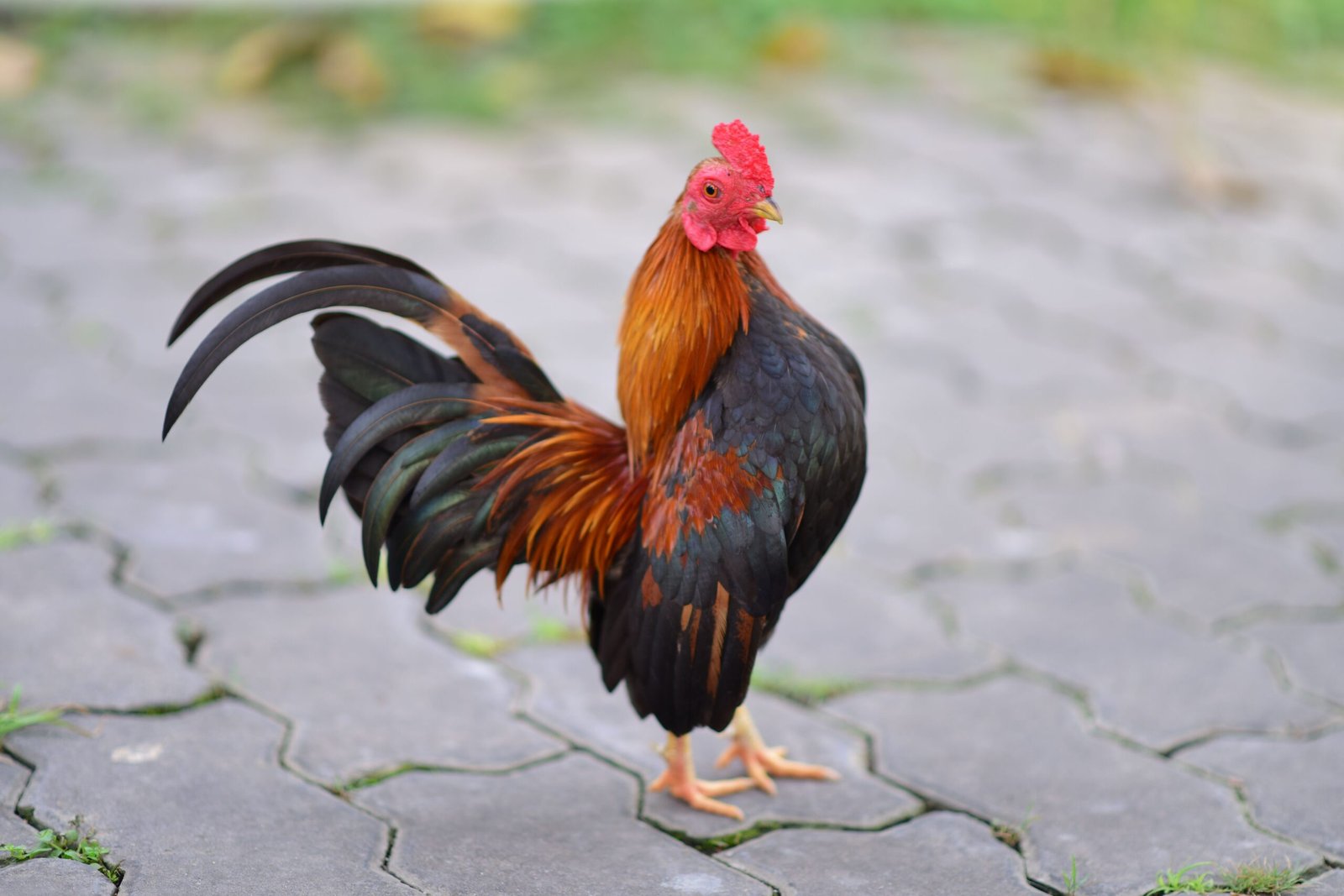
Do bantam roosters crow loudly? Despite their small size, bantam roosters can produce clearly noticeable crows and should not be considered quiet simply because they are smaller than standard chickens. The volume, pitch, frequency, and persistence of crowing vary between individual birds, but a bantam rooster can still be loud enough to create problems when kept close to neighboring homes.
Bantams include many different breeds and varieties rather than representing one uniform type of chicken. Their smaller bodies can affect the character of their calls, but size alone does not reliably predict how disruptive a rooster will be. Anyone considering a bantam because noise is a concern should therefore plan for regular crowing rather than assuming that a smaller bird will produce proportionally less sound.
How Loud Is a Bantam Rooster?
There is no universal decibel level that accurately describes all bantam roosters. Different breeds and individual birds produce different vocalizations, while the distance from the rooster and the surrounding environment also affect how loud a crow sounds to a listener.
Scientific research demonstrates that rooster crowing in general can produce substantial sound pressure. A study published in Zoology and available through PubMed Central measured very high sound-pressure levels close to a crowing rooster’s head and also referenced earlier measurements taken farther from the bird. The rooster studied was not a bantam, so those figures should not be presented as a bantam noise rating. The research instead demonstrates why rooster vocalization should not be dismissed as a minor sound simply because a particular bird is small.
For comparison, our guide on how loud a Silkie rooster is examines the same issue in Silkies, which are treated as bantams in the United States.
Does a Bantam’s Small Size Make It Quieter?
Not necessarily. Bantam chickens are defined primarily by their small physical size rather than by a particular noise level. Penn State Extension’s poultry breed guidance describes bantams as miniature chickens and notes that there are hundreds of bantam breeds and varieties, including miniature forms of larger breeds as well as types without large-fowl counterparts.
That diversity matters when discussing noise. Bantam roosters differ in body structure, temperament, pitch, and individual behavior, so it is difficult to make a useful claim about every bantam based only on size. A smaller rooster may sound different from a large bird without necessarily being quiet enough for a noise-sensitive property.
Perceived noise also involves more than raw volume. A sharp or repetitive crow can attract attention even when it does not sound as deep or powerful as the crow of a larger rooster. Frequency and timing can therefore matter as much as the size of the bird.
Do Bantam Roosters Crow Loudly in the Morning?
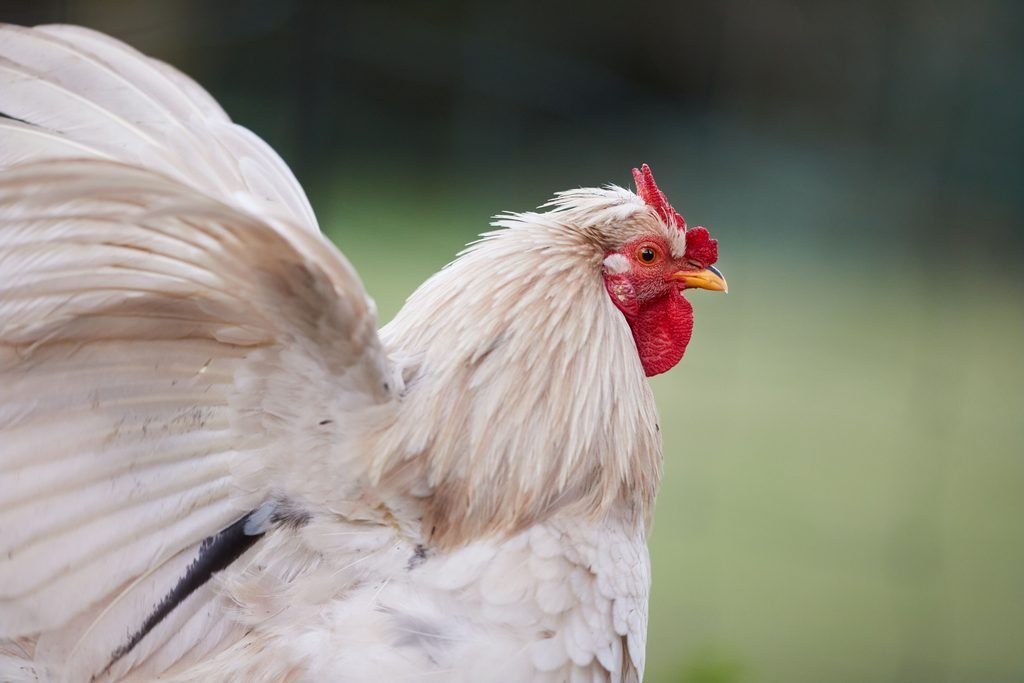
Do bantam roosters crow loudly during the early morning? They certainly can, and this is often when rooster noise becomes most noticeable. Neighborhood background noise is usually lower around dawn, so repeated crowing may stand out more clearly than the same vocalization later in a busy day.
Morning crowing is also rooted in rooster biology. Research on rooster behavior has shown that predawn crowing is influenced by an internal circadian clock rather than being triggered solely by the appearance of daylight. A study published in Scientific Reports and available through PubMed Central also found that social rank influenced the order in which groups of roosters announced the break of dawn.
Keeping a rooster in darkness overnight therefore does not provide a reliable guarantee of silence until a convenient morning hour. Light and environmental activity can influence behavior, but the underlying daily rhythm of crowing remains important.
How Often Do Bantam Roosters Crow?
There is no fixed number of times a bantam rooster will crow in a day. Some individuals may vocalize periodically, while others repeatedly crow throughout the morning and continue at intervals during daylight hours.
Crowing patterns can also be influenced by the social environment. Roosters communicate within a flock, and the presence or sound of other roosters can affect vocal behavior. Changes in activity around the birds may also coincide with periods of increased crowing.
This individual variation is one reason the question “do bantam roosters crow loudly?” cannot be answered by volume alone. A relatively modest crow repeated frequently may become more disruptive than a stronger crow heard only occasionally.
What Does a Bantam Rooster Crow Sound Like?
Bantam roosters produce the familiar multi-part crow associated with male chickens, but the pitch and tone differ between breeds and individuals. Some small roosters may have a sharper or higher-sounding crow than larger birds, while others can produce a surprisingly substantial call for their body size.
The acoustic character of rooster crowing is more complex than a single note. Research into domestic rooster vocalization has identified multiple harmonics within the crow, helping explain why rooster calls have a distinctive sound that can remain recognizable against other environmental noise.
A higher pitch should not automatically be confused with lower loudness. A sound can be relatively high in pitch and still be clearly audible across a backyard or beyond a property boundary.
Are All Bantam Roosters Equally Noisy?
No. The term bantam covers a broad range of small chickens, and individual behavior varies even within the same breed. One rooster may crow relatively infrequently, while another of similar size may be considerably more persistent.
The Livestock Conservancy distinguishes bantams from large fowl on the basis of size and notes that many bantams are scaled-down versions of larger chickens. This classification does not establish a particular noise level or temperament that applies to every bantam rooster.
Breed can still be useful when researching a bird because breeds differ in physical and behavioral characteristics. However, a breed description should be treated as general guidance rather than a promise about exactly how much an individual rooster will crow.
Are Bantam Roosters Quieter Than Standard Roosters?
It is reasonable to expect differences in the sound produced by birds of substantially different sizes, but there is not enough breed-specific evidence to state that bantam roosters as a group are reliably quiet compared with standard roosters. Smaller body size does not remove the natural behavior of crowing.
The more practical comparison involves the entire noise pattern: volume, pitch, frequency, timing, distance, and surrounding environment. A standard rooster on a large property may create fewer practical noise problems than a bantam kept only a short distance from a neighbor’s bedroom.
Silkies provide a useful example of why these distinctions matter. Our guide examining whether Silkie roosters are quiet explains why the reputation of a small breed should not be treated as a guarantee about an individual bird.
Why Do Bantam Roosters Crow?
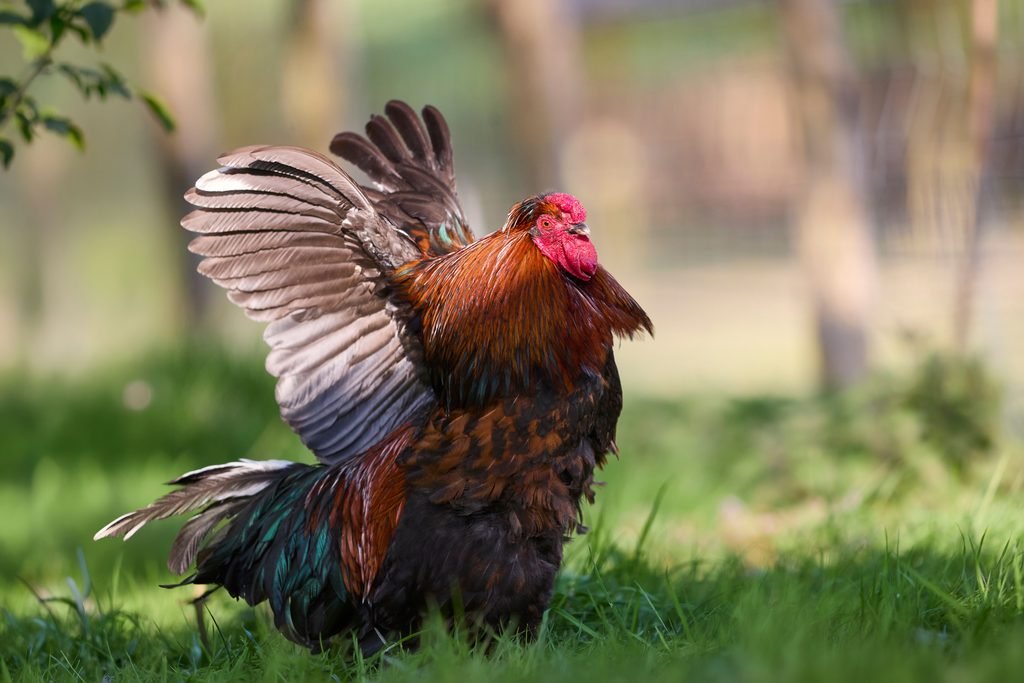
Crowing is normal rooster behavior and serves social and communicative functions. It should not automatically be interpreted as evidence that a bird is distressed or that an owner has created an unsuitable environment.
Roosters may crow as part of their daily biological rhythm and social interactions with other birds. Research showing that social hierarchy influences dawn crowing further demonstrates that rooster vocalization is connected with natural behavior rather than being a simple response to sunrise.
Environmental events can coincide with additional crowing, but eliminating individual triggers does not eliminate the rooster’s underlying tendency to vocalize. Prospective owners should therefore expect crowing as a normal part of keeping a male chicken.
Can Bantam Rooster Noise Travel to Neighboring Properties?
Yes. A bantam rooster can potentially be heard beyond the property where it is kept. There is no reliable distance that applies to every bird because sound propagation depends on the rooster, buildings, barriers, terrain, weather, background noise, and the position of the listener.
Housing location becomes particularly important on small residential properties. A coop positioned near a shared boundary may place the rooster much closer to a neighboring bedroom than one positioned farther inside the property. That difference can affect how disruptive early-morning crowing becomes.
Hard surfaces and nearby structures can also change how sound is experienced. For this reason, a rooster that seems manageable in one setting may create a very different noise situation on another property.
Can You Reduce Bantam Rooster Crowing Noise?
Responsible housing and environmental management may reduce how disruptive crowing becomes, but they cannot guarantee silence. Crowing is a normal behavior, and management should focus on reducing unnecessary disturbance rather than preventing a healthy rooster from vocalizing altogether.
Coop placement is an important starting point. Increasing the distance between nighttime housing and neighboring bedrooms can help reduce the practical impact of early-morning noise. A secure nighttime environment and consistent routine may also limit unnecessary stimulation.
Noise reduction should never come at the expense of adequate ventilation, appropriate temperatures, sanitation, movement, or other welfare needs. Penn State Extension’s poultry housing guidance emphasizes appropriate space, ventilation, and housing considerations for small-scale flocks, including bantam chickens.
Are Bantam Roosters Suitable for Small or Urban Properties?
The compact size of bantams can make their physical housing requirements easier to accommodate than those of some larger chickens, but noise remains a separate consideration. A small bird can still create a significant disturbance when neighboring homes are close.
Local regulations must also be checked before obtaining a rooster. Poultry rules vary between cities, counties, municipalities, homeowners associations, rental properties, and other jurisdictions. Some locations permit hens while restricting or prohibiting roosters, and others regulate poultry through zoning, setbacks, flock limits, or nuisance provisions.
A bantam’s size does not automatically exempt it from rules that apply to roosters. The suitability of a bird therefore depends on both the physical property and the regulations governing that location.
Are Bantam Hens Quieter Than Bantam Roosters?
Bantam hens still make normal chicken vocalizations, but they do not produce the characteristic repeated crow associated with a mature rooster. Hens may become vocal while laying, communicating with flock mates, responding to disturbances, or giving alarm calls, yet their overall sound pattern differs from rooster crowing.
For someone primarily interested in keeping small chickens rather than breeding or maintaining a rooster, hens may be more practical where early-morning crowing would create a problem. Local poultry regulations still need to be checked because rules for keeping hens also vary by location.
Frequently Asked Questions
Do bantam roosters crow loudly despite being small?
Do bantam roosters crow loudly despite their compact size? They can. Individual volume varies, but being a bantam does not guarantee a quiet crow. Frequency, pitch, surroundings, and distance from the listener also influence how noticeable the bird becomes.
Are bantam roosters quieter than large roosters?
Not reliably. Bantam roosters may produce different pitches and tones from larger birds, but there is no universal rule establishing that every bantam will be quieter than a standard-sized rooster.
Do bantam roosters crow every day?
Mature bantam roosters should generally be expected to crow regularly. The number and timing of crows vary between individual birds, and vocalization can occur in the morning as well as later in the day.
Do bantam roosters crow before sunrise?
They can. Research on domestic roosters has demonstrated that predawn crowing is influenced by an internal circadian rhythm, so a rooster does not necessarily wait for sunrise before becoming vocal.
Can neighbors hear a bantam rooster?
Yes, particularly when homes are close together or the rooster is housed near a property boundary. How far the sound travels depends on the individual bird and surrounding environmental conditions.
Final Thoughts on Bantam Rooster Noise
Do bantam roosters crow loudly? Their small size can make their crow seem surprising, but bantams should still be treated as potentially vocal animals. There is no universal decibel figure for bantam roosters, and substantial variation exists between breeds, individual birds, and environments.
Anyone considering a bantam rooster should plan for regular crowing, including the possibility of vocalization before sunrise. Body size is only one characteristic of the bird and should not be used as a substitute for considering crowing frequency, housing location, neighboring properties, and local regulations.
If noise is central to your decision, our guides to Silkie rooster crowing noise and Silkie rooster loudness provide additional examples of how noise can vary even among relatively small roosters.