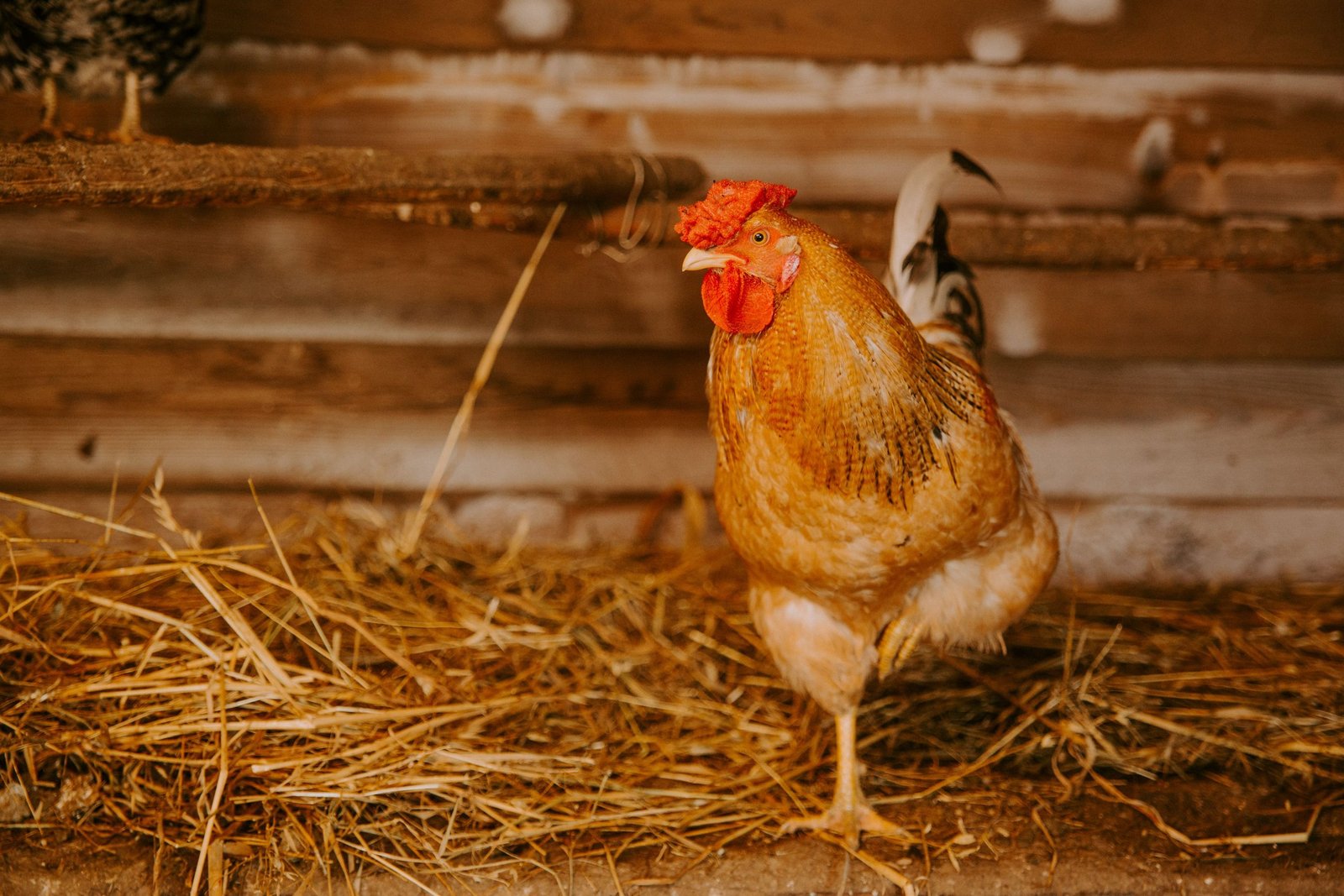
Can you keep a rooster in a small backyard? In some situations, yes, but having enough physical space is only part of the decision. Local laws, crowing noise, distance from neighbors, coop and run size, sanitation, and the rooster’s welfare all determine whether a small backyard is suitable.
The first question should be whether roosters are permitted at your property. Some cities and residential areas allow hens but prohibit roosters, while others require permits or impose specific conditions. If roosters are legal, you can then decide whether the available space allows you to house the bird properly without creating an unreasonable problem for nearby residents.
Small Backyards Are Not Automatically Unsuitable for Roosters
A rooster does not require a farm simply because he is male. A well-designed backyard can potentially provide enough room for suitable housing, an outdoor run, normal movement, and daily care.
The difficulty is that small properties usually place the rooster closer to people. A backyard may provide enough space for the bird while providing too little separation from a neighbor’s bedroom. This is why rooster keeping on a small lot is as much a noise and location question as it is a space question.
Before considering coop designs or breeds, look at the entire property. The usable area, neighboring homes, local regulations, drainage, shade, ventilation, predator risks, and places where a coop can legally be positioned all matter.
Check Local Rooster Laws Before Planning the Backyard
Rooster regulations vary significantly between countries, cities, councils, counties, and municipalities. Never assume that permission to keep backyard chickens automatically includes permission to keep a rooster.
For example, some Canadian municipalities permit residential backyard hens but explicitly prohibit roosters. Auckland has also published urban poultry rules that distinguish chickens from roosters, while some New Zealand councils allow roosters under permits or particular conditions. These examples demonstrate why a worldwide minimum lot size or universal backyard rule would be misleading.
The safest approach is to check the current rules for your exact property with the relevant local authority. Look for restrictions covering roosters, poultry, livestock, zoning, coop setbacks, animal nuisance, and noise before acquiring the bird or constructing permanent housing.
You can see an example of the permit-based approach in Hamilton City Council’s rooster and chicken requirements, which include specific conditions for rooster permits and enclosures.
How Much Backyard Space Does One Rooster Need?
There is no universal rooster-specific square-foot requirement. General backyard poultry guidance varies according to bird size, housing system, outdoor access, climate, and the amount of time birds remain confined.
For a standard-sized rooster with regular outdoor access, around 3–4 square feet of usable indoor coop floor and at least 8–10 square feet of outdoor run space provides a practical planning starting point. Larger birds and roosters that spend long periods confined should have more room.
Those figures describe bird housing, not the ideal size of the entire backyard. You still need room around the enclosure for access, cleaning, drainage, maintenance, and appropriate separation from property boundaries or neighboring homes where required.
Our guide on how much space one rooster needs explains indoor and outdoor space requirements in more detail.
Coop Space and Backyard Space Are Different
A common mistake is calculating the minimum floor area of the coop and assuming that any yard capable of fitting that structure is suitable for a rooster. The coop is only one part of the setup.
The property also needs a suitable outdoor area, access for cleaning, safe feed storage, drainage, ventilation around the housing, and enough separation from neighboring properties to manage the practical impact of crowing. Local rules may require additional setbacks that make part of a small yard unavailable for poultry housing.
A backyard that measures hundreds of square feet can therefore have much less usable rooster space after these factors are considered.
Noise Is Often the Biggest Problem in a Small Backyard
Roosters naturally crow, and a small property places that sound source relatively close to surrounding homes. This can become the limiting factor even when the bird has plenty of physical room.
Crowing is not restricted to sunrise. Roosters may crow before dawn and continue at intervals throughout the day. Research has demonstrated that an internal circadian clock contributes to predawn crowing, which means simply keeping the surroundings dark does not reliably eliminate early calls.
The Current Biology research on rooster circadian crowing provides useful scientific context for why predawn vocalization occurs.
On a small residential lot, you should plan around the assumption that the rooster will crow rather than building the setup around the hope that he will be unusually quiet.
How Close Can a Rooster Be to Neighbors?
There is no universal noise-safe distance between a rooster and the nearest home. Local laws may establish legal setbacks, but meeting a setback does not guarantee that a neighbor will not hear the bird.
Sound generally becomes less intense with increasing distance, so greater separation is useful when the property allows it. The surrounding environment also matters. Buildings, solid barriers, terrain, coop construction, openings, background noise, and weather can affect what reaches another residence.
Our guide on how far a rooster coop should be from neighbors explains why legal setbacks and practical noise separation need to be considered separately.
Can Neighbors Hear a Rooster Across a Small Backyard?
Yes. You should assume that nearby residents may hear a rooster, particularly when surrounding homes are close to the property boundary.
A substantial coop can reduce some sound transmission while the rooster is inside, but ordinary poultry housing is not acoustically sealed. Sound can pass through walls, doors, roofs, gaps, and necessary ventilation openings. Once the rooster is outside, the enclosure provides even less acoustic separation.
There is also no fixed distance at which rooster crowing becomes inaudible. Our article on how far away you can hear a rooster crow explains why claims about a universal hearing distance should be treated cautiously.
Where Should You Put the Coop in a Small Yard?
The best location is not automatically the corner farthest from your own house. On a compact property, that position may place the rooster immediately beside a neighbor’s bedroom.
Compare all legal and physically suitable locations. Look at the distance to surrounding homes, bedroom windows, substantial buildings, solid fences, drainage, shade, weather exposure, predator security, and access for daily care.
Where several suitable locations exist, greater practical separation from noise-sensitive areas is generally preferable. Large doors and openings should also be considered because their orientation can influence direct sound paths.
Our complete guide on where to put a rooster coop to reduce noise covers these placement decisions in more detail.
Can a Small Coop Work for One Rooster?
A compact coop can work when it provides adequate usable space and is primarily used for sleeping and shelter while the rooster has regular access to a larger outdoor area.
Daily coop access is another consideration for a small backyard setup. If opening and closing the coop manually is difficult to manage consistently, our guide to automatic chicken coop doors for roosters explains how to compare door dimensions, timer controls, safety features, and power options.
The rooster should be able to stand normally, turn, walk, stretch, and use an appropriate roost. The enclosure also needs ventilation, weather protection, predator security, dry conditions, and access to necessities appropriate to the management system.
If the rooster will spend extended periods inside, increase the available space rather than designing around the smallest overnight allowance.
A Small Backyard Still Needs a Useful Outdoor Run
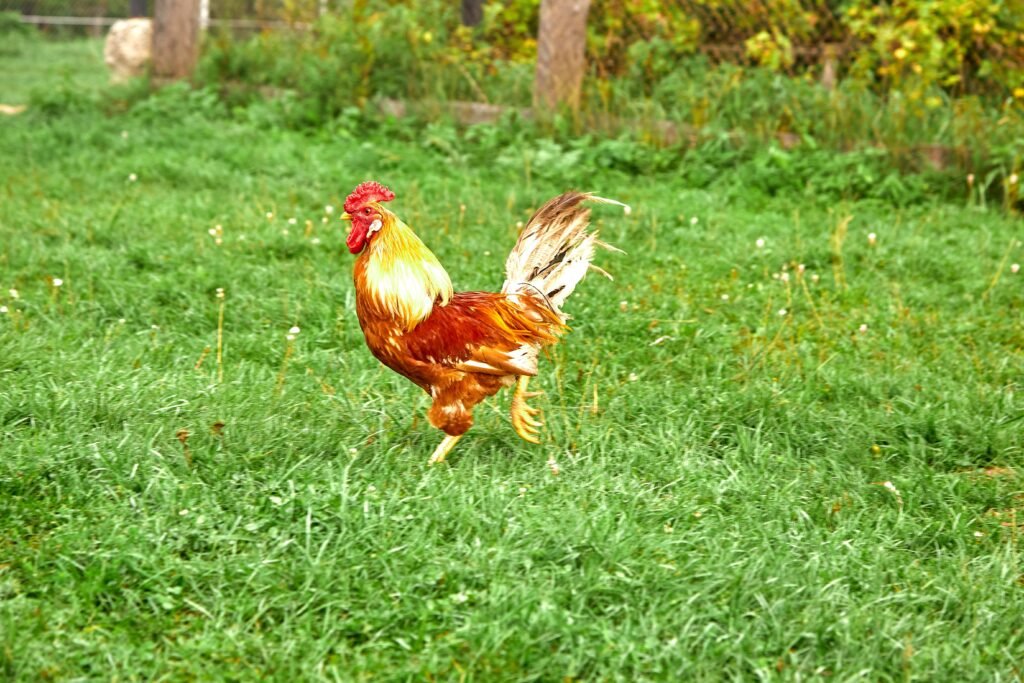
If free-ranging is impossible, the run becomes a major part of the rooster’s daily environment. It should provide enough usable room for walking, scratching, foraging, dust bathing, stretching, and other normal activity.
A tiny run can deteriorate quickly. Repeated traffic over a small patch may remove vegetation and contribute to bare ground, mud, manure buildup, and sanitation problems, particularly in wet conditions.
Good drainage and regular maintenance become increasingly important as the available outdoor area becomes smaller.
Don’t Use Extreme Confinement to Make a Rooster Fit
If the only way to keep a rooster on the property is to confine him permanently in an extremely small enclosure, the backyard is not functioning as suitable rooster housing.
Reducing the bird’s ability to move is not an appropriate solution to limited property space or neighbor noise. Housing should accommodate normal movement and appropriate behavior rather than physically restricting the rooster simply to make him easier to contain.
If adequate housing cannot fit alongside legal setbacks and reasonable neighbor considerations, the property may not be suitable for a rooster even if a small cage could technically fit in the yard.
Ventilation Matters Even More in Compact Housing
A small coop can accumulate heat, moisture, dust, and air contaminants quickly when ventilation is inadequate. Fresh-air exchange therefore remains an essential part of the design.
Do not seal vents because nearby residents can hear crowing through them. Noise reduction should focus on appropriate construction and sound paths while preserving the airflow required for suitable poultry housing.
University of Minnesota Extension’s poultry housing guidance discusses the importance of adequate ventilation in small-flock housing.
If safe ventilation makes the rooster too audible for the location, reconsider the location or the suitability of keeping a rooster there rather than sacrificing air quality.
Can Soundproofing Make a Small Backyard Work?
Safe sound reduction can help, but it cannot transform every small residential yard into a suitable place for a rooster. A well-built enclosure may reduce some crowing while the bird is inside, but it will not eliminate outdoor crowing or override local regulations.
Solid construction, a properly fitted door, control of unnecessary gaps, and thoughtful orientation can contribute to reducing sound transmission. Required ventilation openings must remain functional.
Our guide on how to soundproof a rooster coop safely explains why the goal should be sound reduction rather than trying to create an airtight enclosure.
Keeping the Rooster Inside Later May Reduce Early Noise
If the coop provides meaningful sound reduction, allowing the rooster to remain inside for a reasonable period during the earliest morning hours may reduce how much predawn crowing reaches nearby homes. This strategy changes where some crowing occurs; it does not stop the rooster from crowing.
The housing must remain suitable during the additional time indoors. Space, ventilation, temperature, cleanliness, food and water access, and the needs of other birds all have to be considered.
This is particularly important during warm weather, when delaying release from a poorly ventilated coop can create a more serious problem than the noise you are trying to manage.
See our guide on whether keeping a rooster in the coop longer reduces noise before using delayed morning release as a management strategy.
Don’t Depend on a Supposedly Quiet Breed
Choosing a smaller or supposedly quieter breed does not guarantee that a small backyard will work. Bantams and Silkies still crow, and individual behavior varies.
There is not enough comparative scientific evidence to rank common rooster breeds by a reliable maximum loudness or hearing distance. Breed descriptions based on temperament should not be converted into promises about neighbor noise.
If a small bird suits your available housing, a bantam may be worth considering for physical reasons. Just do not assume that smaller body size makes the crow insignificant.
Our guide to quiet bantam rooster breeds and what to consider explains the limitations of choosing a rooster based primarily on noise reputation.
One Rooster Is Easier to Manage Than Several
On a small property, each additional bird increases the space, sanitation, and housing requirements of the flock. Multiple roosters also introduce additional social dynamics.
Research has shown that social rank influences the order of predawn crowing, with dominant males generally initiating the sequence. Roosters can also respond to other roosters, which can make the overall sound environment more complicated.
A small backyard does not automatically become unsuitable because two males are present, but space and compatibility need much closer consideration. Adding roosters should never be treated as simply adding another few square feet to the run.
Sanitation Becomes Critical in a Small Yard
Noise is not the only way backyard poultry can affect neighbors. Manure, wet bedding, flies, spilled feed, rodents, and odors can create problems even when crowing is reasonably managed.
Small areas concentrate activity. Keep the coop and run clean, prevent chronically wet bedding, store feed securely, clean spills, and manage manure appropriately. Waterers should be positioned and maintained so they do not create persistently wet areas.
Several local authorities explicitly connect backyard poultry rules with preventing odors, pests, and nuisance conditions, which illustrates why sanitation matters in residential settings as much as space does.
Predator Protection Can Be Harder in a Small Setup
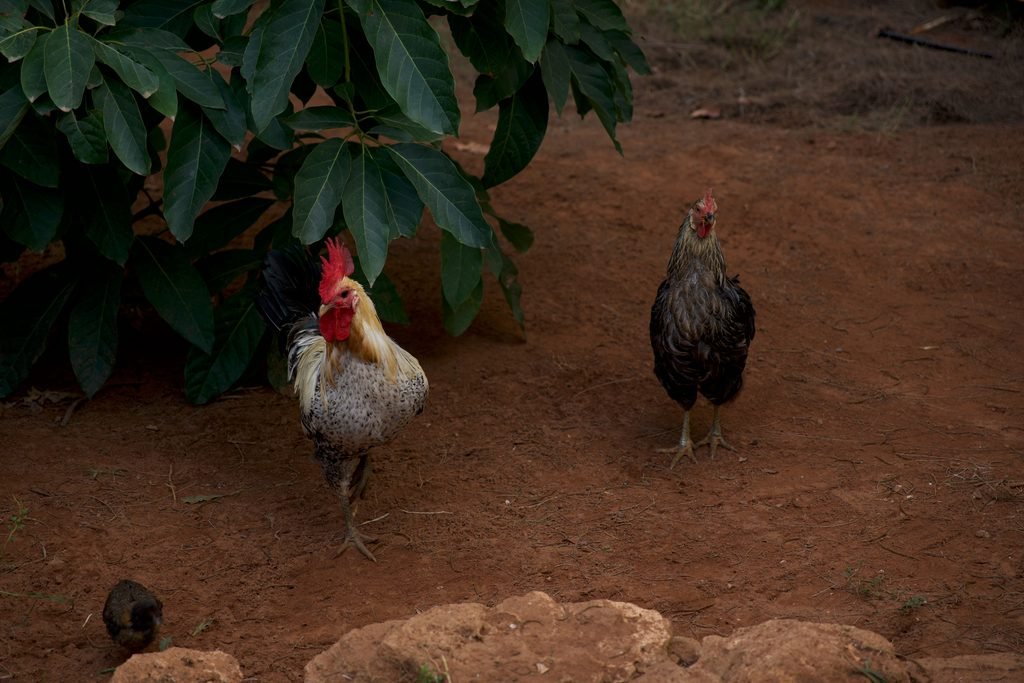
Compact does not mean that security can be simplified. The coop and run still need protection appropriate to the predators found in your area.
Openings should be secured, doors should close reliably, and the enclosure should prevent the rooster from escaping into neighboring properties. Feed storage also needs protection from rodents and other animals.
Predator risks vary widely between countries and regions, so enclosure design should reflect the animals present where you live rather than copying a coop design intended for a completely different environment.
What About Free-Ranging in a Small Backyard?
Allowing a rooster access to the entire yard can provide more room for movement, but it creates additional management issues. The property needs secure boundaries, and the bird should not be able to wander into neighboring yards or public areas.
Free-ranging also does nothing to contain crowing. A rooster calling in the open may be more noticeable to nearby residents than the same bird calling from inside a substantial coop.
Gardens, patios, children’s play areas, pets, predators, and manure management should also be considered before giving poultry unrestricted access to a compact yard.
Will a Rooster Damage a Small Backyard?
Roosters scratch and forage like other chickens. On a small property, repeated activity can quickly disturb mulch, garden beds, young plants, and lawn areas.
A secure run can protect parts of the garden, but concentrating the bird in one area increases wear inside the run. Rotating access between suitable areas, protecting sensitive plants, and maintaining the run surface can help when the property layout allows it.
Expect some change to any ground that chickens use regularly. A small grass run should not be assumed to remain a lawn indefinitely.
How to Keep Neighbors in Mind
Even when rooster keeping is legal, nearby residents will experience the practical effects of your setup. Consider where people sleep, where they spend time outdoors, and how close the coop sits to their home.
If appropriate, discussing the rooster with neighbors can reveal concerns before they become formal complaints. A neighbor may have a bedroom directly facing the proposed coop or work hours that make crowing particularly disruptive.
Our guide on how to keep a rooster without annoying your neighbors brings together placement, morning management, housing, sanitation, and communication strategies.
What Makes a Small Backyard More Suitable?
A small backyard has a better chance of working when rooster keeping is legal, the coop can be positioned away from neighboring bedrooms, enough room remains for a proper run, and the property has good drainage and secure boundaries.
Existing solid structures may help with placement when they interrupt direct sound paths without compromising the rooster’s housing. A well-designed coop can also reduce some early-morning sound while maintaining adequate ventilation.
Most importantly, the available area should feel comfortably adequate after the full setup is planned. If every inch has to be squeezed to fit the coop, run, setbacks, access paths, and other household uses, the property may be too constrained.
When Is a Backyard Too Small for a Rooster?
A backyard is effectively too small when it cannot provide suitable housing and outdoor space while also meeting applicable laws and reasonable management requirements.
This may happen even when the total yard area sounds adequate on paper. Required setbacks can eliminate possible coop locations, nearby bedrooms can make crowing difficult to manage, or the remaining run may be too small for appropriate long-term use.
The answer should come from the usable layout rather than the property’s headline square footage.
Small Suburban Backyard vs. Small Rural Backyard
Two backyards of identical size can present completely different rooster-keeping situations. A compact suburban lot surrounded by several houses places the bird close to multiple listeners. A similarly sized fenced yard attached to a larger rural property may have much greater separation from the nearest residence.
Zoning can also differ. Some authorities prohibit roosters in residential zones while permitting them on rural or larger-lot properties. Eurobodalla Council in Australia, for example, currently allows roosters in specified rural areas while prohibiting them in residential areas because of noise concerns.
This is why yard dimensions alone cannot answer whether a particular property is suitable.
A Practical Small-Backyard Rooster Setup
Start by confirming that a rooster is permitted at the property. Mark any required setbacks and identify the remaining legal locations for poultry housing.
From those locations, choose the site that balances neighbor separation with drainage, shade, ventilation, weather protection, predator security, and convenient daily access. Provide an appropriately sized coop and secure run rather than trying to make the smallest possible structure work.
Plan for crowing from the beginning. Use solid, well-maintained housing, preserve necessary ventilation, avoid unnecessary nighttime lighting, and consider a reasonable morning routine if the coop provides useful sound reduction. Keep feed, manure, water, and bedding well managed so the rooster does not create additional odor, pest, or sanitation problems.
Frequently Asked Questions
Can you keep a rooster in a small backyard legally?
Can you keep a rooster in a small backyard legally depends on the rules applying to your exact property. Some jurisdictions allow roosters, some require permits or particular setbacks, and others prohibit them in residential areas. Check your local authority’s current poultry, zoning, and nuisance rules before acquiring a rooster.
How big should a backyard be for one rooster?
There is no universal minimum backyard size. The property needs enough usable space for appropriate housing and an outdoor area while complying with local setbacks and allowing practical separation from nearby homes.
Can one rooster live in a small coop?
A compact coop can be suitable when it provides adequate usable space, ventilation, roosting, shelter, and security and the rooster has regular access to a larger outdoor area. A tiny enclosure should not become the bird’s entire permanent living space.
Will a rooster annoy neighbors in a small yard?
It is possible. Roosters can crow before sunrise and throughout the day, and close neighboring homes make the sound more likely to be noticeable. Good placement and housing may reduce the impact but cannot guarantee silence.
Can you soundproof a rooster coop in a small backyard?
You can reduce some sound transmission through appropriate construction, but a safe poultry coop should not be completely sealed. Ventilation must remain adequate, and soundproofing does not eliminate outdoor crowing.
Are bantam roosters better for small backyards?
Their smaller body size can make housing easier, but bantam roosters still need suitable space and still crow. A bantam should not be chosen on the assumption that nearby neighbors will not hear him.
Can you keep a rooster if houses are close together?
That depends first on local law and then on the actual property. Close housing increases the risk of noise disturbance, particularly during predawn crowing. On some densely developed properties, keeping a rooster may not be practical even when there is physically enough room for a coop.
Final Thoughts
Can you keep a rooster in a small backyard? Potentially, but yard size alone cannot answer the question. A suitable property needs enough usable space for proper housing and movement while also satisfying local regulations, neighbor considerations, sanitation requirements, and the rooster’s normal needs.
Start with legality, then evaluate the actual layout. Consider coop and run space, neighboring bedrooms, setbacks, drainage, ventilation, predator security, and how you will manage predawn crowing. A thoughtfully designed small yard may work considerably better than a larger yard with poor housing and an unsuitable coop location.
If the only way to fit a rooster is to compromise his space, block ventilation, ignore local rules, or place him immediately beside neighboring homes, the backyard is not suitable simply because a coop can physically fit. The goal should be a setup that works for the rooster, the property, and the people living around it.