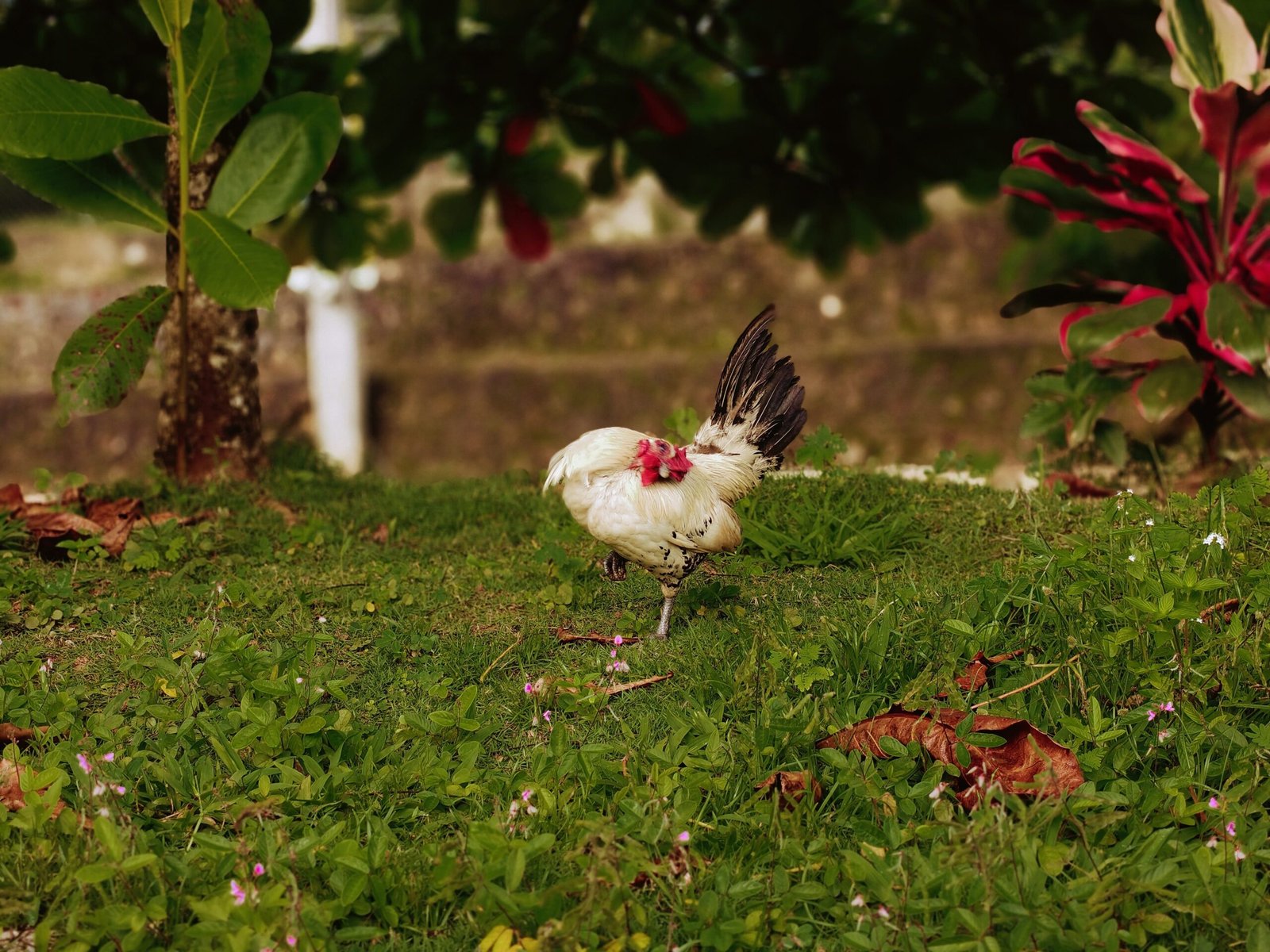
Do smaller roosters crow less than larger roosters? Not necessarily. There is no well-established scientific rule showing that small roosters crow fewer times per day simply because they have smaller bodies. A bantam may sound different from a large rooster, but crowing frequency is influenced by factors such as biological timing, social rank, age, and the behavior of the individual bird.
This distinction matters when choosing a rooster for a small backyard. A compact bird may be easier to accommodate physically, yet still crow repeatedly before sunrise or throughout the day. Understanding what affects the number of crows is more useful than assuming that a smaller rooster will automatically create less noise.
Does Rooster Size Affect How Often They Crow?
Body size alone is not a dependable way to predict crowing frequency. Small roosters are fully capable of normal male vocal behavior, including predawn crowing, responses to other roosters, and calls associated with their social environment.
It is possible for one small rooster to crow less frequently than a particular large rooster, but the reverse can also happen. That comparison tells us about the two individual birds rather than proving a general rule about body size.
Research on rooster crowing has identified several important influences, particularly the internal biological clock and social hierarchy. However, those findings should not be mistaken for evidence that bantams consistently crow fewer times than standard-sized chickens.
Crowing Less Often Is Different From Crowing More Quietly
When people ask whether small roosters crow less, they sometimes mean that the birds make less noise overall. That question combines two separate characteristics: how often a rooster crows and how noticeable each crow sounds.
Crowing frequency refers to the number of calls a rooster makes over a period of time. Loudness describes the perceived strength of those calls. Pitch, duration, distance, and the surrounding environment also affect how a crow is experienced by someone listening.
A small rooster might have a relatively high-pitched crow and still call repeatedly during the morning. A larger rooster might produce a deeper or more substantial-sounding call but crow less frequently. Neither possibility establishes a universal rule about which bird causes more disturbance.
Our guide on whether bantam roosters crow loudly explores the sound of their calls, while this article focuses primarily on how often those calls occur.
What Scientific Research Says About Crowing Frequency
Studies of domestic roosters show that crowing is influenced by biological and social conditions rather than occurring at a fixed rate throughout the day. Researchers have examined the timing of predawn calls, differences between dominant and subordinate males, and changes associated with the birds’ social environment.
A study published in Animal Behaviour in 1995 found that dominant roosters crowed significantly more often than subordinate males in the conditions examined. The researchers also observed differences in crow characteristics associated with social status. Their study of crowing in relation to rooster status provides evidence that social position can influence crowing frequency.
That finding does not mean every dominant rooster always crows more than every subordinate rooster. It shows that social rank can matter, which is a different and more useful conclusion than assuming that a bird’s physical size determines his daily crow count.
Why Social Rank Can Matter More Than Size
Roosters establish social relationships within groups, and their position in the hierarchy can influence vocal behavior. A bird’s opportunity or tendency to crow may therefore change depending on the other males present and the stability of the group.
In a 2015 study published in Scientific Reports, researchers found that the highest-ranking rooster generally initiated predawn crowing, followed by subordinate birds in social order. The presence of the dominant male also reduced the number of predawn crows produced by subordinates in the experimental groups.
The Scientific Reports research on rooster rank and predawn crowing demonstrates why flock structure should be considered when interpreting how often a particular rooster calls.
A small rooster occupying a dominant position may behave differently from a small rooster living under a more dominant male. Body size is only one characteristic of the bird and cannot explain the entire social situation.
Does the Time of Day Affect How Often a Rooster Crows?
Yes. Roosters do not necessarily crow at the same rate throughout the day. Their vocal behavior follows daily patterns, with predawn and morning periods often being especially noticeable.
A 2013 study published in Current Biology demonstrated that predawn crowing is regulated by an internal circadian clock. The researchers also found that external cues, including light and calls from other roosters, can influence crowing responses, with those responses themselves affected by biological timing.
The Current Biology study on the timing of rooster crowing helps explain why a rooster may begin calling before daylight rather than waiting for sunrise.
This applies to small roosters as well as larger ones. A bantam does not lose his internal timing system because of his smaller body size.
Do Bantam Roosters Crow Less Than Standard Roosters?
There is no dependable evidence that bantam roosters, as a group, consistently crow fewer times than standard-sized roosters. Bantam is a size category that includes several different breeds and miniature varieties, so it is already a broad group rather than a single type of chicken.
Individual bantams may vary considerably in crowing frequency. Their social position, age, daily routine, and surroundings can influence their behavior, just as these factors can affect larger roosters.
It is therefore misleading to assume that choosing a bantam automatically means fewer morning calls. A small rooster may be easier to house on a compact property, but that advantage should not be confused with a predictable reduction in crowing.
Do Silkie Roosters Crow Less Because They Are Small?
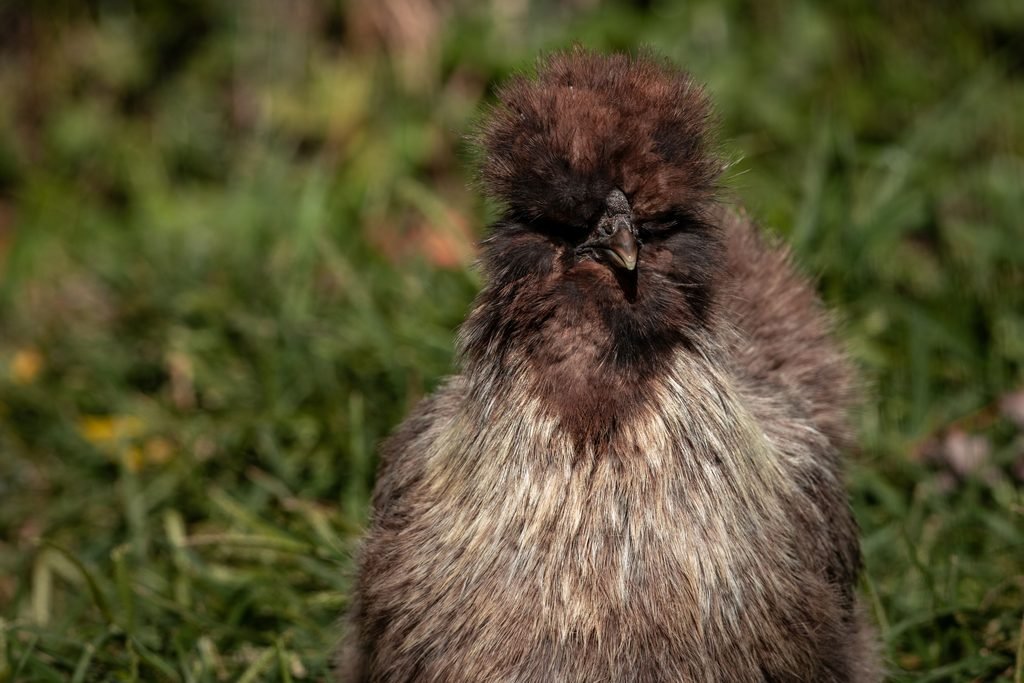
Silkies are often selected for their distinctive appearance and reputation for manageable temperament. They are commonly kept in bantam form, but that does not establish that they crow less frequently than other roosters.
A calm bird can still crow repeatedly. Crowing is a normal male chicken behavior, and a gentle temperament around people does not reliably predict how many times a rooster will call during the morning.
Our article on Silkie versus other bantam rooster noise compares breed-related expectations without claiming that one small breed is scientifically proven to be the quietest.
Does Breed Matter More Than Body Size?
Breed can influence physical characteristics and some behavioral tendencies, but it does not provide a simple, dependable prediction of daily crowing frequency. Two roosters from the same breed may differ substantially in their individual behavior.
Comparisons become especially difficult when the birds live in different environments. A rooster kept alone, a dominant male in a mixed flock, and a subordinate male in a bachelor group may have different crowing patterns for reasons unrelated to breed.
Without controlled comparisons that account for these factors, assigning a fixed crowing rate to a particular breed would give readers a false sense of certainty.
Does Age Affect How Often a Rooster Crows?
Age and maturity can influence crowing behavior. Young male chickens develop their adult vocalizations as they mature, and their behavior may change as they establish social relationships and become more confident within a flock.
Research published in Applied Animal Ethology in 1977 examined crowing and mating behavior in different chicken lines. The researchers observed differences in crowing patterns across ages and lines, including changes that did not follow the same direction in every group. Their study of crowing and mating behavior in selected chicken lines illustrates that crowing frequency can vary with age and genetic background.
For someone choosing a young bantam, this means early behavior should not be treated as a permanent prediction. A cockerel that rarely crows during an early stage of development may become more vocal as he matures.
Can a Small Rooster Crow More After Becoming Dominant?
Changes in social rank can affect crowing. When the hierarchy of a group changes, individual males may alter their vocal behavior as their relationships with other birds change.
Research on stable and disrupted groups of male domestic chickens has found associations between dominance, aggression, and crowing frequency. In one study, removing the highest-ranking male from a group was followed by increased crowing among some of the remaining birds, depending on the experimental conditions.
The research on social dominance and crowing in male chickens reinforces the importance of flock circumstances when evaluating a rooster’s vocal behavior.
It would therefore be a mistake to conclude that a small rooster is naturally quiet simply because he crows infrequently while living with another, more dominant male.
Do Roosters Crow More When They Hear Other Roosters?
Hearing another male can prompt a rooster to crow, although the response is not identical in every bird or situation. Vocal communication is part of normal rooster behavior, and calls from nearby males can become relevant even when the birds do not share an enclosure.
Biological timing and social circumstances influence those responses. A rooster may answer another male at certain times while remaining less responsive at others.
Our guide on whether hearing another rooster increases crowing explains how this interaction can affect backyard noise.
Does Keeping a Small Rooster Alone Reduce Crowing?
Not reliably. Removing other roosters changes the social environment, but it does not eliminate the internal biological timing or other influences involved in crowing.
A rooster living alone may still crow before sunrise, respond to sounds and activity, and call at intervals throughout the day. Some birds may behave differently when separated from a group, but there is no general rule that solitary housing produces fewer crows.
Chickens are also social animals, so housing decisions should not be based solely on an attempt to suppress vocal behavior. Appropriate social conditions and overall welfare remain important regardless of the bird’s size.
Can a Small Rooster Crow Frequently Without Hens?
Yes. Hens are not required for a rooster to crow. A male chicken can produce normal crowing behavior without living with females, and the absence of hens does not guarantee fewer calls.
Social rank, biological timing, and environmental cues remain relevant. A rooster without hens may still respond to another male nearby or begin crowing before sunrise.
Our guide on keeping a rooster without hens covers the broader social and housing considerations of a hen-free arrangement.
Why a Small Rooster Can Still Disturb Neighbors
Even when a small rooster’s crow sounds different from that of a large bird, repeated calls can be disruptive. A rooster that crows frequently during the early morning may attract more attention than a bird that produces fewer calls, regardless of their relative body sizes.
Distance, building placement, open windows, background noise, and the direction of sound all influence what nearby residents hear. A crow does not need to be exceptionally loud to become noticeable when the surrounding neighborhood is quiet.
This is why selecting a smaller rooster should not be treated as a complete noise-management strategy. The location of the coop and the proximity of neighboring homes still deserve careful consideration.
How to Compare Crowing Frequency Before Choosing a Rooster
If you are considering an adult rooster, observing the individual bird is more useful than relying entirely on his breed or size. Ask about his established crowing pattern and, where possible, observe him at different times of day.
A short afternoon visit may provide little information about predawn behavior. Roosters can be much more vocal at particular times, and a bird’s response to other chickens or activity may differ from one environment to another.
It also helps to understand the bird’s current social position. A subordinate rooster may behave differently after moving to a property where he becomes the only male.
These observations cannot guarantee future behavior, but they provide a more realistic starting point than assuming that a small rooster must crow less.
Can You Measure How Often Your Rooster Crows?
Yes. If you already own a rooster, keeping a simple record can help you understand his normal pattern. Count or record crowing episodes during consistent observation periods, such as the time before sunrise, the first hour after daylight, and a comparable period later in the day.
Use the same observation windows across several days and note changes in routine, weather, nearby activity, or flock composition. If you use a recording device, make sure it is positioned safely and does not disturb the birds.
A short record will not predict every future day, but it can show whether your particular rooster tends to crow repeatedly at certain times. That information is more directly useful for managing a backyard than a general claim about small breeds.
Can You Reduce Crowing by Choosing a Smaller Breed?
Choosing a smaller breed may help with some practical housing considerations, but it is not a dependable method of reducing crowing frequency. The number of calls a rooster produces cannot be predicted accurately from body size alone.
If noise is a major concern, consider the individual bird, local rooster regulations, distance from neighboring homes, coop placement, and the suitability of the property before acquiring a rooster.
Our article on how to reduce early-morning rooster crowing discusses practical management approaches without promising that normal crowing can be eliminated.
Does a Better Coop Make a Small Rooster Crow Less?
A well-designed coop provides appropriate shelter, ventilation, security, and opportunities for normal rest. Those features are important for welfare, but a good coop does not automatically reduce the biological tendency to crow.
Coop construction and placement may influence how much sound reaches nearby people, which is different from changing the number of calls the rooster produces. A bird may continue crowing inside an enclosure even when the structure reduces some of the sound heard outside.
Our guide on the best rooster coop setup for a small backyard explains how to balance usable space, ventilation, security, and noise-conscious placement.
What If Quiet Mornings Are Essential?
If you live close to neighbors or in a location with strict noise requirements, do not rely on a bantam or other small rooster to provide quiet mornings. Even a bird that crows relatively infrequently may produce calls at times when they are particularly disruptive.
Some jurisdictions restrict or prohibit roosters regardless of size. Local rules should be checked before choosing a breed or building an enclosure.
Where regular rooster crowing is incompatible with the property, selecting a smaller rooster is not a reliable workaround. The decision should be based on what the location can reasonably accommodate rather than on the hope that a particular breed will remain quiet.
Frequently Asked Questions
Do smaller roosters crow less than big roosters?
There is no established general rule that smaller roosters crow fewer times than larger ones. Crowing frequency is influenced by biological timing, social rank, age, and individual behavior, so body size alone is not a reliable predictor.
Do bantam roosters crow less often?
Not necessarily. Bantam roosters can crow repeatedly before sunrise and throughout the day. Their smaller size does not establish that they will produce fewer calls than standard-sized roosters.
Do Silkie roosters crow less than other breeds?
There is no dependable evidence that Silkie roosters consistently crow fewer times than other breeds. Individual Silkies vary, and a calm temperament does not automatically mean infrequent crowing.
Does a smaller rooster have a quieter crow?
Small roosters may have different-sounding crows, but smaller size does not guarantee that a call will seem quiet. Pitch, perceived loudness, distance, and the surrounding environment all affect how noticeable it is.
Do young roosters crow less than adults?
Young cockerels may have less developed crowing behavior, and their vocal patterns can change as they mature. A young bird’s current crowing frequency should not be treated as a permanent prediction of adult behavior.
Can a small rooster crow before sunrise?
Yes. Predawn crowing is influenced by an internal biological clock, and bantam roosters can begin calling before daylight just as larger roosters can.
Will a rooster crow less if he is the only male?
Not necessarily. Removing other males changes the social environment, but a rooster can still crow frequently when he is the only male. His biological timing and individual behavior remain important.
Which rooster size is best for a quiet backyard?
Neither small nor large roosters can be guaranteed to remain quiet. If noise is a serious concern, evaluate the actual bird, the property, local regulations, and nearby homes rather than choosing solely by body size.
Final Thoughts
Do smaller roosters crow less? The available research does not establish that they do. Small roosters can crow frequently, and studies of rooster behavior show that social rank, biological timing, maturity, and flock circumstances can influence the number and timing of calls.
Body size may affect how a rooster looks and how his crow sounds, but those characteristics should not be confused with crowing frequency. A bantam can produce repeated predawn calls, while a larger rooster may be less vocal in a particular situation. Neither example proves a general rule about size.
If you are choosing a rooster for a backyard, pay attention to the individual bird and the conditions where he will live. A smaller rooster may suit your available space, but he should never be chosen on the assumption that his size alone will deliver quieter mornings.