Finding the quietest rooster breeds for urban backyards can be challenging because no rooster breed is guaranteed to stay quiet. Silkies, Cochin bantams, Seramas, and several other breeds are often considered by backyard chicken keepers, but a calm temperament or small body size does not necessarily mean softer or less frequent crowing.
For anyone living near neighbors, the most important factors are the individual rooster’s vocal behavior, the timing of his calls, the distance between properties, and whether local regulations permit roosters at all. Breed selection still matters for housing, temperament, and general care, but it should never be treated as a reliable way to eliminate crowing.
This guide compares six breeds worth considering, explains what makes their characteristics different, and helps you decide whether a rooster is a realistic choice for your backyard.
Are Some Rooster Breeds Really Quieter Than Others?
Individual roosters can differ considerably in how often they crow and how noticeable their calls sound. However, there is not enough reliable comparative research to establish a universal ranking of rooster breeds from quietest to loudest. Many claims about quiet breeds come from personal observations, which can be useful but do not necessarily predict the behavior of another bird.
It also helps to distinguish crowing volume from crowing frequency. A rooster with a relatively soft-sounding call may crow repeatedly throughout the morning, while another bird with a more powerful crow may call less frequently. Both patterns can cause problems in a residential neighborhood.
Research published in Current Biology found that predawn crowing is regulated by an internal biological clock, while external cues such as light and other roosters can also influence vocal behavior. The study on the circadian timing of rooster crowing explains why even a calm rooster may begin calling before sunrise.
Six Rooster Breeds to Consider for Urban Backyards
The breeds below are not ranked by noise level. Instead, they represent different sizes and husbandry characteristics that may appeal to backyard keepers. None has been scientifically established as consistently quieter than the others.
| Breed | Typical size category | Why people consider it | Main consideration |
|---|---|---|---|
| Silkie | Small; often bantam | Distinctive appearance and gentle reputation | Can still crow frequently |
| Cochin bantam | Bantam | Compact, rounded ornamental breed | Feathered feet need suitable ground conditions |
| Serama | Very small bantam | Exceptionally compact body size | Small size does not guarantee a quiet crow |
| Belgian d’Uccle | Bantam | Small ornamental breed with feathered legs | No proven low-noise advantage |
| Brahma | Large | Substantial breed with a calm reputation | Requires more space and suitable roosting |
| Orpington | Large | Popular backyard breed with a docile reputation | Gentleness does not predict crowing frequency |
Silkie Roosters
Silkies are a popular ornamental breed, recognizable by their unusual feathering, crests, and rounded appearance. Their reputation for gentle behavior makes them appealing to people who want chickens that are manageable around the backyard. However, a Silkie rooster is still capable of regular crowing, including calls during the early morning.
Because Silkies are commonly kept in bantam form, their small size can make them seem like an obvious choice for a compact property. The limitation is that body size does not reliably predict how often a rooster will crow. Some individual Silkies may be relatively unobtrusive, while others produce repeated, noticeable calls.
Silkie care also requires attention to weather protection and feather condition. Their distinctive plumage should be kept in suitable housing with dry resting areas and adequate protection from rain, mud, and predators. If this breed interests you, our guide on whether Silkie roosters are quiet examines their crowing expectations in greater detail.
Cochin Bantam Roosters
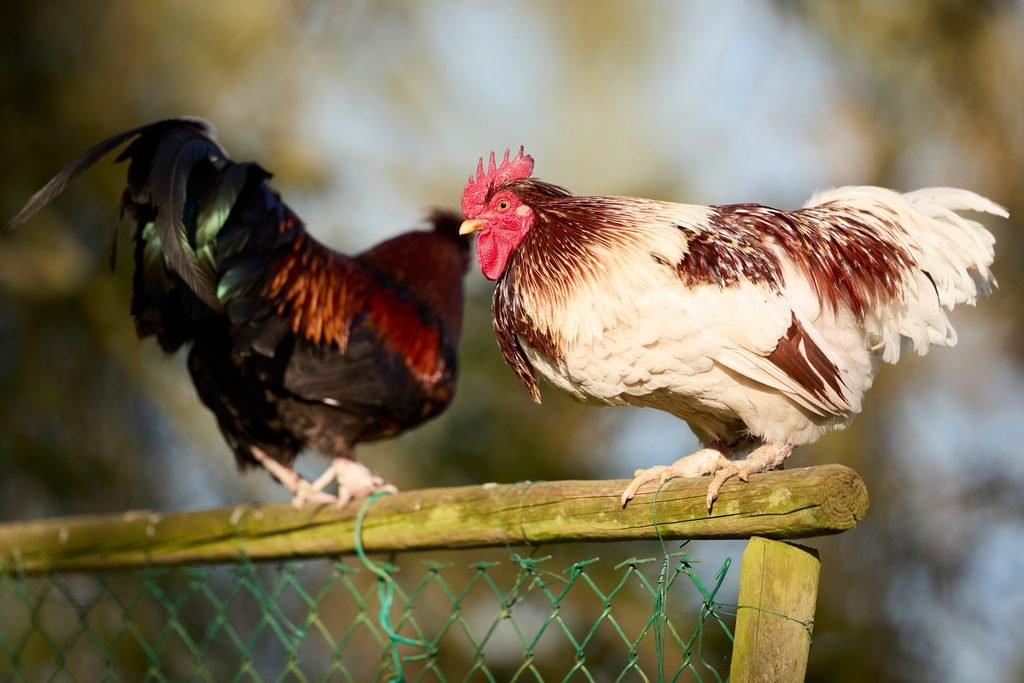
Cochin bantams are compact chickens with rounded bodies and abundant feathering. They are frequently considered by ornamental poultry keepers who appreciate their appearance and generally calm reputation. Their smaller physical size can be convenient when planning housing, although they still need sufficient space for normal movement, roosting, and outdoor activity.
A Cochin bantam’s temperament should not be confused with its vocal behavior. A bird that is easy to handle may still crow repeatedly before sunrise, and there is no dependable evidence that Cochin bantams consistently produce quieter calls than Silkies or other bantams.
Their feathered legs and feet also make drainage and ground conditions particularly important. Persistently muddy runs can create avoidable husbandry problems. A Cochin bantam may be a suitable ornamental choice where rooster keeping is permitted, but its appeal should rest on overall care compatibility rather than an expectation of silence.
Serama Roosters
Seramas are among the smallest chicken breeds, making them especially interesting to people with limited backyard space. Their compact bodies can be an advantage when considering enclosure dimensions, although even very small chickens need secure housing, appropriate social conditions, and enough usable room to remain active.
Small size does not necessarily mean a less noticeable crow. A Serama may produce a relatively high-pitched call that stands out against quiet surroundings, particularly during the early morning. Crowing frequency also varies between individuals, so choosing a Serama does not guarantee fewer calls.
For an urban keeper, the practical question is whether the actual rooster’s behavior is compatible with the property. A very small bird can still disturb nearby residents if he crows repeatedly close to bedroom windows.
Belgian d’Uccle Roosters
Belgian d’Uccles are small ornamental bantams known for features such as feathered legs, beards, and distinctive plumage. They can appeal to keepers who want a compact chicken with a different appearance from a Silkie or Cochin bantam.
As with other bantams, their size does not establish a reliable noise advantage. An individual Belgian d’Uccle may be less vocal than another rooster, but that observation cannot be applied automatically to the entire breed. Crowing behavior depends on more than physical appearance.
Housing should account for their feathered feet, appropriate ground conditions, shelter, and protection from predators. These practical requirements deserve more attention than unsupported claims that the breed is especially quiet.
Brahma Roosters
Brahmas are large chickens with substantial bodies and feathered legs. They are often associated with a calm disposition, which can make them attractive to keepers who prefer larger birds. However, their size creates different housing considerations from those of bantams, particularly in a confined backyard.
A Brahma needs sufficient space to move comfortably, suitable roosting arrangements, and an enclosure designed for a heavier bird. A small coop intended for miniature chickens may not provide adequate accommodation.
Despite their calm reputation, Brahma roosters can crow prominently. There is no reliable basis for assuming that a large, docile breed will call less frequently than a smaller, more active-looking rooster. For urban properties, space and neighbor proximity may be more important limitations than temperament.
Orpington Roosters
Orpingtons are widely kept backyard chickens, valued for their substantial build and generally docile reputation. They may appeal to people who want a traditional-looking chicken that fits into a properly managed flock.
However, friendliness and crowing are separate characteristics. An Orpington rooster may be calm around people while still producing regular morning calls. Choosing this breed because it is often described as gentle does not provide a dependable noise reduction strategy.
Orpingtons also need housing appropriate to their larger bodies, including adequate floor space, comfortable roosting, ventilation, and outdoor access. They may suit properties with more available room, but their size and temperament do not make them automatically better for noise-sensitive neighborhoods.
What Actually Determines How Much a Rooster Crows?
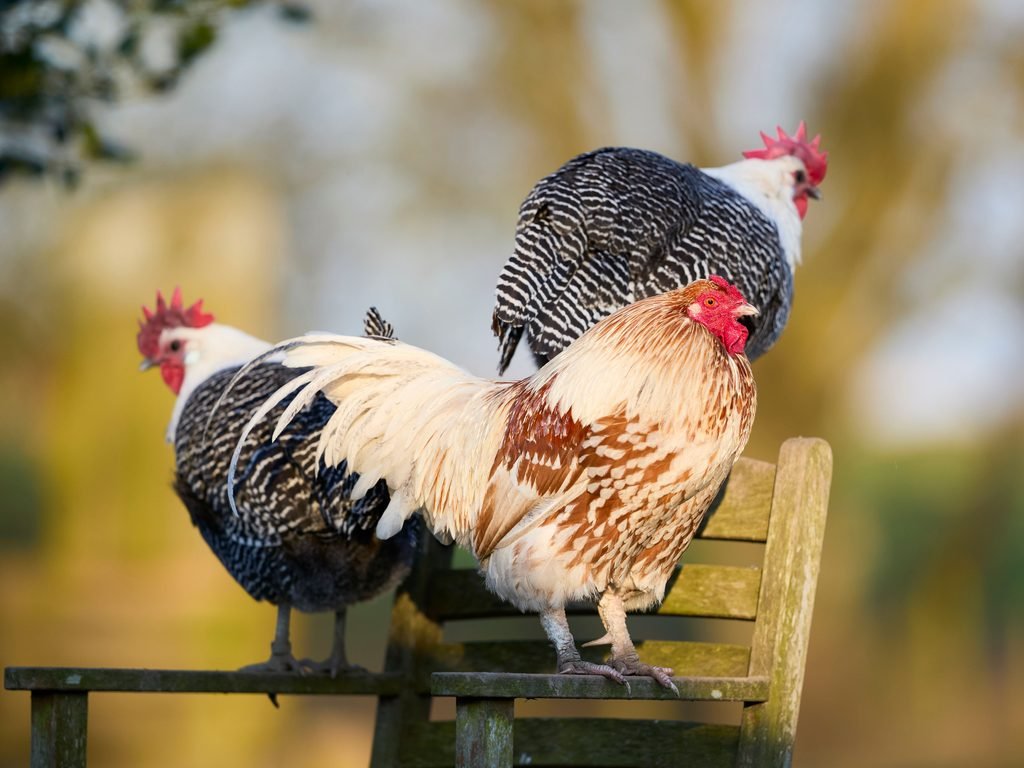
When evaluating the quietest rooster breeds for urban backyards, it is more useful to understand the factors that influence crowing than to rely on breed reputation alone. A rooster’s biological timing, social environment, maturity, and individual behavior can all affect the frequency and timing of his calls.
Biological Timing and Early-Morning Crowing
Roosters have an internal circadian rhythm that helps regulate when they crow. This explains why predawn calls can occur even before daylight becomes visible. External light and environmental activity can influence behavior, but darkness alone does not reliably prevent a rooster from crowing.
This matters in urban settings because a rooster that is relatively quiet during the afternoon may be considerably more vocal early in the morning. Anyone considering an adult bird should try to learn about its established morning routine rather than judging it during a single daytime visit.
Social Rank and Other Roosters
Social relationships also influence crowing. A study published in Scientific Reports found that the highest-ranking rooster in the experimental groups generally initiated predawn crowing, followed by subordinate males. The presence of the dominant bird also reduced some predawn crowing by lower-ranking roosters.
The research on rooster social rank and crowing order shows why a rooster’s behavior may change when his social circumstances change. A bird that crows infrequently while living with a dominant male may behave differently after moving to a new flock.
Individual Differences and Maturity
Individual roosters can differ in their vocal behavior even when they belong to the same breed. Age and maturity may also affect crowing patterns, particularly as young males develop adult behavior and establish their place within a flock.
For this reason, choosing a young cockerel because he currently makes little noise is not a reliable way to secure a quiet adult rooster. His crowing may change as he matures.
Our article on whether smaller roosters crow less often explains why body size alone cannot predict crowing frequency.
Are Bantam Roosters Better Than Large Breeds for City Living?
Bantams may offer practical advantages when physical space is limited. Their smaller bodies can make certain housing arrangements easier to plan, although they still require suitable shelter, ventilation, secure outdoor space, and appropriate social conditions.
However, bantams are not necessarily quieter than large roosters. A small bird may produce a sharp, noticeable crow, and frequent calls can create a disturbance regardless of the rooster’s size. There is also considerable variation among bantam breeds, which should not be treated as a single uniform group.
For readers specifically comparing smaller breeds, our guide to quiet bantam rooster breeds and what to consider explores the limitations of breed-based noise expectations.
How to Choose a Rooster for an Urban Backyard
Choosing a rooster for a residential property requires more than comparing breeds. The available space, local regulations, distance to neighbors, housing conditions, and the individual bird’s behavior should all influence the decision.
- Check whether roosters are legally permitted at your property, including any applicable zoning, council, municipal, or housing restrictions.
- Consider how close the coop would be to neighboring bedrooms, windows, and outdoor living areas.
- Compare breeds based on adult size, climate suitability, temperament, feather care, and flock compatibility rather than unsupported noise rankings.
- Where possible, observe an adult rooster and ask about his established morning crowing pattern.
- Provide secure housing with adequate ventilation, dry bedding, shade, predator protection, and usable outdoor space.
- Be realistic about the possibility of early-morning crowing even after careful breed selection.
These steps cannot guarantee that a rooster will remain quiet, but they help identify whether keeping one is practical and responsible in the first place.
Can Coop Placement Reduce Noise for Neighbors?
Thoughtful coop placement may reduce how much crowing reaches nearby homes. Distance, surrounding buildings, solid construction, and the direction of major openings can influence how sound travels. A coop positioned away from neighboring bedroom windows may be preferable to one placed directly beside a shared boundary.
However, no ordinary backyard coop can guarantee that crowing will be inaudible. Roosters can continue calling inside an enclosure, and sound may travel through openings needed for ventilation.
Never seal a coop tightly or block necessary airflow in an attempt to prevent noise. Poor ventilation can allow moisture, heat, and airborne contaminants to accumulate, compromising the birds’ welfare.
For practical placement advice, see our guide on where to position a rooster coop to reduce noise.
Are Roosters Allowed in Urban Backyards?
Rooster regulations vary considerably between locations. Some cities and councils prohibit male chickens in residential areas, while others allow them subject to zoning, nuisance rules, or specific housing conditions. The fact that a rooster is small or generally calm does not necessarily exempt him from these restrictions.
For example, Brisbane City Council in Australia states that roosters cannot be kept in residential areas. Its official guidance on chickens and other livestock explains the local rules.
This is one example rather than a universal standard. Before acquiring a rooster, check the current requirements for your exact address, including any property-specific restrictions that may apply.
When a Hen-Only Flock Makes More Sense
If your main goal is to keep chickens for companionship or egg production, a rooster may not be necessary. Hens lay eggs without a male present, although a rooster is required for fertilized eggs intended for breeding.
Hens are not silent and can produce noticeable calls of their own, but a hen-only flock avoids the characteristic male crowing that often creates problems in residential neighborhoods. For people living close to neighbors or in areas where roosters are prohibited, this can be a more practical option than searching for a supposedly silent breed.
Even where roosters are permitted, consider whether their normal vocal behavior is compatible with the surrounding homes. A breed’s appearance or gentle reputation should not outweigh that basic consideration.
Frequently Asked Questions
What is the quietest rooster breed for an urban backyard?
No rooster breed has been reliably established as the quietest across all individuals and circumstances. Silkies, Cochin bantams, Seramas, and other breeds may be worth considering for their general characteristics, but none guarantees quiet crowing.
Are Silkie roosters quieter than other breeds?
Not necessarily. Silkies have a gentle reputation, but that does not establish that they consistently crow less loudly or less frequently than other breeds. Individual behavior varies.
Do Serama roosters crow less because they are small?
There is no dependable evidence that Seramas consistently crow fewer times simply because they are very small. Their calls may sound different from those of larger birds, but small size does not guarantee less noise.
Are Brahma and Orpington roosters quiet?
Both breeds are often associated with calm temperaments, but they remain capable of regular crowing. Their generally docile reputations should not be interpreted as evidence of quieter or less frequent calls.
Can a quiet rooster still disturb neighbors?
Yes. Even a rooster that crows relatively infrequently may disturb nearby residents if he calls before sunrise or close to bedroom windows. The timing and location of the sound can matter as much as its perceived loudness.
Will a dark coop stop a rooster from crowing early?
No. Predawn crowing is influenced by an internal biological clock, so darkness alone cannot reliably prevent morning calls. Any coop used for overnight housing must maintain suitable ventilation and comfortable conditions.
Can you keep a bantam rooster in a city?
That depends on local regulations. Some jurisdictions permit roosters under specific conditions, while others prohibit them in residential areas. Being a bantam does not automatically exempt a rooster from those rules.
Final Thoughts
The quietest rooster breeds for urban backyards cannot be identified through a dependable universal ranking. Silkies, Cochin bantams, Seramas, Belgian d’Uccles, Brahmas, and Orpingtons have different characteristics, but none can be relied upon to provide quiet mornings.
For a residential property, the best approach is to evaluate the individual rooster, understand his housing needs, check local rules, and consider how regular crowing could affect nearby homes. A smaller or calmer breed may suit your preferences, but it is not a substitute for realistic noise planning.
If early-morning crowing would be unacceptable or roosters are prohibited where you live, a hen-only flock is generally a more practical choice than relying on an uncertain breed reputation.