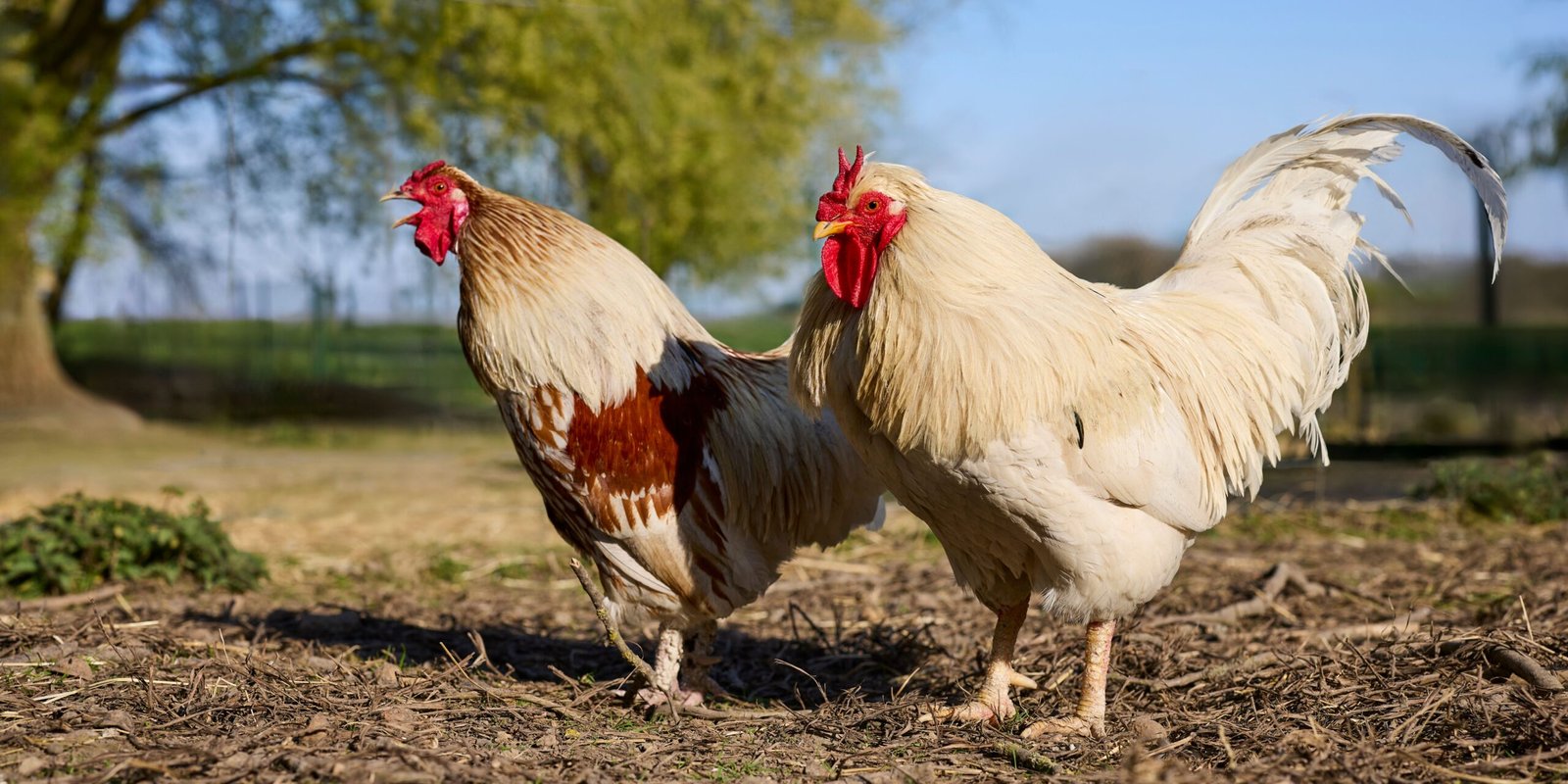
Does having more than one rooster make them crow more? Keeping multiple roosters can create more overall crowing because there are several birds capable of calling and one rooster’s crow can be followed by others. However, it does not necessarily make every individual rooster crow more frequently. Social hierarchy can actually suppress some crowing by lower-ranking males.
This distinction is important. A flock containing three roosters has three potential sources of crowing, so the total noise may be greater than with one rooster. At the same time, the birds establish social relationships that can influence who crows first, who crows most often, and when subordinate roosters choose to call.
Do Multiple Roosters Crow More Than One Rooster?
Multiple roosters can produce more total crowing simply because more males are capable of vocalizing. If one rooster begins calling and others follow, the result can be a sequence of crows that lasts longer and sounds more intense than a single bird calling alone.
However, scientific research shows that crowing within a group is not random. Roosters establish social hierarchies, and rank can influence both the timing and frequency of their calls.
A study published in Scientific Reports examined groups of four roosters and found that the highest-ranking male generally initiated predawn crowing. Lower-ranking birds followed in descending order of social rank.
The same research found that the presence of the dominant rooster significantly reduced predawn crowing by subordinate males. That makes the relationship between rooster numbers and crowing more complicated than simply multiplying the number of birds by the number of calls.
Why Do Roosters Crow When They Are Together?
Crowing is part of rooster communication and social behavior. When several males live together, each rooster operates within a social environment rather than behaving independently.
Dominance relationships are particularly important. Higher-ranking males generally have priority over resources and can influence the behavior of subordinate birds.
Crowing itself has also been associated with social status. Research published in the journal Animal Behaviour, available through ScienceDirect, found that dominant males in the study crowed significantly more often than subordinate males.
This means the amount of crowing produced by a multi-rooster flock depends partly on how those males interact socially.
Does the Dominant Rooster Crow More?
Research provides evidence that dominant roosters can crow more frequently than subordinate birds under certain conditions.
In the controlled predawn experiments involving groups of four males, higher-ranking roosters tended to crow more frequently than lower-ranking birds. The highest-ranking rooster also almost always produced the first morning crow.
Earlier research examining crowing and social status similarly found higher crow rates among dominant males.
These findings suggest that simply counting the number of roosters in a flock does not tell you how much each bird will contribute to the total noise. Their position within the social hierarchy also matters.
Can a Dominant Rooster Make Other Roosters Crow Less?
Yes. This is one of the most important findings when considering multiple roosters and noise.
The Scientific Reports study found that the presence of a dominant rooster suppressed some predawn crowing by subordinate birds. When researchers removed the highest-ranking rooster, the second-ranking bird took over the leading position and began initiating the morning sequence.
The remaining subordinate roosters then followed the new highest-ranking male. This demonstrates why adding another rooster does not necessarily make each existing rooster increase his crowing. Social suppression can work in the opposite direction.
Why Does One Rooster Crow and the Others Follow?
A familiar pattern in multi-rooster flocks is one bird calling first and the others responding shortly afterward.
Researchers found a structured version of this behavior during the predawn period. The dominant rooster usually started first, with subordinate birds following according to rank. The lower-ranking birds often followed the leading rooster within a relatively short period.
That can create the impression that one rooster has triggered an explosion of noise from the entire flock.
Our previous guide on whether roosters crow more when they hear another rooster examines this rooster-to-rooster response in greater detail.
Does Having Two Roosters Mean Twice the Crowing?
No. Two roosters do not automatically produce exactly twice as many crows as one rooster.
Individual crowing frequency varies, and the relationship between the two males can affect their behavior. One may become dominant and crow relatively frequently while the subordinate male calls less often. In another environment, both birds may produce noticeable sequences of calls.
External factors such as time of day, nearby roosters, lighting, disturbances, and the individual personalities of the birds can further affect the pattern.
There is therefore no reliable formula such as two roosters producing twice the noise or three roosters producing three times the noise.
What Happens When You Keep Three or More Roosters?
As the number of males increases, flock social dynamics become more complicated. More birds are capable of crowing, interacting, and responding to events in the surrounding environment.
Chickens can establish dominance hierarchies in which individuals occupy different social positions. Crowing is one behavior that can reflect those relationships.
Research into socially structured chicken populations describes crowing among the ritualized behaviors associated with dominant males. A scientific review available through ScienceDirect discusses social hierarchy, competition, and dominance signaling in fowl.
More males can therefore mean a more complex social environment as well as more potential sources of crowing.
Do Roosters Compete by Crowing?
Crowing is associated with social status, but it is too simplistic to describe every crow as a direct challenge between males. Studies have found relationships between dominance and crowing frequency, and rooster calls can function as social signals. Dominant males may also respond differently to the calls of other males depending on their status.
At the same time, crowing is influenced by circadian timing and other environmental stimuli. A rooster calling at dawn is not necessarily challenging another bird every time he vocalizes. It is more accurate to view crowing as part of a larger communication and social system.
Can More Roosters Make Morning Crowing Worse?
From a practical noise perspective, yes, multiple roosters can make the morning period more noticeable.
Even when subordinate birds crow less frequently than the dominant male, several birds calling in sequence can extend the period during which crowing is heard. One bird may begin and others may follow, producing repeated calls from different locations within the flock.
Morning crowing can also seem especially prominent because background environmental noise is often relatively low before normal daytime activity begins. If predawn noise is the main problem, our guide to reducing early-morning rooster crowing covers practical environmental factors that can be managed safely.
Will Roosters Crow at the Same Time?
They may crow close together, but research suggests that predawn crowing within established groups can follow a social order rather than every rooster beginning simultaneously.
The dominant bird generally initiates the sequence, after which subordinate males follow. This can happen quickly enough that several calls appear to form one continuous morning chorus.
The timing is also influenced by the birds’ internal circadian clocks, which help roosters anticipate dawn before visible sunrise.
This combination of biological timing and social order helps explain why groups of roosters can sound coordinated in the early morning.
What Happens If the Dominant Rooster Is Removed?
Removing the dominant rooster can change the crowing hierarchy. In the controlled group study, researchers physically removed the highest-ranking male. The second-ranking rooster then became the bird that initiated predawn crowing, and the remaining subordinate males followed him.
This is particularly useful evidence because it shows that the leading role was associated with social position rather than simply one unusually vocal individual. The flock’s social organization can therefore adjust when the hierarchy changes.
Will Separating Roosters Reduce Crowing?

Separation changes the birds’ immediate social environment, but it does not eliminate their natural motivation to crow. If separated roosters remain within hearing distance, they may still hear and respond to one another. Physical separation without sufficient acoustic separation therefore does not guarantee a reduction in total noise.
Each rooster also retains his own circadian rhythm and can crow independently, particularly around dawn. Separation should consequently be considered primarily in terms of appropriate flock management and safety rather than as a guaranteed noise-control technique.
Do Roosters Crow More When They Cannot See Each Other?
There is no reliable general rule that blocking visual contact will automatically make roosters crow either more or less. Roosters can communicate acoustically without seeing one another. If two birds remain within hearing distance, a visual barrier does not prevent one rooster’s crow from becoming part of the other’s environment.
Other social interactions may change when visual and physical contact is removed, but the effect on crowing frequency cannot be predicted from the visual barrier alone.
Can Neighboring Roosters Increase the Noise Even With Only One Rooster at Home?
Yes. You do not need to own multiple roosters for your bird to experience the calls of other males.
A neighboring rooster within hearing distance can contribute to a back-and-forth sequence. This means a property with one rooster may sometimes experience a vocal environment similar to a multi-rooster situation if several neighboring birds are audible.
Distance, buildings, vegetation, terrain, background noise, and other environmental conditions affect how sound travels, so there is no universal distance at which roosters will stop hearing one another.
Do Multiple Roosters Crow More at Night?
Keeping multiple males does not mean they will necessarily crow continuously throughout the night. However, each additional rooster is another bird capable of responding to nighttime disturbances or other calls.
Artificial light, activity around the coop, animals, sudden sounds, or another rooster calling may coincide with nighttime vocalization.
Predawn crowing should also be distinguished from true middle-of-the-night crowing. A group beginning its morning sequence while it is still completely dark may simply be displaying normal circadian behavior.
Our guide explaining why roosters may crow at night covers that distinction in more detail.
Does Having More Roosters Change How Often Each Bird Crows?
It can. Social status is one reason individual crowing frequency may change when roosters live together.
Dominant males have been observed crowing more frequently than subordinate males in research settings, while the presence of a dominant rooster can suppress some voluntary or predawn crowing by subordinates.
Research into social status and behavior in domestic fowl has also found associations between crowing frequency and dominance. A study published by the Royal Society examined the relationship between social status and consistent behavioral differences in male domestic fowl.
The individual rooster’s social position therefore needs to be considered alongside the total number of males.
Are Two Roosters Louder Than One?
From the perspective of someone living nearby, two roosters can certainly create more noticeable noise than one because there are two independent sources of crowing.
That does not mean the acoustic output simply doubles. One rooster may crow substantially more than the other, the birds may call at different times, or a dominant male may suppress some crowing by the subordinate.
The practical impact also depends on where the birds are housed, how frequently they crow, the time of day, surrounding structures, and the distance to neighboring properties.
Can Breed Make a Multi-Rooster Flock Quieter?
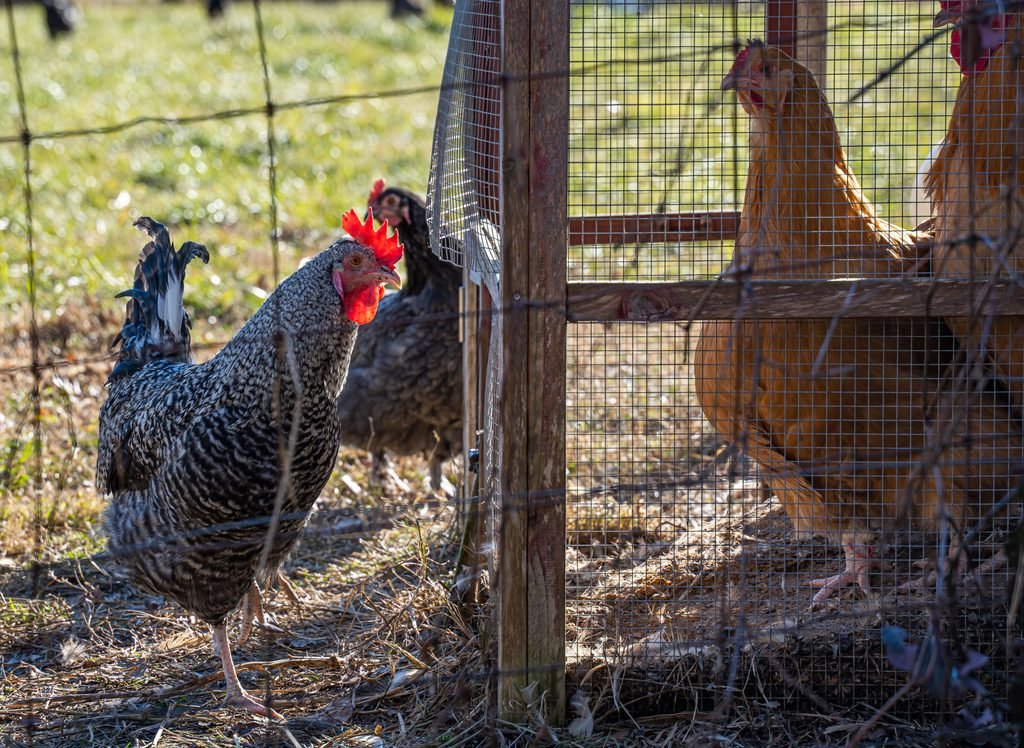
Breed choice does not provide a reliable guarantee that several roosters will remain quiet together. Individual variation exists within breeds, and controlled evidence is insufficient to rank common breeds confidently according to their total crowing frequency when multiple males live together.
A small rooster can still crow frequently, while a larger bird may be less vocal. Social rank and individual behavior further complicate comparisons. Our guide to quiet bantam rooster breeds explains why breed reputation should not be treated as a promise of low noise.
Is It Safe to Keep Multiple Roosters Together?
Noise is not the only consideration when keeping several roosters. Multiple males can compete and may show aggressive behavior toward one another, particularly when social relationships are unstable or birds cannot avoid conflict.
Whether a particular group can live together successfully depends on factors including flock composition, individual temperament, available space, resources, and management.
Expert guidance through Cooperative Extension’s Ask Extension service notes that extra roosters can result in fighting and recommends considering rooster-to-hen ratios when managing a breeding flock.
If birds are repeatedly fighting or sustaining injuries, that is a welfare and flock-management problem rather than simply a crowing issue.
Should You Keep More Than One Rooster If Noise Is a Concern?
If minimizing noise is a major priority, adding additional roosters introduces more potential sources of crowing and more complicated social interactions.
Even though dominance can suppress some calls from subordinate birds, that should not be interpreted as a strategy for creating a quieter flock. Multiple roosters can still participate in sequences of crowing and respond to one another.
Local regulations also matter. Some jurisdictions restrict roosters entirely, while others regulate animal numbers, housing, setbacks, or nuisance noise. Requirements should be checked for the specific property before expanding a flock.
Frequently Asked Questions
Does having more than one rooster make them crow more every day?
Does having more than one rooster make them crow more every day? It can increase the total amount of crowing you hear because several males are capable of calling, but it does not necessarily make every individual rooster crow more. Dominant males can suppress some crowing by subordinate birds.
Will two roosters constantly crow at each other?
Not necessarily. Roosters may respond to each other’s calls, but their crowing is also affected by social hierarchy, circadian timing, individual behavior, and environmental stimuli.
Which rooster usually crows first?
Research on established groups found that the highest-ranking rooster generally initiated predawn crowing, with subordinate males following according to social rank.
Does the dominant rooster crow the most?
Studies have found higher crowing rates among dominant males under certain experimental conditions. However, individual behavior and environment also influence frequency, so dominance should not be treated as the only factor.
Will removing one rooster reduce the noise?
Having fewer roosters removes one potential source of crowing, but the remaining birds may change their behavior when the social hierarchy changes. Research has shown that a second-ranking rooster can assume the leading crowing role when the dominant male is removed.
Can multiple roosters live together without fighting?
Some groups can establish workable social hierarchies, but conflict is possible and management conditions matter. Repeated fighting or injuries should be addressed as a flock-welfare issue rather than accepted as normal simply because several roosters are present.
Final Thoughts on Keeping Multiple Roosters
Does having more than one rooster make them crow more? Multiple roosters can increase the total amount of crowing heard from a property because there are more birds capable of vocalizing and roosters can follow one another’s calls. But that does not mean every rooster automatically crows more frequently.
Social hierarchy changes the picture. Research shows that dominant roosters tend to lead predawn crowing and can suppress some calls from subordinate males. When the dominant bird is removed, another rooster can assume that leading position.
For anyone concerned about noise, the practical lesson is straightforward: adding roosters creates additional potential sources of crowing, but the resulting noise cannot be predicted by simply multiplying the number of birds. Individual behavior, dominance, timing, neighboring roosters, housing, and the surrounding environment all influence how much crowing you ultimately hear.