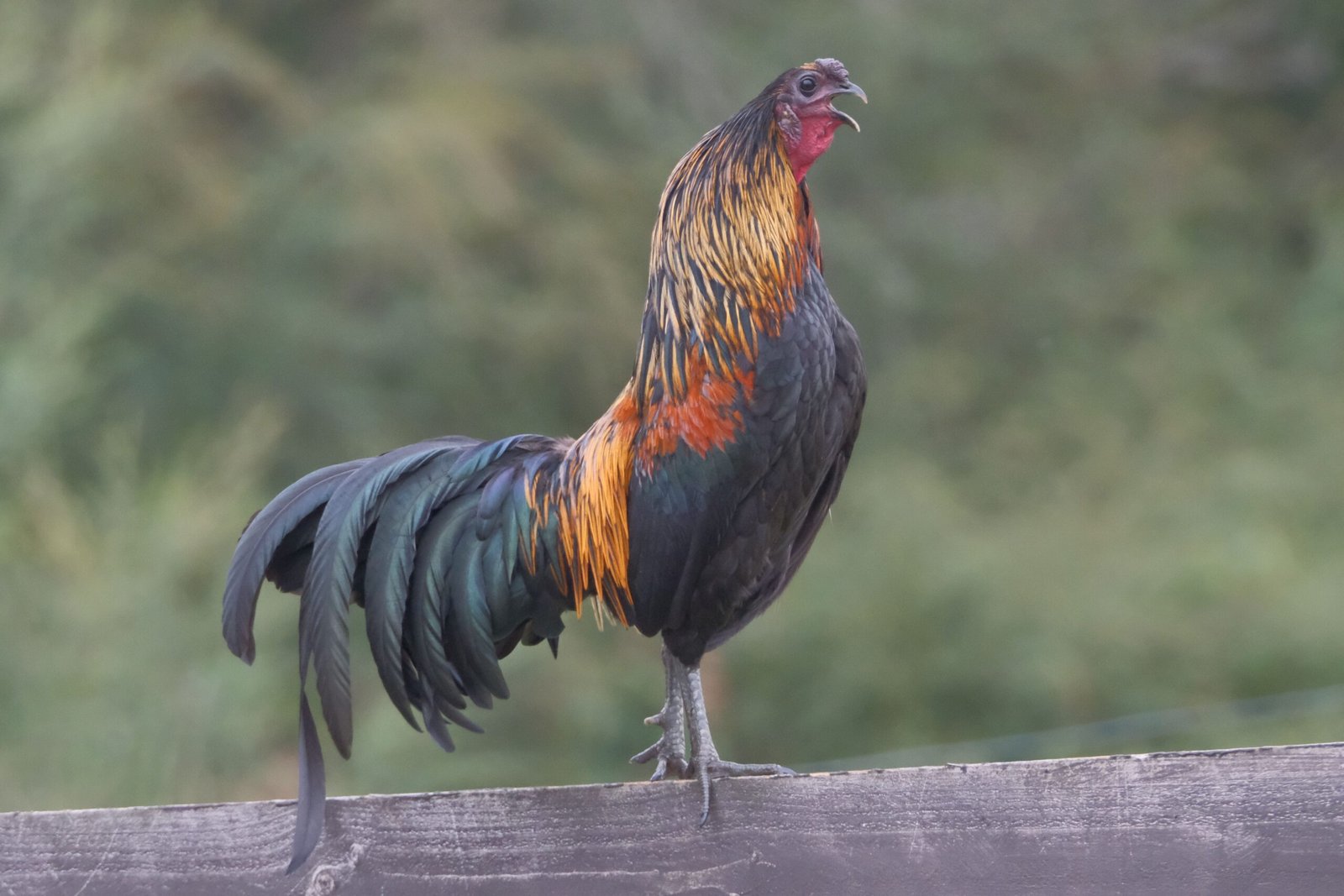
Learning how to reduce early-morning rooster crowing starts with understanding that crowing is a normal behavior, not simply a habit that can be switched off. Roosters have an internal circadian rhythm that helps them anticipate dawn, which means a healthy rooster may begin calling before the sun is visible.
You therefore cannot reliably guarantee silence every morning. What you can do is identify unnecessary triggers, improve the rooster’s nighttime environment, reduce the impact of the sound, and avoid management practices that compromise his welfare.
Why Do Roosters Crow So Early?
Roosters do not have to wait for sunrise before they begin crowing. Their internal biological clock helps regulate predawn vocal behavior.
A study published in Current Biology found that roosters continued to display anticipatory predawn crowing under constant dim-light conditions. The researchers concluded that the circadian clock plays a major role in regulating this behavior. The study is indexed by PubMed.
This is important when trying to manage early crowing. Simply preventing a rooster from seeing the first sunlight does not necessarily prevent him from anticipating morning.
If your rooster routinely starts at a specific early hour, our guide explaining why a rooster may crow at 4 AM covers the biological timing in greater detail.
1. Reduce Unnecessary Artificial Light at Night
Start by looking at the rooster’s nighttime environment. Security lights, porch lights, vehicle headlights, coop lighting, streetlights, and light from nearby buildings may illuminate the housing area after dark.
Artificial light is not the only reason roosters crow early, and eliminating it will not override the circadian clock. However, reducing unnecessary nighttime illumination can remove one potential environmental stimulus and provide a more consistent dark period.
If practical, position the sleeping area away from direct artificial light or prevent unnecessary light from shining directly into it. Any modification should maintain appropriate airflow and temperature.
2. Keep the Nighttime Environment Consistent
Sudden changes in the environment can disturb resting birds. Regular vehicle movement, people approaching the coop, doors opening, machinery, dogs, or other nighttime activity may cause a rooster to become alert.
Observe what happens shortly before the crowing begins. A rooster that starts at roughly the same time every morning may be following his biological rhythm, while crowing that repeatedly follows a particular disturbance may indicate an environmental trigger.
Reducing avoidable nighttime disturbances can make the environment more predictable even if it does not eliminate normal predawn crowing.
3. Check for Animals Around the Coop
Wildlife, rodents, pets, and other animals moving around the housing area can disturb a flock. Crowing alone does not prove that a predator is present, but repeated nighttime agitation is a reason to inspect the enclosure.
Check doors, latches, wire, openings, and other potential access points regularly. The appropriate predator protection depends on the animals present in your location, so housing should be designed for local conditions rather than relying on a single universal coop design.
If your rooster has suddenly begun vocalizing during the middle of the night rather than only near dawn, our guide to why roosters crow at night covers several possible environmental explanations.
4. Consider the Influence of Other Roosters
Roosters do not vocalize independently of their social environment. Hearing other males and living within a flock hierarchy can affect crowing behavior.
Research published in Scientific Reports found that social rank influenced predawn crowing in groups of roosters. The dominant bird generally initiated crowing, followed by subordinate birds according to their rank. When the highest-ranking bird was removed, the next rooster assumed the leading role. The study is available through PubMed Central.
If several roosters live together or neighboring roosters can hear one another, social interaction may therefore contribute to the morning sequence of calls.
5. Position the Coop Carefully
If you are still planning the rooster’s housing, location can make a substantial difference to how noticeable crowing becomes.
Where regulations and the property layout allow, increasing the distance between the rooster’s sleeping area and bedrooms or neighboring homes can reduce the practical impact of early calls. Avoid positioning a coop immediately beside windows or other areas where people sleep when a more suitable location is available.
Local rules may regulate whether roosters can be kept at all, as well as setbacks, housing, noise, or animal numbers. Check the requirements that apply to your specific property before establishing or relocating a rooster enclosure.
6. Use Housing to Manage Sound Carefully
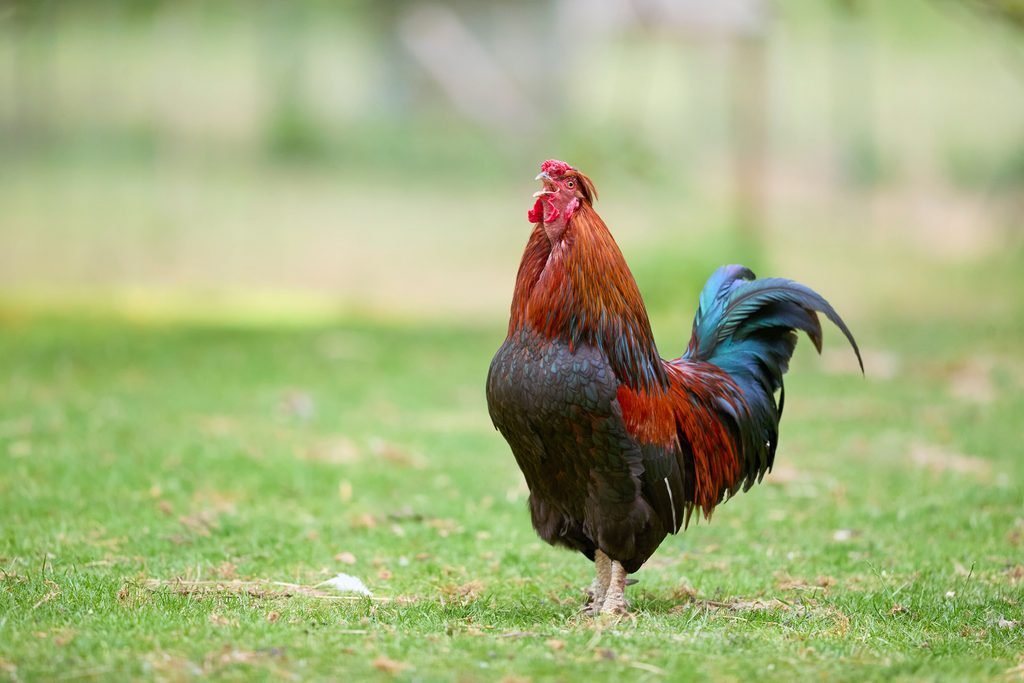
Housing design can influence how sound reaches the surrounding area, but a chicken coop should never be sealed simply to contain crowing.
Roosters require adequate ventilation and a suitable temperature. Completely enclosing a coop or blocking ventilation openings in an attempt to suppress sound can create unsafe conditions involving heat, humidity, and poor air quality.
Any noise-management changes should therefore begin with the bird’s housing requirements. Sound reduction is secondary to providing a safe nighttime environment.
7. Avoid Assuming Complete Darkness Will Stop Crowing
One common idea is that keeping a rooster completely dark will make him sleep until he is exposed to daylight. Scientific evidence does not support this as a reliable way to eliminate predawn crowing.
The controlled circadian experiments described earlier demonstrated that roosters maintained a predawn crowing rhythm under constant dim-light conditions. Their biological clocks allowed them to anticipate the beginning of the day without a normal sunrise cue.
Darkness may remove unnecessary light stimulation, but it should not be confused with an off switch for natural crowing behavior.
8. Learn Your Rooster’s Normal Crowing Pattern
Before changing the environment repeatedly, observe the rooster’s existing routine for several days. Note approximately when the first crow occurs, whether the bird produces a short sequence or continues for an extended period, and whether anything consistently happens immediately beforehand.
This makes it easier to distinguish a predictable predawn pattern from crowing associated with a disturbance.
There is no universal number of daily calls that applies to every rooster. Our guide explaining how often roosters crow looks at individual variation, time of day, and social influences on crowing frequency.
9. Reduce Triggers Rather Than Trying to Eliminate Natural Behavior
A practical goal is to reduce early-morning rooster crowing that is being encouraged by avoidable environmental conditions, rather than trying to eliminate every natural crow.
For example, unnecessary nighttime lighting can be addressed. A repeated disturbance around the coop can be investigated. Housing can be positioned thoughtfully when space and local regulations permit.
None of these changes guarantees silence because predawn crowing is partly internally regulated. Setting a realistic goal prevents increasingly restrictive management techniques from being used in an attempt to stop a normal behavior completely.
10. Consider the Total Noise Impact, Not Just the First Crow
The first crow of the morning is only one part of the noise issue. Frequency, repetition, proximity, and the surrounding environment can matter as much as the timing of the first call.
A rooster that begins early but calls only intermittently creates a different noise pattern from one that repeatedly crows for an extended period. Crowing can also seem more prominent before dawn because background environmental noise is often relatively low.
When assessing a rooster’s impact, observe the complete morning pattern rather than concentrating exclusively on the clock time of the first crow.
Can You Train a Rooster Not to Crow in the Morning?
You should not expect training to eliminate normal predawn crowing. Crowing is an innate rooster behavior with a strong biological component, including circadian regulation.
Management can address environmental conditions that contribute to unnecessary disturbance, but that is different from teaching a rooster never to crow.
Claims that a simple training technique can permanently eliminate normal crowing should therefore be approached cautiously.
Will Keeping the Coop Dark Make a Rooster Crow Later?
Reducing artificial nighttime light may create a more consistent nighttime environment, but keeping a coop dark does not guarantee a later first crow.
Roosters can anticipate dawn through their internal circadian rhythm. That is why they may begin calling while it still appears completely dark outside.
For more detail on this distinction, see our guide explaining why roosters can crow while it is still dark.
Should You Cover a Rooster Coop at Night?
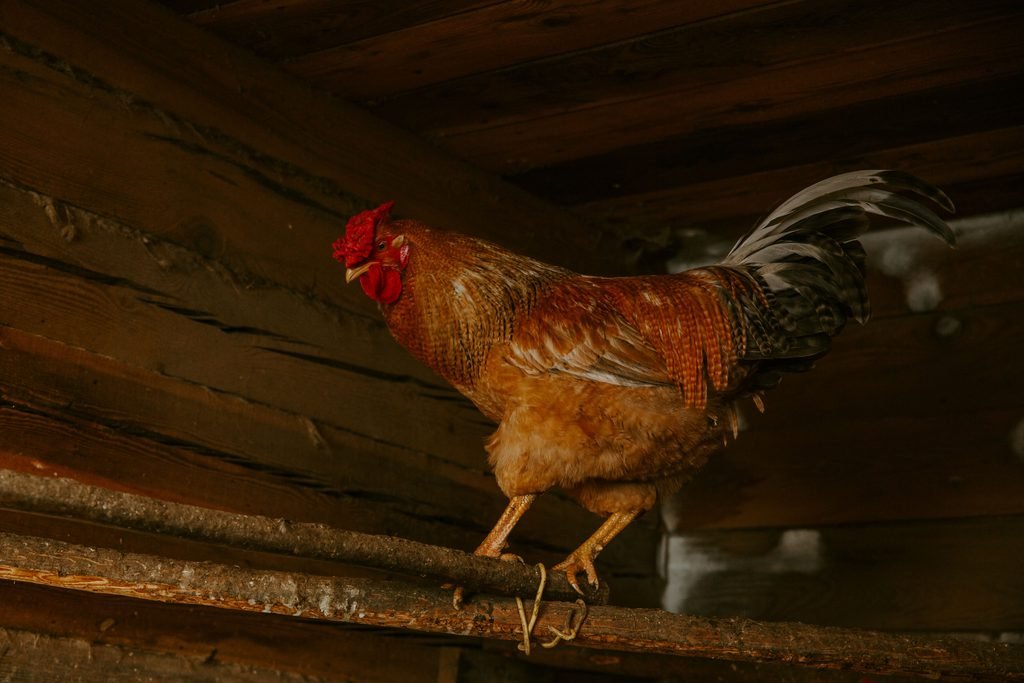
Blocking a specific source of artificial light is different from tightly covering or sealing a coop. Any material added around chicken housing must not interfere with ventilation or create unsafe temperatures.
A rooster still requires a suitable nighttime environment regardless of noise concerns. If a cover is being considered, its effect on airflow, heat, moisture, and fire safety should be evaluated before its potential effect on sound or light.
Never sacrifice essential ventilation simply to try to keep the rooster quiet.
Can Soundproofing Stop Early-Morning Crowing?
Sound management and crowing prevention are two different things. Housing modifications may change how sound travels, but they do not remove the rooster’s biological motivation to crow.
Effective sound reduction also becomes complicated because many materials that restrict sound transmission can restrict airflow when used incorrectly. A completely sealed enclosure is not an appropriate solution for a living bird.
For this reason, any future soundproofing strategy should prioritize safe ventilation, temperature management, sufficient space, and appropriate housing before noise reduction.
What If My Rooster Suddenly Starts Crowing Earlier?
A change in timing is worth considering in context. Seasonal changes in sunrise, new artificial lighting, other roosters, changes to the flock, disturbances around the housing, or changes to the rooster’s routine may coincide with a new pattern.
Observe whether anything else has changed rather than assuming the earlier crowing has one specific cause.
If a sudden behavioral change occurs alongside signs such as weakness, reduced appetite, breathing difficulty, injury, or other concerning physical symptoms, seek appropriate veterinary advice rather than treating the issue solely as a noise problem.
What Not to Do to Stop a Rooster Crowing
Noise concerns should never justify management that causes unnecessary harm or prevents a rooster from meeting basic welfare needs.
Do not seal a rooster inside a poorly ventilated enclosure, expose him to unsafe temperatures, deprive him of normal access to food or water, or use frightening or painful punishment in an attempt to prevent vocalization.
Products or procedures marketed as quick ways to stop crowing also deserve careful scrutiny, particularly when they restrict normal behavior or could cause injury. If a proposed intervention affects the rooster physically, appropriate veterinary and animal-welfare guidance should be considered before using it.
What If Early Crowing Is Causing Problems With Neighbors?
If crowing is affecting nearby residents, address the issue before it develops into a prolonged dispute. Start by checking the local rules governing rooster keeping and animal noise because requirements vary considerably between jurisdictions.
Then identify practical changes that can reduce the impact without compromising the bird’s welfare. Housing location, unnecessary nighttime lighting, environmental disturbances, and the distance between the rooster and neighboring bedrooms are reasonable factors to examine.
Some properties simply may not be suitable for keeping a rooster, particularly where local regulations prohibit them or where unavoidable crowing creates an ongoing conflict. This is one reason local rules and housing conditions should be considered before acquiring a rooster.
Frequently Asked Questions
How can I reduce early-morning rooster crowing?
To reduce early-morning rooster crowing, start by limiting unnecessary artificial light and nighttime disturbances, checking for activity around the coop, providing secure and appropriately located housing, and observing whether other roosters influence the behavior. These steps may reduce avoidable triggers but cannot guarantee complete silence.
Why does my rooster start crowing before sunrise?
Roosters possess an internal circadian clock that helps them anticipate dawn. Research has shown that predawn crowing can continue under controlled dim-light conditions, meaning visible sunrise is not required.
Can I make my rooster sleep later?
There is no reliable method that guarantees a rooster will sleep silently until a chosen clock time. His biological rhythm can trigger predawn crowing even without visible morning light.
Will blackout curtains stop a rooster crowing?
Blocking artificial light may remove an environmental stimulus, but darkness does not reliably prevent circadian predawn crowing. Any material used around housing must also preserve adequate ventilation and safe temperatures.
Why is my rooster louder early in the morning?
Early crowing can seem especially prominent because there may be less background noise from traffic, people, and other daytime activity. Frequency, distance, surroundings, and the characteristics of the individual crow also influence how noticeable it is.
Can you completely stop a rooster from crowing?
Crowing is a normal, innate rooster behavior, so complete silence is not a realistic management goal. It is more appropriate to address avoidable triggers and reduce the impact of crowing while maintaining suitable welfare conditions.
Final Thoughts on Reducing Early-Morning Rooster Crowing
The safest way to reduce early-morning rooster crowing is to manage the factors you can control while recognizing the biological behavior you cannot simply switch off. Unnecessary artificial light, repeated disturbances, housing location, animal activity, and interactions with other roosters are all worth examining.
At the same time, normal predawn crowing is regulated partly by the rooster’s internal circadian clock. Darkness alone therefore cannot guarantee silence, and housing should never be sealed or made unsafe in an attempt to suppress noise.
A realistic strategy focuses on reducing unnecessary triggers and minimizing the impact on people nearby. That approach provides a better balance between responsible rooster management, neighbor considerations, and the bird’s normal behavior.