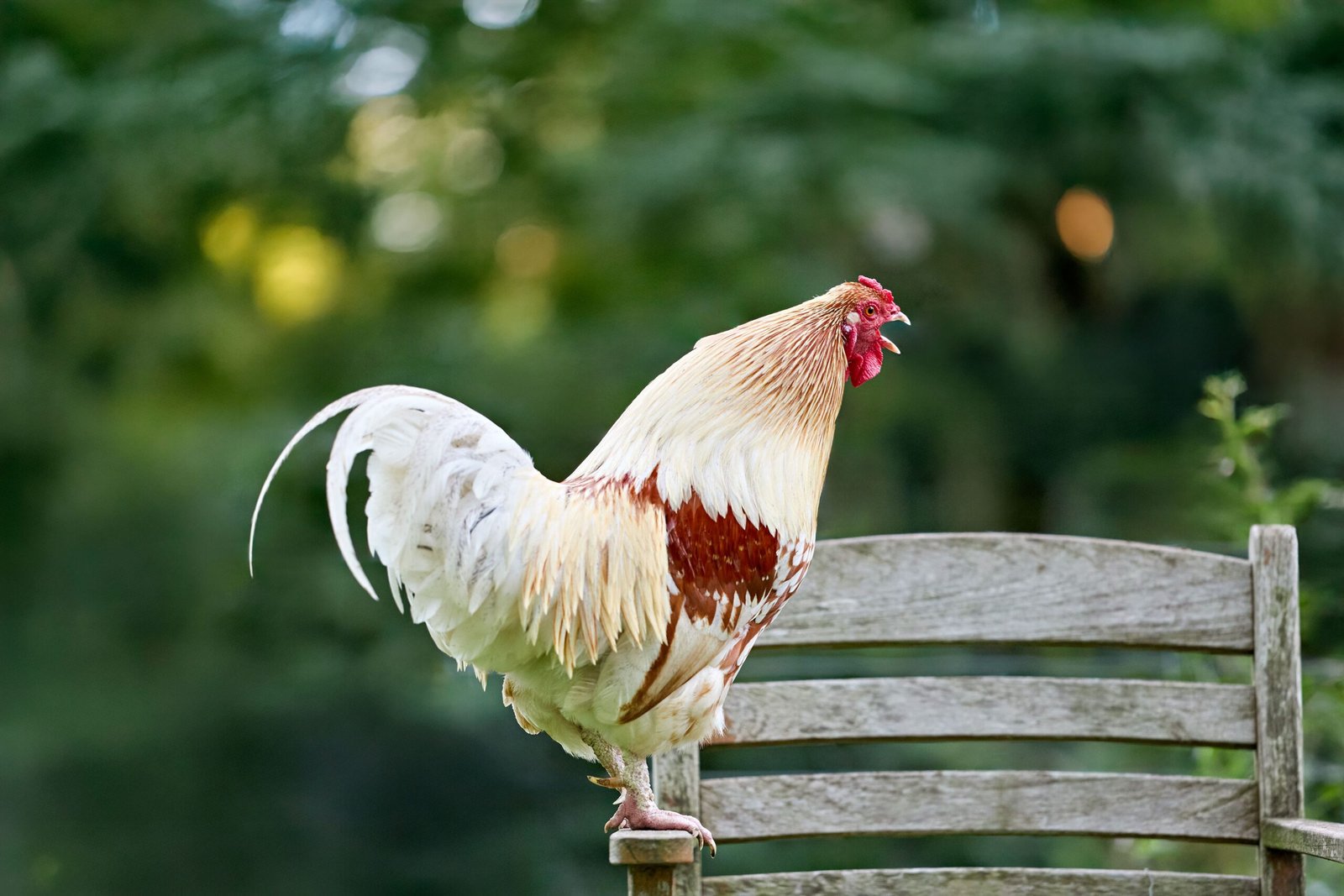
How often do roosters crow? There is no fixed number of times a rooster will crow each day. Some roosters vocalize periodically, while others produce repeated sequences of crows throughout the morning and continue calling at intervals during the day. Crowing frequency varies between individual birds and can also be influenced by biological rhythms, social rank, nearby roosters, and environmental stimuli.
The familiar predawn crow is only one part of this behavior. Roosters can crow before sunrise, after daylight arrives, and at other times throughout the day. Understanding how crowing changes with time and circumstances provides a more accurate picture than trying to assign every rooster a daily crow count.
How Many Times Does a Rooster Crow Each Day?
There is no scientifically established daily number that applies to all roosters. A rooster may crow several times within a short period, remain quiet for a while, and then begin calling again later. Another bird living under similar conditions may follow a different pattern.
Scientific studies of rooster vocalization have demonstrated measurable differences in crowing frequency between birds under controlled conditions. Research published in Scientific Reports found that higher-ranking roosters tended to crow more frequently than lower-ranking members of their groups during the experimental light cycle. The study, available through PubMed Central, also demonstrated that social hierarchy affected predawn crowing.
These findings help explain why a single daily number would be misleading. Crowing is behavior influenced by the individual rooster and his social environment rather than a vocalization performed a predetermined number of times.
When Do Roosters Crow Most Often?
Roosters are particularly associated with predawn and morning crowing. Their internal circadian clock allows them to anticipate the beginning of the day, so vocal activity can start before visible sunrise.
A study published in Current Biology demonstrated that rooster crowing follows an internally regulated circadian rhythm. Roosters maintained their anticipatory predawn crowing even under constant dim-light conditions. The research is indexed by PubMed.
This biological rhythm helps explain why morning is such a recognizable period for crowing. It does not mean the rooster will stop once the morning sequence has finished.
Do Roosters Crow Throughout the Day?
Yes. Roosters can crow throughout daylight hours rather than restricting their calls to dawn. The frequency may rise and fall, and periods of repeated crowing can be separated by quieter intervals.
External events can also coincide with daytime crowing. Activity involving other chickens, sounds from neighboring roosters, light, and other environmental stimuli may influence when a rooster vocalizes.
The result is a pattern that can seem unpredictable when viewed minute by minute even though the rooster still has a strong daily biological rhythm. Morning crowing is especially recognizable, but it represents only part of his total vocal activity.
Why Do Some Roosters Crow More Than Others?
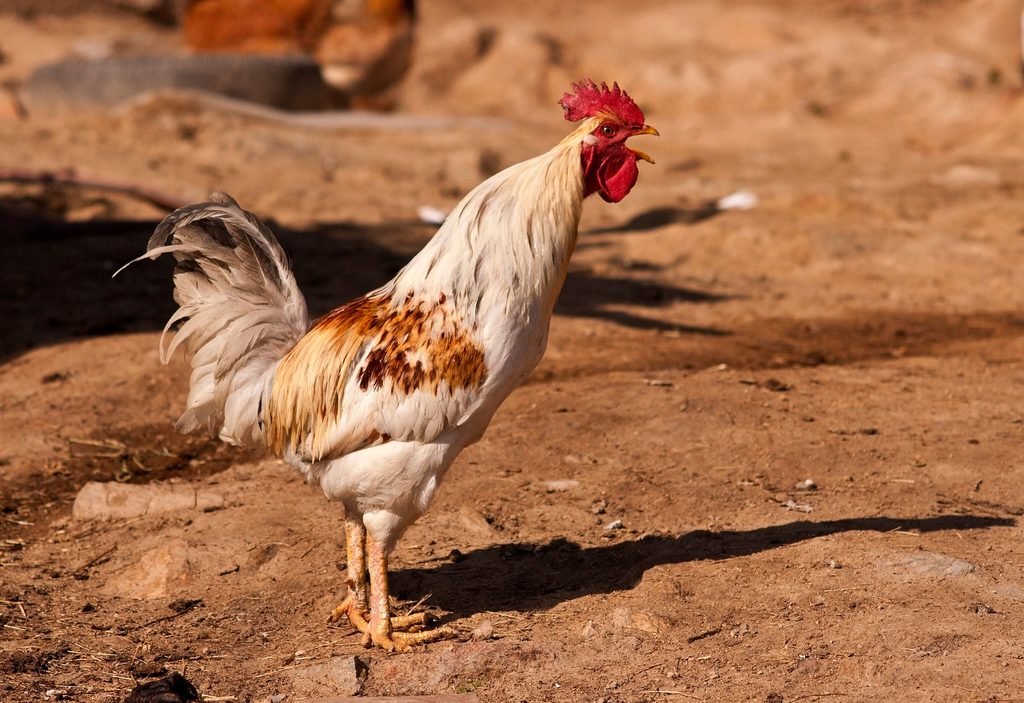
Individual variation is a major reason crowing frequency differs. Two roosters do not necessarily vocalize at the same rate simply because they are the same breed or live in similar surroundings.
Social position can also matter. In the Scientific Reports study of grouped roosters, the dominant bird generally initiated predawn crowing, with subordinate roosters following according to social rank. Researchers also found that the presence of the dominant rooster suppressed some predawn crowing by subordinate birds.
More recent research into chicken crowing also describes crowing frequency as an important feature associated with male social status. A study examining domestication and crowing behavior, available through PubMed Central, discusses how social rank can modify crowing behavior even though fundamental characteristics of the call are largely innate.
How Often Do Roosters Crow in the Morning?
If you are asking how often do roosters crow during the morning specifically, the answer still varies substantially between birds. Some may produce repeated sequences around the predawn period, while others crow less frequently.
Controlled research has shown that social relationships can change these patterns. In groups, lower-ranking roosters may delay their first predawn crow until after the dominant rooster begins. The number of predawn crows can also differ according to social position.
Morning frequency therefore cannot be separated completely from flock dynamics. A rooster living alone, one living with hens, and one living among several competing males may not display identical vocal patterns.
Why Does My Rooster Crow Several Times in a Row?
A sequence of repeated crows is normal rooster behavior. Crowing serves communicative and social functions, and a rooster does not necessarily consider one call sufficient before becoming quiet again.
Other roosters can contribute to these sequences. When one bird begins calling, another within hearing distance may respond. Research into rooster hierarchy found that subordinate males followed the dominant rooster’s first predawn crow within a relatively short period.
This interaction can create the familiar pattern of multiple roosters apparently answering one another across neighboring properties or within a flock.
Do Roosters Crow Every Morning?
Regular morning crowing should be expected from a mature rooster. The exact timing and frequency may vary, but predawn vocalization is strongly connected with the rooster’s internal circadian system.
Research on red junglefowl, the wild ancestors of domestic chickens, provides additional evidence for this biological pattern. A study indexed by PubMed observed predawn crowing before sunrise across seasons under semi-wild conditions and concluded that the behavior was under circadian control.
The precise clock time can shift, particularly as seasonal sunrise times change. Our guide explaining why a rooster may crow at 4 AM looks more closely at why some birds begin their morning calls unusually early.
Do Roosters Crow Before Sunrise?
Yes. Roosters can begin crowing before daylight because their internal clock helps them anticipate dawn. They do not need to wait until the sun appears above the horizon.
Experiments under controlled lighting conditions are particularly important here because they demonstrate that immediate sunrise is not required to trigger predawn crowing. The rhythm can continue when normal changes in morning light are absent.
For a closer examination of this behavior, our article on whether roosters crow when it is still dark explains how the circadian clock and external light cues interact.
Do Roosters Crow at Night?
Roosters are capable of crowing outside their normal morning and daytime pattern. A nighttime disturbance, artificial light, activity involving other animals, or another environmental stimulus may coincide with occasional vocalization.
Predawn crowing should be distinguished from random nighttime crowing. A rooster calling in the hours before sunrise may already be entering the anticipatory phase of his normal circadian pattern rather than reacting to a sudden disturbance.
The time shown on a clock therefore does not always reveal whether the behavior belongs to the rooster’s morning rhythm. This is particularly relevant during seasons when sunrise occurs relatively early.
Do Roosters Crow More When Other Roosters Are Nearby?
Other roosters can affect vocal behavior, although the relationship is more complex than simply causing every bird to crow more. Roosters live within social hierarchies, and dominant males can influence both the timing and frequency of subordinate crowing.
In controlled group experiments, the highest-ranking rooster almost always initiated predawn crowing. When that bird was removed, the second-ranking rooster assumed the leading role. Subordinate roosters also tended to crow less in the presence of the dominant bird.
External crowing sounds can nevertheless act as stimuli. A rooster may respond when another bird calls, which helps explain why crowing can spread rapidly among several roosters within hearing distance.
Does Breed Determine How Often a Rooster Crows?
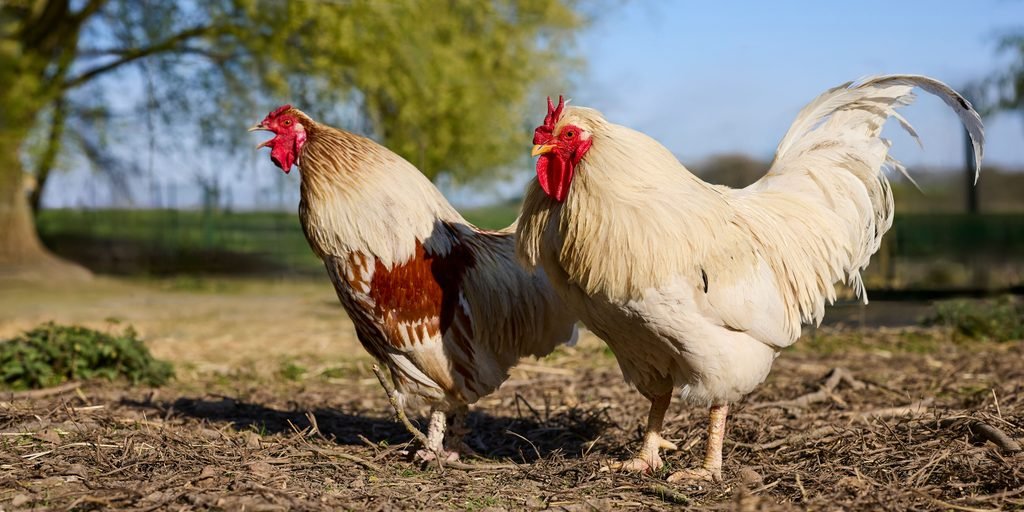
Breed may contribute to behavioral tendencies, but there is not enough controlled comparative evidence to assign dependable daily crow counts to individual chicken breeds. Statements that a particular breed will crow only a certain number of times each day should therefore be treated cautiously.
Individual behavior can vary substantially within a breed. Age, social environment, flock structure, and the presence of other males can further complicate comparisons.
The same caution applies when selecting small chickens primarily because of noise concerns. Our guide to quiet bantam rooster breeds explains why breed reputation should not be treated as a guarantee of low crowing frequency or volume.
Do Bantam Roosters Crow Less Often?
There is no reliable rule establishing that bantam roosters crow less frequently simply because they are smaller. Bantams are defined largely by their physical size, while crowing frequency is a behavioral characteristic influenced by several other factors.
A small rooster may crow repeatedly, just as a larger rooster may have quieter periods during the day. Size also does not determine how noticeable repeated vocalization will be to people nearby.
Our article examining how loudly bantam roosters crow covers the related issue of why body size cannot reliably predict the practical impact of rooster noise.
Does Crowing Frequency Change With the Seasons?
Seasonal changes in daylight can influence daily biological rhythms, and research on red junglefowl has found seasonal changes in crowing under semi-wild conditions. Predawn crowing nevertheless occurred before sunrise across the seasons studied.
This means an owner’s experience of crowing time and frequency may not remain identical throughout the year. Changing sunrise times and environmental conditions can alter when vocal activity is noticed.
Season should therefore be considered alongside individual behavior and social conditions rather than assuming that a rooster will maintain exactly the same clock-based routine throughout the year.
Is Frequent Crowing Normal?
Frequent crowing can fall within normal rooster behavior. There is no universal threshold at which a certain number of daily crows automatically becomes abnormal.
What matters is the broader pattern of the individual bird. A rooster that routinely vocalizes frequently is different from a bird whose behavior changes suddenly alongside other unusual physical or behavioral signs.
Crowing frequency alone cannot diagnose a health or welfare problem. It should be understood within the context of the rooster’s established behavior, environment, and flock.
Why Crowing Frequency Matters for Rooster Noise
How often a rooster crows can be just as important as the sound of an individual call. A rooster with a moderately loud crow may become highly noticeable if he repeats it frequently, particularly during quiet early-morning hours.
Distance and surroundings also influence the practical effect. Repeated calls from a rooster housed close to neighboring homes can be more intrusive than the same vocal pattern occurring farther away.
This is why rooster noise cannot be evaluated through volume alone. Frequency, timing, pitch, distance, and the surrounding environment combine to determine how noticeable crowing becomes.
Frequently Asked Questions
How often do roosters crow each day?
How often do roosters crow each day varies considerably between individuals. There is no established daily number that applies to every rooster. Some birds crow periodically, while others produce repeated sequences throughout the morning and continue vocalizing later in the day.
Can a rooster crow dozens of times a day?
A rooster can crow repeatedly during the day, but there is no universal count that defines normal behavior. Frequency depends on the individual bird and his biological, social, and environmental circumstances.
Why does my rooster crow every few minutes?
Repeated crowing can be part of an individual’s normal vocal pattern. Other roosters, social interactions, environmental stimuli, and the time of day can also influence when repeated sequences occur.
Do roosters stop crowing after sunrise?
No. Although crowing is strongly associated with dawn, roosters can continue vocalizing after sunrise and at intervals throughout daylight hours.
Do roosters crow more when they hear another rooster?
Roosters can respond to other males, and research demonstrates that social relationships affect crowing behavior. However, dominance can also suppress some crowing by lower-ranking males, so the relationship is not simply that every additional rooster always produces more calls.
Is it normal for a rooster to crow before daylight?
Yes. Predawn crowing is regulated partly by an internal circadian clock, allowing roosters to anticipate dawn before visible sunrise.
Final Thoughts on How Often Roosters Crow
How often do roosters crow? There is no single daily number that accurately describes every bird. Roosters can crow repeatedly around dawn, continue calling during daylight hours, and occasionally vocalize outside those periods.
Scientific research shows that crowing is shaped by the rooster’s circadian rhythm and social environment. Dominance hierarchy can affect both the order and frequency of predawn calls, while external stimuli can produce additional crowing. Individual differences make a universal daily crow count unrealistic.
For anyone evaluating rooster noise, frequency should be considered alongside volume and timing. A bird that repeatedly crows during quiet hours may be more noticeable than one that produces a stronger but less frequent call, making the overall pattern more informative than the number of crows alone.