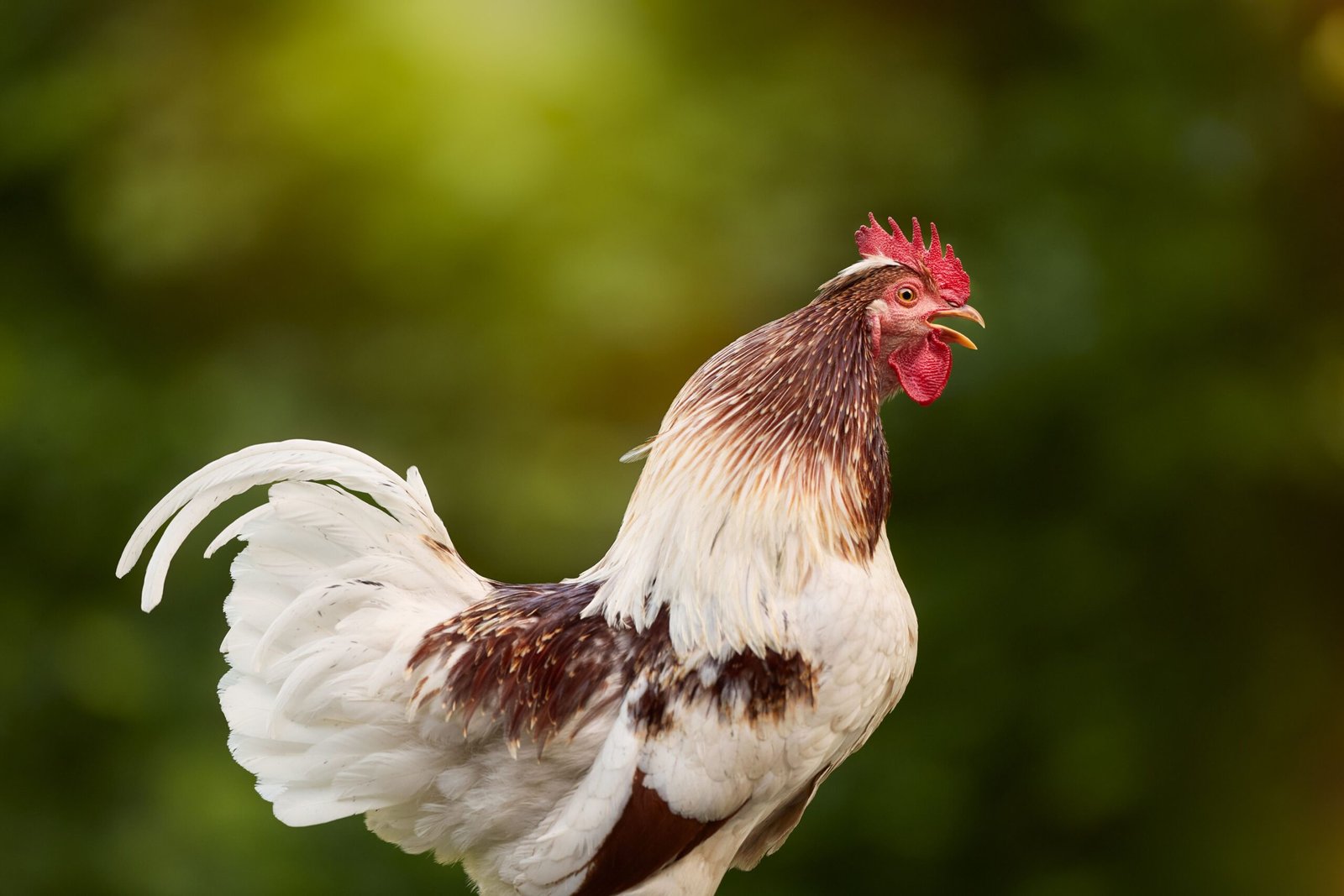
Do roosters crow when it’s still dark? Yes. Roosters can begin crowing well before sunrise because their morning vocal behavior is regulated partly by an internal circadian clock. Visible daylight can influence their activity, but a rooster does not need to see the sun or a brightening sky before he starts to crow.
This predawn behavior explains why a rooster may be heard while his surroundings still appear completely dark. External factors such as artificial light and other roosters can also influence vocal activity, but darkness alone does not prevent normal crowing.
Why Do Roosters Crow in the Dark?
The familiar association between roosters and sunrise can create the impression that daylight causes the first crow of the morning. Scientific research shows that the process is more complex.
A study published in Current Biology investigated whether rooster crowing is driven primarily by external light or an internal biological clock. The researchers found that roosters continued to display anticipatory predawn crowing under constant dim-light conditions. The study, indexed by PubMed, concluded that the rooster’s internal circadian clock plays a major role in regulating this behavior.
This means darkness does not function as an automatic off switch for crowing. A rooster’s biological rhythm can prepare him for the approaching morning even when obvious daylight cues are absent.
Do Roosters Need Light to Know Morning Is Coming?
Roosters do not depend entirely on immediate changes in light to anticipate the morning. Like many animals, they have biological rhythms that help organize behavior over approximately 24-hour cycles.
The controlled-light experiments on rooster crowing are particularly useful because they separated immediate environmental light from the birds’ internal timing. Even without a normal sunrise occurring around them, the roosters maintained a rhythmic pattern of predawn crowing.
Light remains an important environmental cue, particularly over longer periods, but it is not necessary for every individual morning crow. The internal clock helps explain how a rooster can begin calling before visible dawn.
How Long Before Sunrise Do Roosters Start Crowing?
There is no fixed interval that applies to every rooster. Some birds may become vocal relatively close to sunrise, while others can begin considerably earlier. Individual behavior, season, environmental conditions, and social circumstances can all affect the pattern an owner observes.
The clock time of sunrise also changes throughout the year and varies by location. A rooster that follows a relatively consistent biological rhythm may therefore appear to crow unusually early during certain parts of the year.
This is why a specific time such as 4 AM should not be treated as a universal rooster schedule. Our guide explaining why a rooster may crow at 4 AM examines early-morning timing and the circadian mechanism in greater detail.
Can Roosters Crow in Complete Darkness?
Yes. If you are wondering do roosters crow when it’s still dark enough that no sunrise is visible, experimental research provides strong evidence that they can. Roosters have demonstrated rhythmic crowing even under controlled dim-light conditions.
That does not mean light has no effect on them. Rather, it means immediate exposure to sunrise is not required to initiate every episode of predawn crowing. The internal biological clock continues to influence when the bird expects the active part of the day to begin.
A dark nighttime environment can therefore coexist with perfectly normal crowing. Darkness by itself is not evidence that a rooster should remain silent.
Can Artificial Light Make a Rooster Crow in the Dark?
Artificial light can provide an external stimulus and may influence rooster activity. Lighting around homes, barns, coops, roads, or neighboring properties can change the nighttime environment experienced by a flock.
Research has shown that external stimuli can induce crowing, even though the internal circadian clock remains the primary regulator of anticipatory predawn crowing. This means artificial light may contribute to vocal activity without being the fundamental reason roosters crow before sunrise.
The distinction is important. A rooster that crows in darkness is not necessarily responding to a hidden light source. His internal rhythm may be sufficient to explain the behavior.
Do Other Roosters Cause Crowing Before Sunrise?
Roosters are responsive to one another, and their social relationships can affect predawn vocal behavior. Hearing another rooster may contribute to a sequence of calls, particularly when several males live within hearing distance.
Research published in Scientific Reports found that social rank influenced the order in which groups of roosters crowed at dawn. The dominant rooster generally crowed first, followed by subordinate birds according to social rank. The study is available through PubMed Central.
The researchers also found that subordinate roosters changed their predawn crowing behavior when the highest-ranking bird was absent. This demonstrates that the internal clock is not the only factor involved; social hierarchy can shape how morning crowing is expressed.
Why Do Roosters Crow More Than Once in the Dark?
Crowing is not simply a single announcement that morning has arrived. Roosters can repeat their calls, respond to other birds, and continue vocalizing as the morning progresses.
The number of calls varies considerably between individual birds. One rooster may crow intermittently, while another may produce repeated sequences that make the predawn period much more noticeable.
This difference is important when considering rooster noise. The practical impact of crowing involves frequency and repetition as well as the sound of an individual call. A moderately loud rooster that repeatedly crows can be more disruptive than a bird that produces a stronger call less frequently.
Does Covering a Coop Stop a Rooster From Crowing?
Covering a coop to block visible morning light does not guarantee that a rooster will remain silent. Because predawn crowing is influenced by an internal circadian rhythm, the bird does not need to see the sunrise before beginning to vocalize.
Reducing unnecessary nighttime light may remove an external stimulus, but it cannot eliminate the underlying biological behavior. Any material placed around a coop must also avoid compromising ventilation, temperature control, or the safety of the birds.
The scientific evidence therefore does not support the idea that simply creating complete darkness will reliably stop morning crowing.
Do Roosters Crow All Night?
Roosters are strongly associated with morning crowing, but they are capable of vocalizing outside the predawn period. Occasional nighttime crowing can occur when a bird responds to activity, light, other animals, or other disturbances in its environment.
That is different from a rooster continuously crowing throughout the entire night. Individual patterns vary, and an isolated nighttime call does not establish that the rooster has lost his normal day-night rhythm.
Predawn crowing is particularly distinctive because it can occur predictably as part of the rooster’s circadian cycle rather than requiring an obvious immediate disturbance.
Why Is Crowing in the Dark So Noticeable?
Early rooster crowing may seem especially loud because the surrounding environment is often quieter before dawn. Traffic, human activity, machinery, and other daytime sounds may be minimal, leaving the rooster’s calls more exposed.
Distance and surroundings also affect how the sound is experienced. A rooster located close to a house or neighboring property may be far more noticeable than the same bird heard from a greater distance.
Small roosters should not automatically be assumed to solve this issue. Our guide examining whether bantam roosters crow loudly explains why body size alone does not reliably predict how disruptive a rooster will sound.
Does Breed Affect Predawn Crowing?
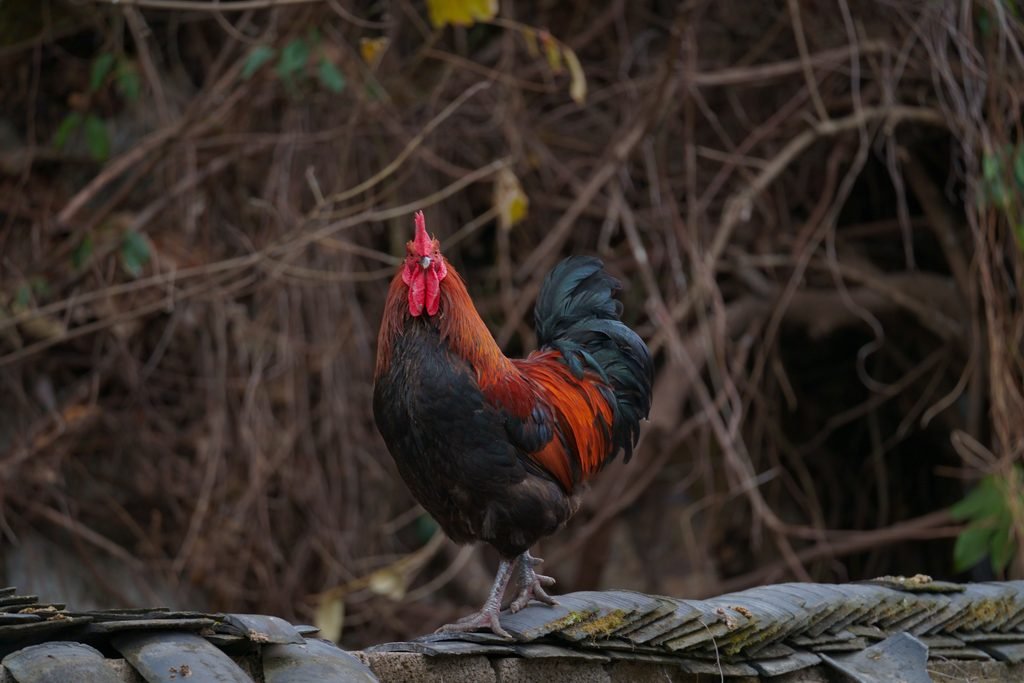
Different chicken breeds have distinctive physical and behavioral characteristics, but there is insufficient controlled evidence to assign reliable predawn crowing schedules to individual breeds. An individual rooster’s behavior may vary substantially even within the same breed.
This makes broad claims about breeds that supposedly never crow early difficult to support. A calm or small breed can still contain males that begin vocalizing well before sunrise.
The same caution applies to Silkies. Their smaller size and reputation do not remove normal rooster vocal behavior. Our article on whether Silkie roosters are quiet explains why breed reputation should not be treated as a guarantee of low noise.
Do Bantam Roosters Crow in the Dark?
Bantam roosters possess the same fundamental male crowing behavior seen in larger domestic chickens. Being smaller does not prevent a rooster from participating in normal predawn vocalization.
The character of a bantam’s crow may differ from that of a larger rooster, and individuals can vary considerably in frequency and persistence. However, there is no sound basis for assuming that a bantam will wait until daylight before crowing.
People comparing smaller birds can find a broader discussion in our guide to quiet bantam rooster breeds, which separates breed characteristics from unsupported guarantees about crowing behavior.
Is Crowing Before Daylight Normal?
Yes. When people ask do roosters crow when it’s still dark because their bird has suddenly awakened them before sunrise, the darkness itself is not evidence of abnormal behavior. Predawn crowing is consistent with the circadian behavior documented in domestic roosters.
What matters is the broader context. A rooster that routinely begins calling before daylight is demonstrating a different pattern from a bird that suddenly changes its behavior alongside other unusual signs.
Crowing before sunrise, considered by itself, is a normal feature of rooster behavior rather than proof that the bird is confused about the time of day.
Can You Make a Rooster Wait Until Sunrise to Crow?
There is no dependable method that guarantees a rooster will remain silent until visible sunrise. His internal circadian rhythm means that eliminating immediate daylight does not eliminate his ability to anticipate dawn.
Reducing unnecessary artificial lighting and other nighttime disturbances may limit some external stimulation, but these measures do not remove normal predawn vocal behavior.
The distinction is between influencing environmental triggers and controlling an innate biological rhythm. A rooster may still crow before sunrise even in a stable, dark nighttime environment.
Frequently Asked Questions
Do roosters crow when it’s still dark outside?
Do roosters crow when it’s still dark outside? Yes. Scientific research has demonstrated that roosters can maintain predawn crowing rhythms without seeing a normal sunrise. Their internal circadian clock helps them anticipate the approaching morning.
Why does my rooster crow before there is any daylight?
The rooster’s internal biological clock is a major reason. Visible daylight can influence behavior, but it is not required for every predawn crow.
Will a dark coop keep a rooster quiet?
Not reliably. Darkness may remove some external light stimulation, but research shows that roosters can crow according to an internally regulated rhythm even under dim-light conditions.
Can a security light make a rooster crow?
Artificial light can act as an external stimulus and may influence activity or crowing. However, a rooster that crows before dawn is not necessarily reacting to artificial light because his internal clock can produce predawn crowing without it.
Do roosters only crow at sunrise?
No. Roosters can crow before sunrise and at other times during the day. Dawn is strongly associated with crowing because roosters show a predictable biological rhythm around the beginning of their active period.
Why do several roosters crow one after another?
Crowing has a social component. Research has shown that flock hierarchy can influence the order of predawn crowing, with dominant roosters generally initiating the sequence before subordinate birds.
Final Thoughts on Roosters Crowing in the Dark
Do roosters crow when it’s still dark? Yes, and the behavior is supported by experimental evidence. Roosters possess an internal circadian clock that allows them to anticipate dawn and begin vocalizing without needing to see the sunrise.
Light, other roosters, social hierarchy, and environmental stimuli can influence when crowing occurs, but they operate alongside the bird’s internal biological rhythm. This is why blocking morning light cannot guarantee that a rooster will remain silent until daylight.
Predawn crowing is therefore not a sign that a rooster has mistaken darkness for daytime. For many roosters, calling before visible sunrise is simply part of the normal rhythm of the day.