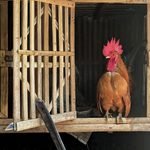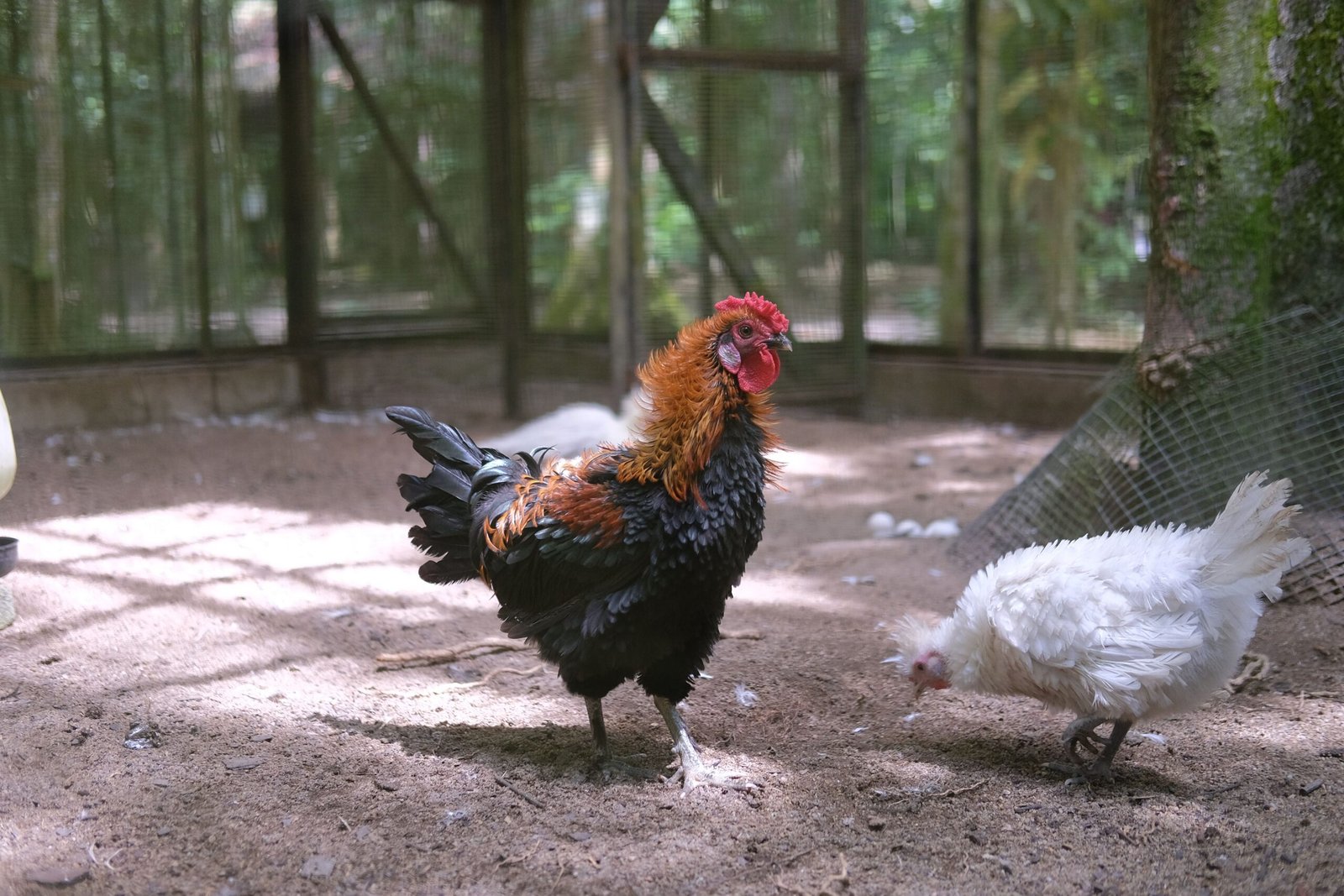
Where should you put a rooster coop to reduce noise? In general, choose a legal and suitable location that maximizes practical distance from bedrooms and neighboring homes, avoids directing major openings toward noise-sensitive areas, and takes advantage of existing solid barriers where possible. The location must also provide safe access, drainage, shade or weather protection as appropriate, predator protection, and adequate ventilation.
Coop placement will not stop a rooster from crowing. What it can do is change the distance and path between the rooster and the people hearing him. That makes location one of the first factors worth considering before adding complicated soundproofing materials to the enclosure.
Why Coop Location Matters for Rooster Noise
Rooster crowing is airborne sound. Once it leaves the coop, it travels through the surrounding environment before reaching a house, bedroom, patio, or neighboring property.
Distance, barriers, terrain, buildings, openings in the coop, and the relative positions of the rooster and listener can all influence the sound that ultimately reaches that location.
Basic outdoor acoustics therefore gives us a useful principle: controlling the relationship between the source, the transmission path, and the receiver can be just as important as modifying the source itself.
The Federal Highway Administration’s guidance on noise barriers explains how distance and barriers influence outdoor noise propagation. Although the guidance concerns transportation noise rather than roosters, the underlying acoustic principles help explain why location and barriers matter.
1. Maximize Distance From Nearby Bedrooms
If you have a choice between several suitable and legally permitted locations, distance should be one of the first considerations.
A coop immediately outside a bedroom window creates a very different noise situation from one positioned farther away. This matters particularly with roosters because crowing commonly occurs during the predawn and early-morning period when people may still be sleeping.
Look beyond your own bedroom as well. The nearest noise-sensitive location may actually be a neighbor’s house.
Increasing distance will not make crowing disappear, and the exact reduction cannot be predicted without considering the environment. However, avoiding unnecessary proximity is a sensible first step.
2. Consider Your Neighbor’s House, Not Just Your Own
One of the easiest placement mistakes is positioning the coop at the far end of your own property without considering what lies immediately beyond the boundary.
The back corner of your yard may be far from your bedroom but only a short distance from a neighbor’s bedroom.
Before choosing a location, look at the surrounding properties. Consider neighboring houses, windows, outdoor living areas, and other places where early crowing is likely to be disruptive.
This is especially important in suburban and small-lot environments where moving the coop away from one home may inadvertently move it much closer to another.
3. Check Local Rooster and Coop Rules First
Noise reduction should never be planned independently of local regulations.
Depending on the jurisdiction, rules may regulate whether roosters are permitted, how many poultry can be kept, where a coop can be located, required setbacks from property boundaries or neighboring residences, sanitation, and nuisance noise.
There is no universal setback distance that applies internationally. A distance that is legal in one municipality may be prohibited in another.
Check the rules applying to the specific property before constructing or relocating a permanent coop. Do not rely on a generic online recommendation as a substitute for local requirements.
4. Avoid Pointing Major Openings Toward Bedrooms
The orientation of the coop can matter as well as its physical location.
Doors, windows, and ventilation openings create less substantial sections of the building envelope than solid walls. An open doorway can provide a relatively direct path for crowing to leave the structure.
If the coop design and ventilation requirements allow it, avoid aiming major openings directly toward the closest bedroom or neighboring home.
This does not mean vents should be closed or reduced simply for noise control. Instead, orientation should be considered when initially planning the structure so that necessary openings can serve their purpose without unnecessarily facing a noise-sensitive location.
5. Use Existing Buildings as Potential Barriers
A substantial existing structure between the rooster and a nearby home may interrupt a direct line of sight between the sound source and receiver.
Garages, sheds, solid walls, and other buildings can sometimes influence the path outdoor sound takes.
The U.S. Department of Transportation’s noise-barrier resources explain the broader principle that an effective barrier needs to interrupt the direct path between a noise source and receiver.
A small decorative object should not be expected to provide the same effect as a substantial solid structure.
6. Consider a Solid Fence Carefully
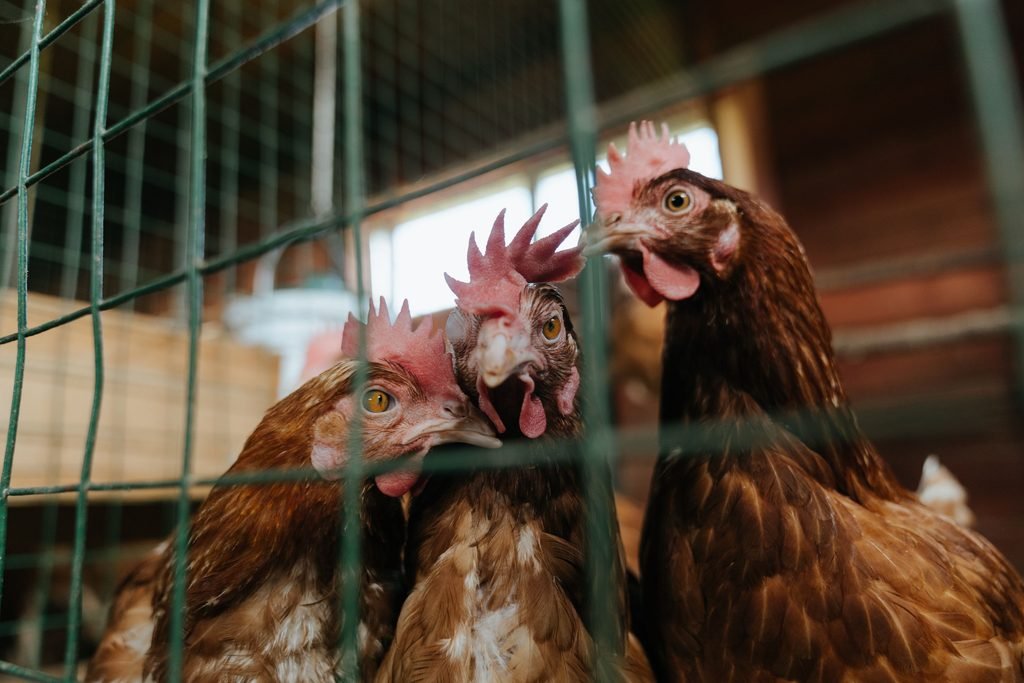
A solid fence may help alter the direct sound path in some situations, particularly when it blocks line of sight between the source and receiver. Its usefulness depends on factors such as height, length, construction, gaps, and where it sits relative to the rooster and the person hearing the crow.
A fence with large gaps is less useful as an acoustic barrier than a continuous solid barrier. Likewise, a barrier that is too short to interrupt the direct path may have limited effect.
Do not rely on a fence as a guaranteed solution. It is better viewed as one part of a broader location and housing strategy.
7. Don’t Rely on Shrubs Alone for Soundproofing
Trees, hedges, and shrubs can make a coop less visually intrusive and may contribute to a more pleasant property layout, but ordinary landscaping should not be treated as equivalent to a solid acoustic barrier.
Vegetation can influence sound under some conditions, especially across substantial depths of dense planting, but a thin hedge or a few shrubs should not be expected to make rooster crowing disappear.
The U.S. Forest Service research on vegetation and noise reduction illustrates that vegetation effects depend on characteristics such as planting depth, density, and structure rather than simply the presence of a few plants.
Use landscaping primarily for appropriate site design and screening, not as a substitute for distance or a substantial barrier.
8. Avoid Creating a Direct Sound Corridor
Look at the path between the proposed coop and nearby homes.
A completely unobstructed route toward a bedroom can allow sound to travel without encountering a substantial barrier. Existing structures or appropriately positioned solid barriers may alter that path.
At the same time, avoid assuming that enclosing the coop between walls automatically solves the problem. Hard surfaces can reflect sound, and outdoor acoustics can become complicated.
The practical goal is not to create a perfect acoustic model of the property. It is to avoid obviously poor placement choices when better alternatives exist.
9. Think About Height and Terrain
Terrain can affect the relationship between the rooster and surrounding properties.
A coop positioned where there is a clear elevated line toward nearby homes may behave differently acoustically from one where substantial terrain interrupts that path.
However, terrain is only one factor, and it would be misleading to claim that placing a coop at a specific elevation will guarantee a particular reduction in crowing noise.
Use the actual property layout rather than applying a universal rule such as always putting a coop uphill or downhill.
10. Don’t Sacrifice Drainage for Noise Reduction
The acoustically convenient corner of the yard is not necessarily a suitable place for poultry housing.
A low area that repeatedly collects water can create wet bedding, mud, sanitation problems, and difficult access. Good housing requires consideration of drainage as well as noise.
University of Minnesota Extension’s poultry housing guidance recommends locating poultry housing on well-drained ground and emphasizes the importance of appropriate ventilation.
If the quietest-looking part of the property regularly floods or stays wet, choose a more suitable location and manage noise through other methods.
11. Consider Sun, Shade, and Local Climate
A rooster coop should not be positioned solely according to where sound might travel.
Sun exposure, shade, prevailing weather, seasonal temperature, and the construction of the coop all influence the birds’ environment. A location that becomes dangerously hot simply to gain more distance from a neighbor is not a successful solution.
The best orientation varies with climate. This is why a universal instruction to face every rooster coop in one compass direction would be inappropriate.
Noise reduction remains secondary to providing safe housing conditions.
12. Keep Ventilation in the Placement Decision
A coop needs adequate fresh-air exchange, and its location can influence natural airflow.
Placing an enclosure in a poorly ventilated location and then sealing openings to control noise compounds the problem. Instead, ventilation and noise should be considered together from the beginning.
Our guide on soundproofing a rooster coop without blocking ventilation explains why necessary air openings need to be treated differently from unnecessary construction gaps.
13. Consider the Direction of Predawn Crowing Noise
Roosters can begin crowing before visible sunrise, so evaluate the location based on nighttime and early-morning conditions rather than only visiting the site during a noisy afternoon.
During quiet periods, a rooster may seem much more noticeable because there is less background activity from traffic, people, machinery, and other daytime sources.
If possible, stand at the proposed location and look toward nearby bedrooms and homes. This simple check can reveal an obvious placement problem before a permanent structure is built.
14. Don’t Put the Coop Next to Your Own Bedroom
This may sound obvious, but maximizing the rooster’s distance from sleeping areas can be overlooked when convenience becomes the main consideration.
A coop beside the house may be easier to access, but a rooster starting his predawn sequence close to a bedroom window can create a significant disturbance.
If another suitable location exists that remains practical for feeding, cleaning, security checks, and daily care, additional distance may be worthwhile.
15. Keep Daily Access Practical
The farthest possible corner of the property is not automatically the best location.
Roosters and other chickens require regular observation, feeding, watering, cleaning, and security checks. A coop that is extremely difficult to reach can make routine management harder.
Choose the best compromise between distance from noise-sensitive locations and practical daily access.
This is particularly important during bad weather or emergencies, when quick access to the enclosure may matter.
16. Consider Predator Security
A remote location may reduce the practical impact of crowing but can also place the flock farther from normal human activity.
The coop and run still need appropriate predator protection for the local area. Doors, latches, openings, wire, and structural components should be selected with likely predators in mind.
Do not place the rooster in an insecure or difficult-to-monitor location solely because it is farther from neighboring homes.
Should the Coop Be Close to a Fence?
There is no universal answer because local setback rules, fence construction, neighboring property layout, access, drainage, and ventilation all matter.
A boundary fence may also be immediately beside a neighbor’s property. Moving the rooster toward that fence could therefore increase the impact on the neighbor even if it moves the bird farther from your own home.
Check local setback requirements before choosing a boundary location and consider what is on the other side of the fence.
Is the Back Corner of the Yard the Best Place?
Sometimes, but not automatically.
A rear corner can increase distance from your own house, which may be useful. But if the same corner is directly beside another residence, has poor drainage, receives excessive heat, or creates difficult access, it may be a poor location overall.
Evaluate the complete site rather than following the simple rule of putting the rooster as far away from your house as possible.
Should You Put the Coop Behind a Shed or Garage?
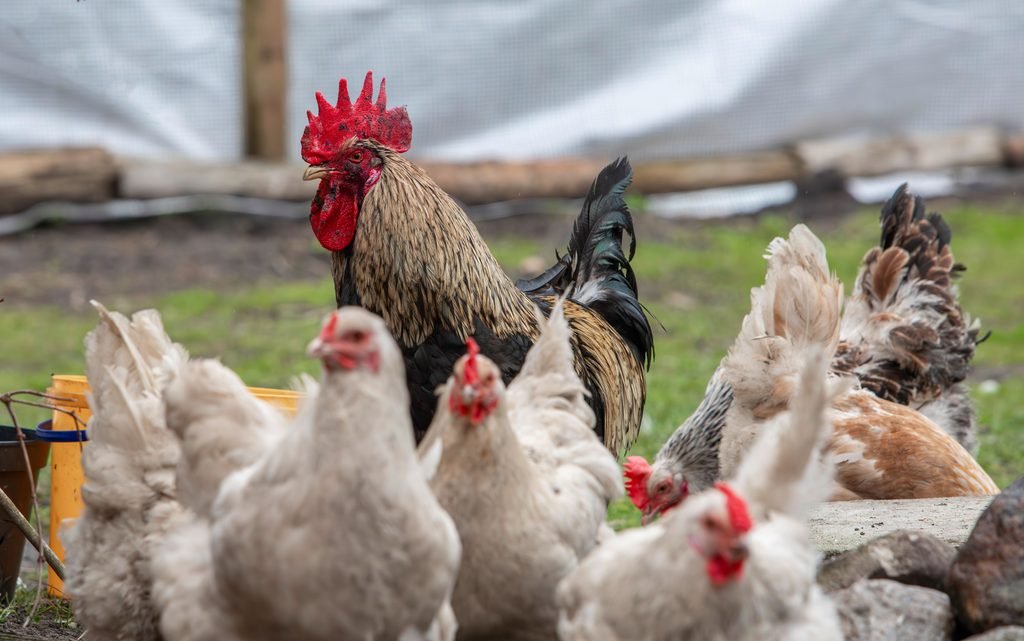
An existing solid building between the coop and a noise-sensitive receiver may help interrupt a direct sound path.
However, do not squeeze the coop into an unsuitable narrow space simply to place a structure between it and a house. The location still needs adequate ventilation, drainage, access, weather protection, cleaning space, and predator security.
Also consider fire safety and any local rules governing distances between structures.
Should the Coop Face Away From the Neighbors?
If by “face” you mean the orientation of large doors, windows, and openings, directing them away from the nearest noise-sensitive property can be worth considering during the design stage.
But the walls themselves do not make sound travel in only one direction. Crowing can pass through building components, vents, doors, and the outdoor environment.
Orientation is therefore one tool rather than a complete solution.
How Far Should a Rooster Coop Be From a House?
There is no universal distance that guarantees rooster crowing will no longer be disruptive.
The answer depends on the rooster, number of birds, coop construction, terrain, barriers, background noise, surrounding buildings, and local regulations.
More importantly, legal setback requirements differ between jurisdictions. Always check the rules applying to the property rather than relying on an arbitrary distance found online.
Where several legal and otherwise suitable locations are available, greater separation from sleeping areas is generally preferable from a noise-management perspective.
Can Moving a Coop Actually Reduce Rooster Noise?
Moving the coop does not make the rooster himself quieter. It changes the relationship between the sound source and the people hearing it.
A better location may increase distance, place a substantial structure between the rooster and a bedroom, or avoid directing major openings toward a nearby residence.
That can be useful even though the rooster continues producing the same natural vocalizations.
Should You Move the Coop Before Trying to Soundproof It?
If the existing location is obviously poor and the structure can reasonably and legally be moved, location is worth considering before investing heavily in acoustic modifications.
Soundproofing a coop positioned immediately beside a neighbor’s bedroom may be much harder than starting with a more appropriate site.
If relocation is not practical, construction improvements may become more important. Our complete guide on how to soundproof a rooster coop safely covers walls, doors, insulation, sound paths, ventilation, and other options.
What If You Have a Small Backyard?
Small properties provide fewer opportunities to increase distance, making rooster keeping more difficult from a noise-management perspective.
In that situation, local regulations should be checked before anything else. Some residential areas prohibit roosters or impose requirements that make keeping one impractical on a small lot.
If roosters are permitted, focus on the best legal location available, orientation, safe housing, appropriate barriers, and reducing unnecessary environmental triggers.
There may also be situations where the property simply cannot provide enough separation to prevent recurring noise conflict.
Can Coop Placement Stop Early-Morning Crowing?
No. Location changes the way noise affects the surroundings; it does not eliminate the rooster’s biological motivation to crow.
Predawn crowing is influenced by the rooster’s internal circadian rhythm, which means moving the enclosure to another part of the property will not reset the bird into silence.
If the goal is to address the behavior and environmental triggers rather than sound transmission, see our guide on how to reduce early-morning rooster crowing.
What If You Have More Than One Rooster?
Multiple males introduce additional potential sources of crowing. They may also participate in socially organized sequences of calls.
That makes thoughtful placement even more important when several roosters are kept on the same property.
However, more birds do not produce a simple mathematical increase in crowing because social rank can influence individual calling patterns. Our guide asking whether having multiple roosters makes them crow more explains this relationship in detail.
A Simple Way to Choose the Best Coop Location
Start by marking every location where a coop is legally permitted and physically suitable. Eliminate areas with poor drainage, unsafe heat exposure, inadequate access, or obvious security problems.
Next, compare the remaining locations with nearby bedrooms and neighboring homes. Look for the option that provides useful separation without simply moving the rooster closer to someone else.
Then consider whether existing solid structures or barriers interrupt the direct path toward noise-sensitive areas. Check where the coop’s doors and major ventilation openings would face.
Finally, confirm that the chosen location still allows adequate ventilation, daily access, cleaning, weather protection, and predator-resistant housing.
This process is more reliable than selecting a location based on distance alone.
Coop Placement Mistakes to Avoid
Do not place the coop against a neighbor’s boundary simply because that location is farthest from your own house. Do not choose a wet or flood-prone area solely for noise reasons. Do not sacrifice ventilation by squeezing the enclosure into an enclosed space.
Avoid assuming that a few shrubs will soundproof the rooster, and do not position major openings directly toward nearby bedrooms when a suitable alternative orientation is available.
Most importantly, do not build first and check local rooster regulations afterward. Confirm that the location and rooster keeping itself are permitted before investing in a permanent structure.
Frequently Asked Questions
Where should you put a rooster coop to reduce noise the most?
Where should you put a rooster coop to reduce noise? Choose a legal, well-drained, safe location that provides useful distance from bedrooms and neighboring homes, and consider orienting major openings away from noise-sensitive areas. Existing substantial barriers may also help alter the direct sound path.
Should a rooster coop be as far from the house as possible?
Greater distance from bedrooms can help with noise, but the farthest location is not automatically the best. Neighboring homes, drainage, access, weather, ventilation, security, and local regulations must also be considered.
Will a fence block rooster crowing?
A substantial solid barrier may influence outdoor sound transmission if it interrupts the direct path between the rooster and listener, but a fence will not make crowing disappear. Its effectiveness depends on its construction, dimensions, gaps, and placement.
Do trees and hedges reduce rooster noise?
Ordinary landscaping should not be relied upon as soundproofing. Dense vegetation over substantial depth can influence sound propagation, but a thin hedge or a few trees should not be expected to provide major isolation from crowing.
Should a rooster coop face away from a neighbor’s house?
When practical, directing major openings away from nearby bedrooms can be considered as part of the overall design. However, sound does not travel exclusively through the front of a coop, so orientation is only one part of noise management.
Can I put a rooster coop next to my property line?
That depends on local regulations and the surrounding property. Setback rules vary, and a boundary location may place the rooster very close to a neighboring residence. Check the requirements applying to the specific property before building.
Final Thoughts on Rooster Coop Placement
Where should you put a rooster coop to reduce noise? Start with a location that provides sensible separation from bedrooms and neighboring homes while remaining legal, dry, ventilated, secure, and practical to maintain.
Then consider orientation and the surrounding environment. Avoid directing major openings toward noise-sensitive areas when alternatives exist, and take advantage of substantial existing barriers where they fit safely into the site.
Coop placement cannot stop a rooster from crowing, but it can reduce how intrusive that crowing becomes. Choosing the location carefully before building is often simpler than trying to correct a poor location later with increasingly complicated soundproofing measures.