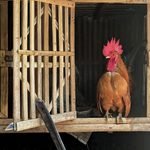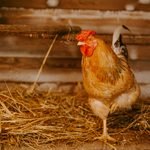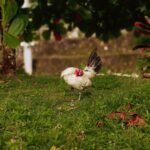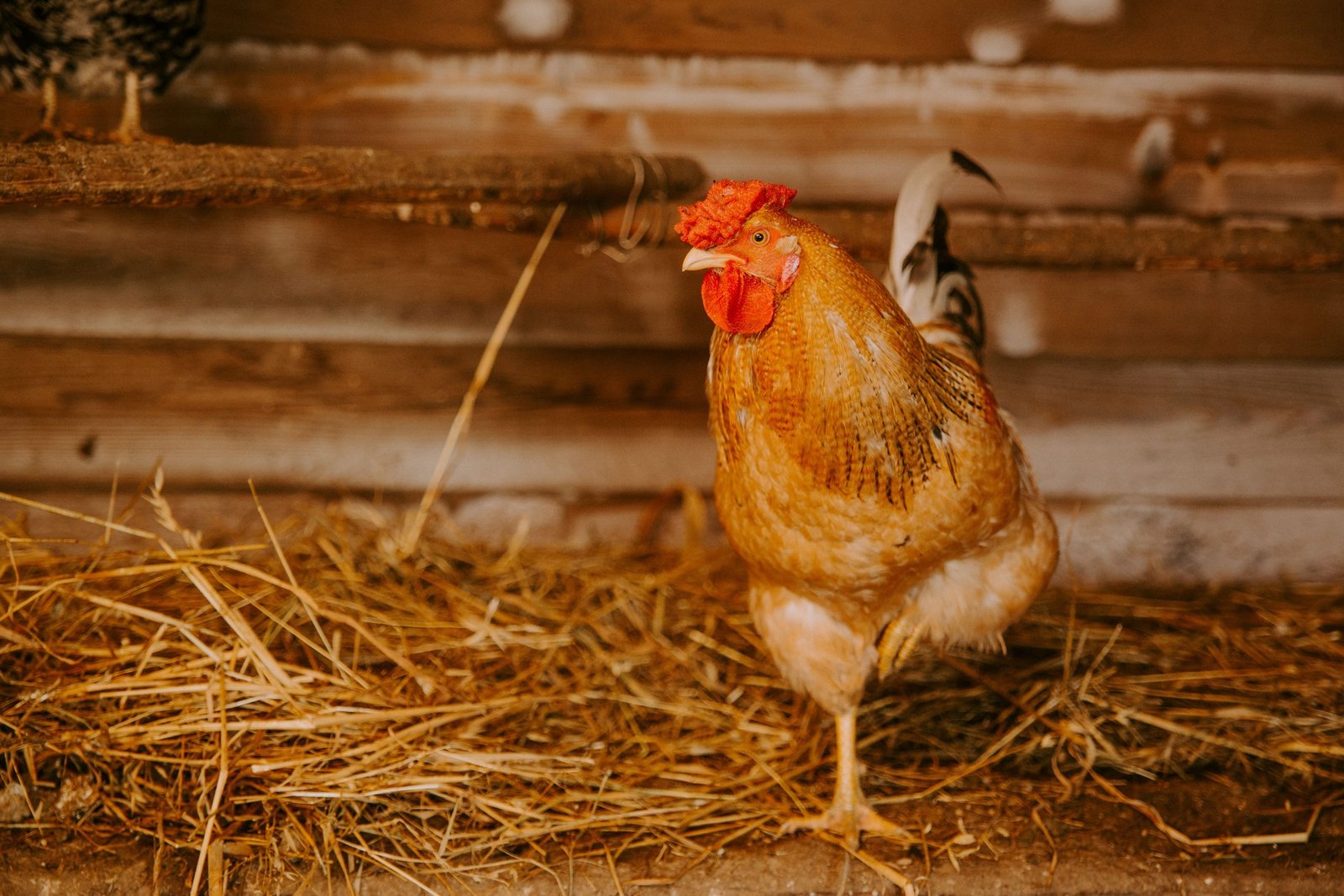
How much space does one rooster need? There is no universal rooster-specific square-foot requirement, but general chicken-housing guidelines provide a useful starting point. For a standard or large rooster with regular outdoor access, planning around 3–4 square feet of usable indoor coop space and at least 8–10 square feet of outdoor run space gives you a more practical starting point than trying to fit him into the smallest possible enclosure.
Those figures should not be treated as an exact biological requirement. Breed size, time spent confined, climate, flock size, housing design, and access to an outdoor area all affect how much space is appropriate. A rooster that spends most daylight hours in a large run uses his indoor coop differently from one that may remain confined for long periods.
There Is No Single Space Requirement for Every Rooster
Poultry space recommendations vary because chickens are kept under very different conditions. A small bantam housed with daily outdoor access does not have the same spatial needs as a large Brahma kept inside during long periods of bad weather.
Extension guidance on space allowances for backyard poultry specifically notes that precise allowances are difficult to prescribe because breed, age, outdoor access, climate, and other environmental factors affect the amount of space birds need.
Coop entrance dimensions matter too, especially for larger rooster breeds. If you’re considering an automated entrance, our guide to automatic chicken coop doors for roosters explains how to check opening sizes, safety features, and installation requirements before buying.
This is the right way to approach rooster housing. Start with established chicken-housing guidelines, then adjust upward when the rooster is large, highly active, confined for longer periods, or sharing the enclosure with other birds.
How Much Coop Space Does One Rooster Need?
For backyard planning: around 3–4 square feet of usable indoor floor space is a reasonable starting point for one standard-sized rooster that has regular access to a suitable outdoor run. A larger rooster or a bird that spends substantial time confined indoors should be given more room.
Published minimums vary. Penn State Extension’s small-scale poultry housing guidance lists 2 square feet of indoor space for large chickens, while broader Extension guidance recommends 3–4 square feet indoors for laying chickens in urban backyard systems.
Rather than treating the lowest published number as a design target, consider how the coop will actually be used. Enough usable floor area should remain after feeders, waterers, walls, and other equipment are taken into account.
For a standard-sized rooster: at least 8–10 square feet of outdoor run space is a useful starting range. Providing more space is preferable when the rooster will spend most of the day in the run rather than free-ranging or using a larger secure area.
The Merck Veterinary Manual’s backyard poultry guidance gives approximately 8–10 square feet of outside run space for laying hens and larger chickens. It also emphasizes that bird size and activity level matter when determining space.
An outdoor run is not simply an empty rectangle attached to the coop. It should give the rooster enough usable room to walk, scratch, forage, dust bathe, stretch, and move around without spending the entire day in one heavily worn patch.
Is 4 Square Feet Enough for One Rooster?
Four square feet can be a reasonable amount of indoor coop floor space for a standard rooster when the coop is primarily used for sleeping and shelter and the bird has regular access to a much larger outdoor area. It would be a very different situation if four square feet represented the rooster’s entire living area.
A rooster should not spend his life in a four-square-foot box simply because a general indoor guideline uses a similar number. Indoor coop space and total usable living space are different concepts.
If weather, predator risk, disease controls, or your management routine frequently keep the rooster inside, plan a larger indoor area rather than relying on a guideline intended for birds with regular outdoor access.
Is 10 Square Feet Enough for One Rooster?
Ten square feet provides considerably more room than a small sleeping compartment, but whether it is enough depends on what the space represents. Ten square feet of outdoor run attached to a separate coop is different from ten square feet serving as the bird’s entire environment day and night.
For an outdoor run, 8–10 square feet per large chicken appears in established poultry guidance as a useful minimum range. If the rooster spends nearly all of his waking hours in that run, providing more space can improve the amount of room available for movement and normal behavior.
When your property allows it, designing above the minimum is usually more useful than trying to determine the smallest enclosure a rooster can tolerate.
Does a Large Rooster Need More Space?
Yes, breed and body size should influence your planning. A large Brahma, Jersey Giant, or similarly substantial rooster occupies more physical space than a small bantam and may require more room to turn, walk, stretch, and use a roost comfortably.
This does not mean every large breed requires one precise additional number of square feet. Housing recommendations are not that exact. The better approach is to increase usable space as bird size increases and make sure doors, roosts, ramps, and other features are also suitable for the bird.
Large and heavy birds may also be less suited to high roosts that require substantial jumping. Coop design should account for movement and accessibility as well as floor area.
Do Bantam Roosters Need Less Space?
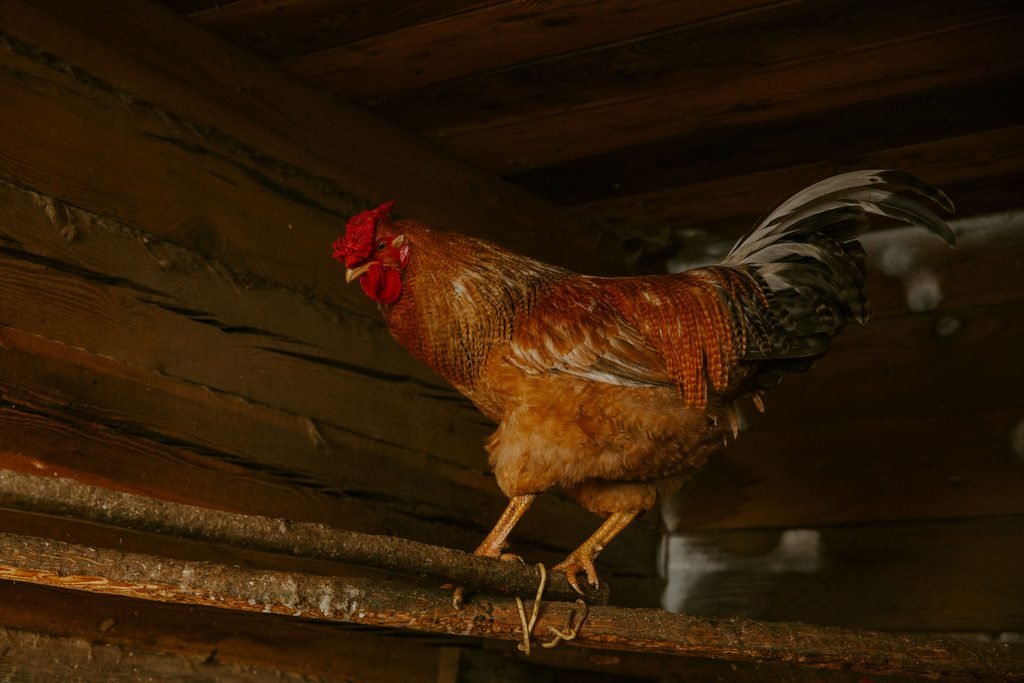
A bantam rooster physically occupies less space than a standard or large rooster, and some published poultry guidelines give smaller minimum allowances for bantam chickens. Penn State, for example, lists 1 square foot indoors and 4 square feet in an outside run as minimum space requirements for bantams.
Those numbers should not become an excuse to keep a bantam in an unnecessarily tiny enclosure. Small chickens still need opportunities to walk, scratch, forage, stretch, dust bathe, and move away from other birds.
If you have enough room to provide a larger run, there is little benefit in shrinking the enclosure simply because the rooster is a bantam.
Space Depends on How Long the Rooster Stays Inside
Time spent confined is one of the most important variables in coop sizing. A rooster that enters the coop to roost at night and spends most of the day in a large outdoor area places relatively little demand on the indoor floor during daylight hours.
The calculation changes when birds remain inside because of severe weather, predator pressure, temporary restrictions, or a management routine that delays morning release. They need enough room to move and use the enclosure during those additional hours.
This is particularly relevant if you are using the coop as part of a noise-management strategy. Our guide on whether keeping a rooster in the coop longer reduces noise explains why delayed release should only be considered when the housing remains suitable while occupied.
A Rooster Needs More Than Floor Space
Square footage is useful, but it does not describe the entire housing environment. A rooster also needs suitable headroom, ventilation, a secure sleeping area, appropriate roosting arrangements, dry footing, access to food and water as required by the management system, and protection from weather and predators.
A poorly designed 20-square-foot enclosure can function worse than a thoughtfully designed space of the same size. Large areas occupied by equipment, inaccessible corners, steep ramps, or poorly positioned roosts may add to the stated dimensions without adding much usable space.
When comparing coop sizes, focus on usable space rather than the dimensions printed on a product description.
How Much Roosting Space Does One Rooster Need?
A rooster needs enough roost length to perch comfortably without being forced against a wall or another bird. Published recommendations vary with chicken size. Penn State lists approximately six inches of perch space for standard chickens and four inches for bantams.
For a single large backyard rooster, providing additional roost length is usually easy and gives the bird room to choose his position. The bar should also be wide and stable enough for the rooster’s feet and body size.
Roost height matters for heavy breeds. Excessively high perches can increase the impact on legs and joints when a heavy rooster jumps down, so the highest possible perch is not necessarily the best design.
Does One Rooster Need a Nesting Box?
No. A rooster does not lay eggs and therefore does not require a nesting box for himself.
If hens share the coop, they will need appropriate nesting facilities. Those boxes take up physical room and need to be considered when calculating the usable layout of the coop.
A coop marketed for a certain number of chickens may include nesting areas within its advertised dimensions, which is another reason to look closely at actual usable floor space rather than relying on a manufacturer’s capacity claim.
Can One Rooster Live Alone?
Space is not the only consideration when housing a rooster by himself. Chickens are social animals, so long-term housing arrangements should consider opportunities for appropriate social interaction as well as physical room.
A rooster may sometimes need temporary separation because of injury, quarantine, flock management, or aggression. A temporary individual enclosure should still provide suitable room, ventilation, shelter, food, water, and opportunities for normal movement.
Keeping a rooster permanently alone in a small enclosure should not be treated as an easy solution to flock-management problems.
How Much Space Does a Rooster Need With Hens?
Once hens are added, calculate space for the entire flock rather than giving the rooster his allowance and fitting the hens into whatever remains.
For example, a flock containing one rooster and several hens needs enough total indoor and outdoor space for every bird to move and use resources without excessive crowding. Breed size and the amount of daily outdoor access remain important.
More space can also give individual birds opportunities to move away from one another. This becomes valuable when managing normal flock hierarchy and interactions between a rooster and hens.
What If You Have Two Roosters?
Adding a second rooster changes more than the arithmetic. You have another bird requiring physical space, but you also have additional social interactions to manage.
Roosters can establish dominance relationships, and compatibility varies between individuals. A cramped enclosure gives subordinate birds fewer opportunities to create distance from a more dominant bird.
Providing more room does not guarantee that two roosters will live together peacefully, but crowding is unlikely to improve a difficult social situation.
If you’re considering multiple males, our article on whether having more than one rooster makes them crow more also explains how rooster social hierarchy can affect vocal behavior.
Why Overcrowding Creates Problems
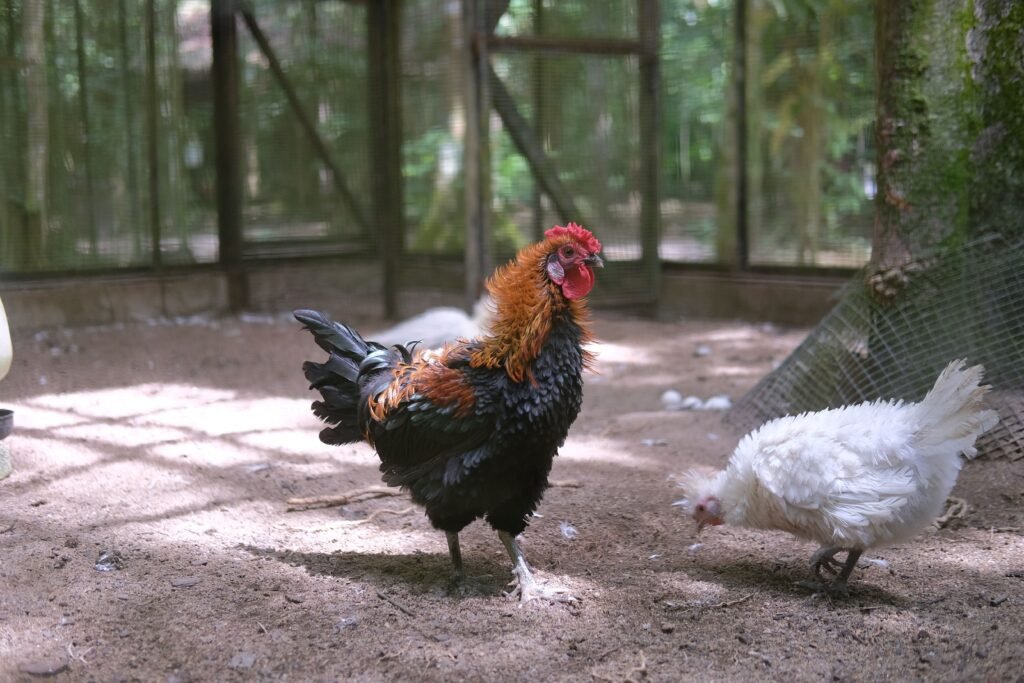
Insufficient space concentrates birds, manure, moisture, and activity into a smaller area. It can also make it harder for individual chickens to avoid one another.
Extension poultry guidance notes that inadequate space can contribute to behavioral problems such as feather pecking and cannibalism. Space allowances also affect air circulation, litter conditions, and the birds’ ability to perform normal behaviors.
This is why maximum stocking capacity is not a particularly useful goal for a backyard rooster keeper. Designing for comfortable use gives you more flexibility when weather or other circumstances keep the flock confined.
More Space Does Not Replace Good Ventilation
A large coop can still develop poor air quality if ventilation is inadequate. Chickens produce heat, moisture, carbon dioxide, manure, and airborne contaminants, so fresh-air exchange remains necessary regardless of floor area.
Likewise, ventilation does not compensate for severe overcrowding. Space and airflow work together as parts of the overall housing design.
This becomes particularly important when trying to control rooster noise. Do not reduce ventilation simply to keep crowing inside the structure. Our guide on soundproofing a rooster coop without blocking ventilation explains why safe airflow must remain a priority.
Does Free-Ranging Change the Space Requirement?
Regular access to a large outdoor area changes how a rooster uses his coop and run. A bird that spends much of the day walking and foraging across a larger secure area has more opportunities for movement than one permanently confined to a small run.
That does not mean free-ranging eliminates the need for suitable indoor housing. The rooster still needs adequate space when locked inside overnight or during periods when outdoor access is unavailable.
Free-ranging also introduces separate considerations involving predators, property boundaries, vegetation, local rules, and the safety of the birds.
What If the Rooster Cannot Free-Range?
If free-ranging is not practical, put more emphasis on the size and quality of the secure run. A rooster that spends most daylight hours inside an enclosed run benefits from having more than the smallest published allowance.
The run should provide usable room for walking, scratching, foraging, dust bathing, and environmental enrichment. It should also remain manageable during wet weather rather than becoming a permanently muddy or heavily contaminated area.
Extension guidance notes that smaller urban runs can quickly lose vegetation and require careful management, particularly when drainage is poor.
Does Climate Affect How Much Space a Rooster Needs?
Climate affects how much time the rooster can comfortably spend in different parts of his enclosure. Long periods of rain, snow, extreme heat, or other severe conditions may increase the amount of time birds spend under cover.
If your climate frequently keeps chickens inside, providing additional sheltered and indoor space becomes more valuable. A coop designed only around nighttime occupancy may feel very different when the flock has to remain there for much of the day.
Hot climates also make ventilation and shade especially important. Extra floor area does not make an overheating, poorly ventilated coop safe.
How Much Space Does an Indoor Rooster Need?
An indoor rooster should not be planned around the smallest overnight coop allowance. If the bird spends most or all of his time indoors, the enclosure becomes his primary living environment rather than simply a place to sleep.
He needs enough usable area for normal movement and behavior, along with appropriate flooring, ventilation, sanitation, roosting, enrichment, and access to food and water. The arrangement also needs to account for manure, feather dust, noise, and other practical aspects of keeping poultry in an enclosed environment.
A general 3–4-square-foot coop guideline intended for chickens with outdoor access should therefore not be interpreted as an appropriate total living area for a permanently indoor rooster.
Can a Rooster Coop Be Too Small for Noise Control?
Yes. A small enclosure may appear attractive for noise management because there is less structure to modify, but restricting the bird’s space is not an appropriate substitute for acoustic design.
A rooster should be able to stand normally, turn, stretch, move, and use his housing without being physically restricted simply to interfere with crowing.
If noise is a concern, work on the structure and its location rather than reducing the rooster’s living space. Our guide on how to soundproof a rooster coop safely covers ways to reduce sound without treating extreme confinement as the solution.
How Coop Location Affects the Space You Can Provide
The largest possible coop is not automatically the best coop if it has to be placed in a poorly drained, exposed, unsafe, or legally prohibited part of the property. Housing needs to balance usable space with location.
Choose a site that can support a sufficiently large coop and run while providing drainage, ventilation, weather protection, predator security, and reasonable access for cleaning and daily care.
If neighbors are nearby, noise also becomes part of the decision. Our guide on where to put a rooster coop to reduce noise explains how location and surrounding homes affect the practical impact of crowing.
Should You Build Bigger Than You Currently Need?
Building slightly larger than your immediate calculation can be useful if you expect the flock to grow or if birds may sometimes spend longer periods confined. It also provides more flexibility for feeders, waterers, cleaning, and changes to the internal layout.
However, bigger is not an excuse for poor design. A large building still needs appropriate ventilation, drainage, security, roosting arrangements, and weather protection.
Plan around the number and size of birds you realistically expect to keep rather than building a tiny enclosure now and assuming overcrowding can be solved later.
A Practical Space Plan for One Rooster
For one standard rooster with regular outdoor access, around 3–4 square feet of usable indoor coop floor and at least 8–10 square feet of outdoor run space provides a practical starting point. If the rooster is large, spends long periods confined, or you have room available, increase those areas rather than treating the starting figures as maximums.
Then evaluate the housing as a complete system. Make sure the rooster can move comfortably, use an appropriate roost, access food and water as required, stay dry, receive adequate ventilation, and remain protected from predators and extreme weather.
If hens or additional roosters are added, recalculate the total housing requirement. Do not assume that an enclosure planned for one bird can absorb several more without changing how the space functions.
Frequently Asked Questions
How much space does one rooster need in a coop?
How much space does one rooster need depends on his size, outdoor access, and how long he remains confined. Around 3–4 square feet of usable indoor floor space is a practical starting point for a standard rooster with regular access to a larger outdoor area, but larger breeds and birds confined for longer periods should have more room.
How much outdoor run space does a rooster need?
Published guidance for larger chickens commonly uses around 8–10 square feet of outdoor run space per bird. Providing more room is preferable when the rooster spends most of his day inside the run.
Is a 2-by-2-foot coop big enough for one rooster?
A 2-by-2-foot floor provides four square feet, which may fit within common indoor planning guidelines for a standard chicken with substantial outdoor access. Dimensions alone do not determine whether a coop is suitable, however. Height, roosting arrangements, ventilation, equipment, weather protection, and how long the rooster remains inside all matter.
Does a rooster need more space than a hen?
There is no universal rule requiring every rooster to receive a fixed amount more space than every hen. Large roosters may need more room because of their body size, and social dynamics can affect space needs when roosters live with other birds.
Does a bantam rooster need less space?
Bantams are smaller, and some poultry guidelines give them lower minimum space allowances. They still benefit from enough room to move, forage, scratch, dust bathe, and use their enclosure normally.
Can a rooster live in a coop all day?
A small coop designed mainly for sleeping should not automatically be used as a full-time living area. If a rooster spends extended periods indoors, provide substantially more usable space and ensure the enclosure supports movement, ventilation, sanitation, food and water access, and normal behavior.
Final Thoughts
How much space does one rooster need? For a standard rooster with regular outdoor access, around 3–4 square feet of usable indoor coop space and at least 8–10 square feet of outdoor run space is a sensible planning starting point. These figures are guidelines rather than a universal rooster-specific requirement.
Breed size, climate, time confined, housing design, flock size, and outdoor access can all justify providing more room. Large roosters and birds that spend much of the day confined should not be planned around the smallest published minimum.
Most importantly, think beyond square footage. A suitable rooster setup combines enough usable space with ventilation, secure shelter, appropriate roosting, dry conditions, predator protection, and room for normal movement. If you have the space to build comfortably above the minimum, that is usually a better long-term plan than designing the smallest enclosure that can fit the bird.