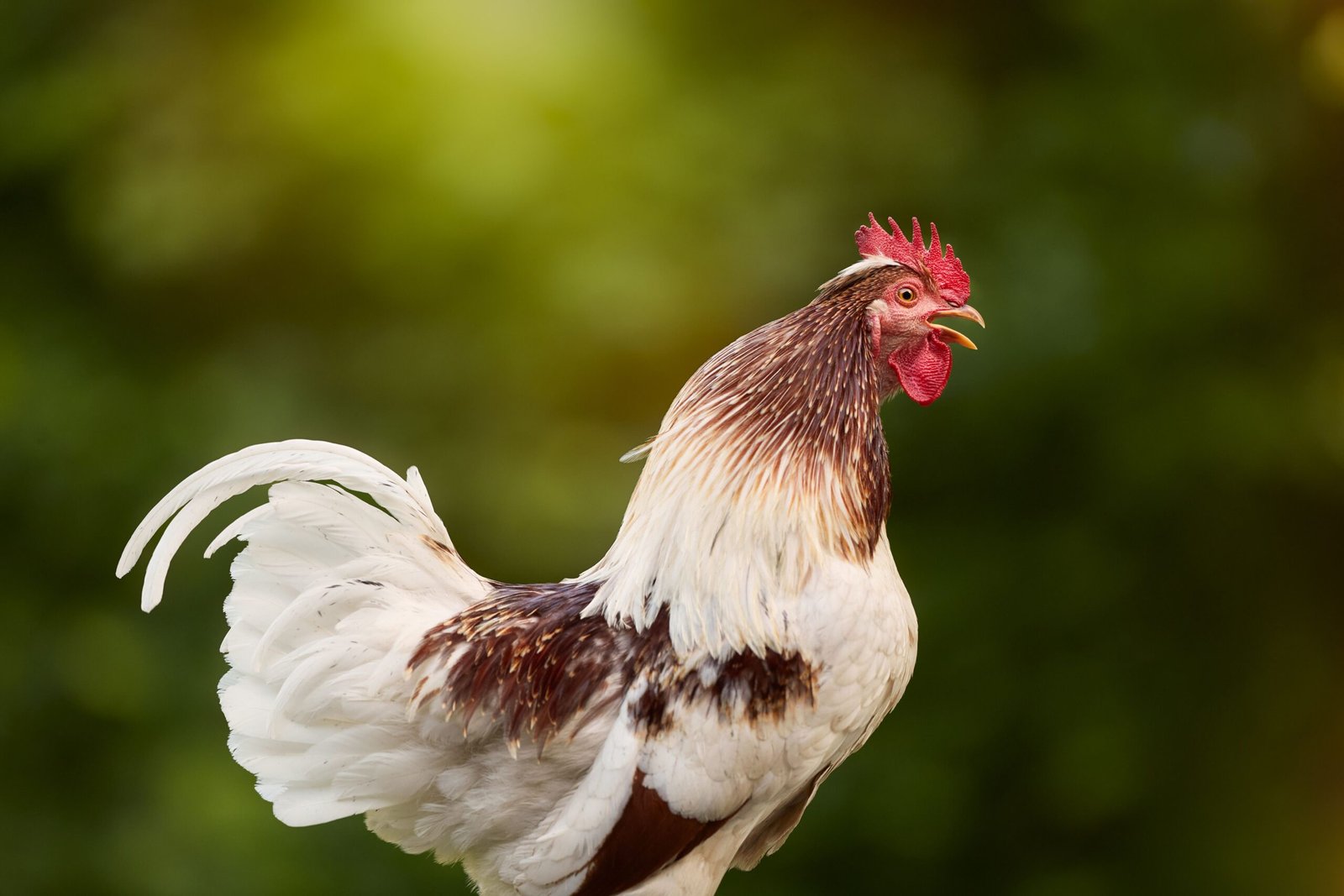
How far away can you hear a rooster crow? There is no single distance that applies to every rooster or every property. A crow may remain noticeable hundreds of feet away and, under favorable conditions, potentially much farther. However, claims that every rooster can be heard from a specific number of miles are not supported by a universal scientific rule.
How far the sound carries depends on the rooster, distance, terrain, buildings, barriers, background noise, weather conditions, whether the bird is inside a coop, and the position of the listener. The important question is therefore not simply how loud a rooster is, but how much of that sound remains detectable after traveling through the surrounding environment.
How Loud Is a Rooster Crow?
Rooster crowing can produce high sound pressure levels close to the bird.
Research published in the journal Zoology reported previous measurements of around 100 dB at a distance of one meter from a crowing rooster. The researchers also measured extremely high sound levels near the rooster’s own ears while investigating how the birds protect themselves from their vocalizations.
You can read the rooster crowing study published in Zoology for the research details. These measurements demonstrate that a crow can be powerful at close range. They do not tell us that every rooster can be heard at one particular maximum distance.
There Is No Universal Maximum Hearing Distance
You will often see claims that a rooster can be heard one mile, two miles, or even farther away. Some rooster keepers report hearing individual birds across large rural properties.
Those observations may be genuine, but they should not be converted into a universal rule. Audibility depends on the sound reaching the listener relative to the surrounding background noise. A distinctive crow across quiet countryside may remain recognizable at a distance where the same bird would be difficult to hear beside a busy road.
There is therefore no scientifically established distance at which all rooster crows suddenly become inaudible.
Why Distance Makes a Rooster Sound Quieter
Sound spreads as it travels away from its source. As that acoustic energy spreads across a larger area, the sound pressure level at the listener generally decreases. This is why a rooster standing a few feet away sounds dramatically more intense than the same bird heard from farther across a property.
Outdoor conditions make the real-world relationship more complicated. Reflections, barriers, ground conditions, vegetation, wind, and other factors can alter propagation. Distance is therefore important, but it is not the only factor.
Can You Hear a Rooster From 100 Feet Away?
A rooster may certainly remain audible at 100 feet under many ordinary conditions.
That distance alone should not be assumed to provide meaningful acoustic separation from a neighboring home. Whether someone hears the rooster indoors will also depend on the house, windows, walls, background noise, and where the rooster is positioned.
If a neighboring bedroom is only around this distance from a coop, it is sensible to assume that crowing could potentially be noticeable rather than assuming the distance will solve the problem.
Can You Hear a Rooster From 500 Feet Away?
It is possible for rooster crowing to remain audible at 500 feet. Again, there is no guarantee in either direction.
An exposed rooster crowing across quiet open ground presents a different situation from a bird inside a substantial coop with buildings and other barriers between him and the listener. The question also changes depending on whether someone is standing outdoors listening for the bird or sleeping inside a closed house.
Can You Hear a Rooster From a Quarter Mile Away?
A quarter mile is about 1,320 feet, or approximately 400 meters. Anecdotal reports from poultry keepers show that people sometimes hear roosters at this distance, particularly in quiet rural environments.
These reports demonstrate what can happen, not what will happen on every property. Background noise, buildings, terrain, wind, vegetation, coop construction, and the individual rooster can all change the result.
Someone considering a rooster should not assume that a quarter mile automatically puts neighboring properties beyond hearing range.
Can You Hear a Rooster From a Mile Away?
Some poultry keepers report recognizing rooster crows from around a mile away or farther in favorable conditions. These reports are anecdotal rather than a controlled measurement establishing a standard rooster hearing range.
A mile should therefore not be presented as either a guaranteed maximum or a guaranteed safe distance.
A loud, distinctive call traveling across quiet open terrain may remain detectable much farther than the same call in a dense neighborhood with traffic and other background sounds. Instead of asking whether one mile is the official limit, consider the conditions between the rooster and the listener.
Why Roosters Can Seem Louder in the Early Morning
The early morning is one of the most important periods for rooster noise because predawn crowing is part of normal rooster behavior. The surrounding environment may also be quieter at this time. There may be less traffic, machinery, conversation, yard work, and other human activity masking the crow.
As a result, a distant rooster can be much more noticeable during a quiet morning than during a busy afternoon, even without assuming that the rooster himself has suddenly become louder.
Our guide on why roosters crow at 4 AM and before sunrise explains the biological timing behind early crowing.
Does Wind Affect How Far Rooster Crowing Travels?
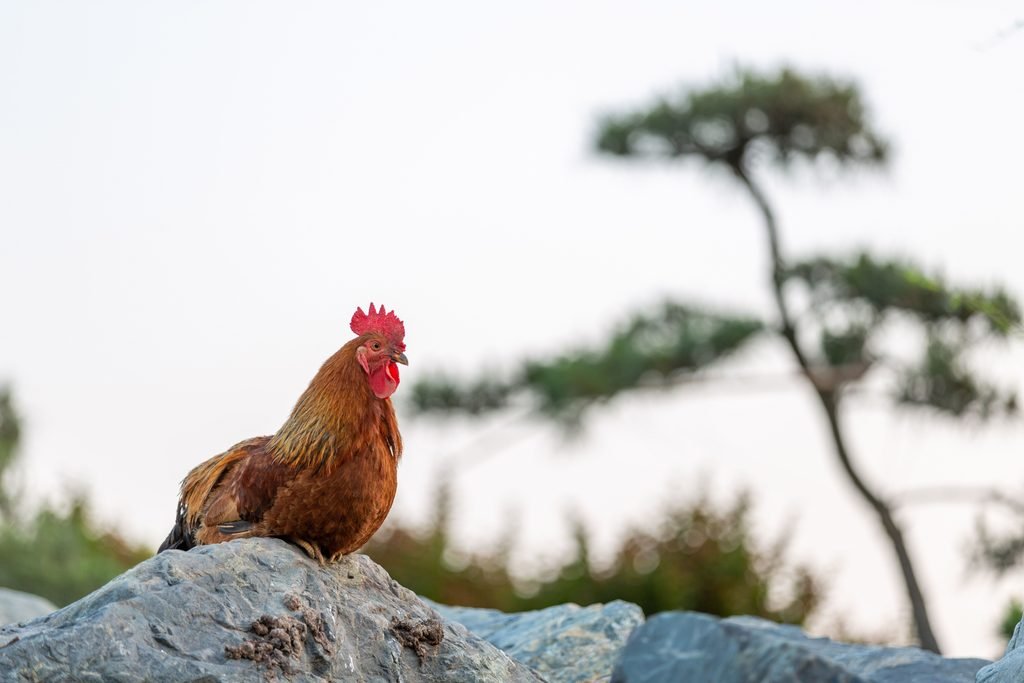
Wind can affect outdoor sound propagation, but the result is more complicated than saying that wind simply carries a crow a fixed extra distance.
Wind speed and direction can alter the way sound propagates through the atmosphere. The relationship also changes with height and surrounding conditions.
For a rooster owner, the practical lesson is simple: the same rooster may not sound equally noticeable at a distant location every day. Do not use one quiet observation from one weather condition as proof that neighbors will never hear the bird.
Does Terrain Affect Crowing Distance?
Yes. Terrain changes the physical relationship between the sound source and listener. Hills, depressions, ridges, buildings, and other substantial features can interrupt or alter sound paths. An unobstructed elevated position can behave differently from a location surrounded by substantial structures or terrain.
There is no universal rule that a rooster should always be placed uphill or downhill to control noise. The actual property layout matters more than a generic terrain recommendation.
Does an Open Field Let Crowing Travel Farther?
Open ground can provide a relatively unobstructed path between a rooster and a listener. If there are no substantial buildings or barriers between them, there may be fewer physical obstructions affecting the direct sound path.
This helps explain why rooster crowing can remain surprisingly noticeable across quiet rural land. However, the exact hearing distance still cannot be predicted from the presence of an open field alone.
Do Buildings Reduce How Far a Rooster Can Be Heard?
Buildings can affect outdoor sound propagation by blocking, reflecting, or redirecting sound. A substantial structure positioned between the rooster and a listener may interrupt the direct sound path. In other situations, hard surfaces can produce reflections that make the acoustic environment more complicated.
This is one reason coop placement should consider surrounding structures rather than distance alone. Our article on where to put a rooster coop to reduce noise explains how distance, orientation, neighboring homes, and existing barriers can be considered together.
Do Trees and Hedges Stop Rooster Noise?
A few trees or shrubs should not be treated as reliable soundproofing. Dense vegetation extending across substantial depth can influence outdoor sound propagation, but a narrow hedge is not equivalent to a solid acoustic barrier.
Landscaping can still be useful for visual screening and property design. It simply should not be relied upon to make a nearby rooster inaudible. Distance and substantial physical barriers are generally more useful factors to consider when planning around neighboring homes.
Can You Hear a Rooster Farther Away at Night?
A distant rooster may seem particularly noticeable at night or during the predawn hours because background noise can be lower. Atmospheric conditions can also influence outdoor sound propagation. However, it would be misleading to claim that rooster crowing always travels a particular multiple farther at night.
What matters to a sleeping neighbor is the sound that reaches the bedroom relative to the surrounding noise. A distant crow that disappears into daytime activity may stand out clearly when everything else is quiet. If nighttime calling is the problem, see our guide on why a rooster may crow at night.
Does the Rooster’s Breed Affect How Far His Crow Travels?
Individual roosters differ in their vocalizations, and body size and vocal characteristics can vary between birds. However, there is not enough comparative evidence to assign every breed a reliable maximum hearing distance. A bantam should not automatically be considered neighbor-safe simply because he is smaller.
Likewise, it is not responsible to say that one breed can always be heard a certain number of feet farther than another without controlled comparative measurements. If size is part of your decision, our article on whether bantam roosters crow loudly explains why smaller does not necessarily mean quiet.
Can a Silkie Rooster Be Heard From Far Away?
Silkie roosters still crow and can be audible beyond their immediate enclosure. There is no established Silkie-specific distance at which the crow becomes inaudible. Online descriptions of Silkies as quieter than other roosters should not be interpreted as a guarantee that neighbors will not hear them.
The individual bird, surroundings, housing, and distance remain important. For a closer look at this breed, see our guide on how loud a Silkie rooster can be.
Does Having More Than One Rooster Affect the Noise?
Multiple roosters create multiple potential sound sources. They can also respond to one another. Research published in Scientific Reports found that social rank influenced the order of predawn crowing, with higher-ranking males generally taking priority in the crowing sequence.
You can read the Scientific Reports study on rooster social rank and predawn crowing for the experimental findings. This does not mean that two roosters automatically produce twice the noise. It does mean that a multi-rooster property may create more opportunities for crowing to be noticed.
Can Other Roosters Hear and Answer a Distant Crow?
Roosters can respond to the crowing of other roosters, although the distance over which a response occurs depends on whether the call remains audible and meaningful to the bird. There is no established universal maximum response distance.
When one rooster answers another, the result can make crowing seem more widespread because calls originate from multiple locations. Our guide on whether roosters crow more when they hear another rooster examines this behavior in more detail.
Does a Coop Reduce How Far Crowing Travels?
A substantial enclosure can reduce some sound transmission compared with a rooster crowing in the open. The effect depends on the walls, roof, doors, gaps, ventilation openings, and overall construction. An open-sided shelter will not perform like a more substantial enclosed structure.
Ventilation is especially important. Any safe poultry enclosure needs fresh-air exchange, and openings that allow air to move can also allow sound to escape. This means a normal rooster coop should not be expected to contain every crow.
Can Neighbors Still Hear a Rooster Inside the Coop?
Yes. Walls and a closed door may reduce the amount of sound reaching neighboring properties, but they do not guarantee silence.
Ventilation openings, lightweight construction, gaps, and proximity to the neighbor can all keep the crow clearly noticeable. Our guide answering whether neighbors can hear a rooster inside a coop examines this situation specifically.
Does Soundproofing Reduce the Hearing Distance?
Safe sound-reduction measures can reduce the amount of crowing transmitted through parts of the enclosure. In turn, that can make the rooster less noticeable at surrounding locations. But there is no universal formula such as adding one material and reducing the hearing distance by half.
The result depends on the complete building assembly and the environment around it. Our guide on how to soundproof a rooster coop safely covers solid construction, doors, wall assemblies, sound paths, barriers, and ventilation without recommending that the enclosure be sealed airtight.
Why Background Noise Matters So Much
Audibility depends partly on the relationship between the rooster’s crow and other sounds reaching the listener. Traffic, machinery, wind, air-conditioning equipment, people, dogs, and general daytime activity can make a distant crow harder to distinguish.
In a quiet rural setting, there may be much less competing sound. This helps explain why two people can give completely different answers about how far away they can hear their roosters. Their acoustic environments may be completely different.
Why Being Audible Is Different From Being Annoying
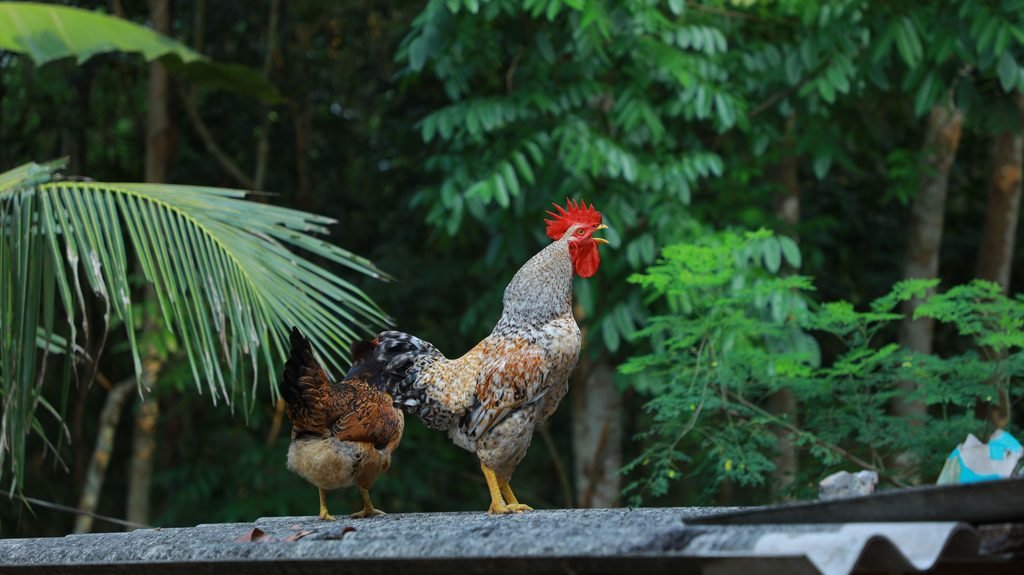
A rooster can be faintly audible without being disruptive. Conversely, repeated crowing at a shorter distance during sleeping hours may create a serious problem even if the sound does not travel particularly far.
Frequency, timing, duration, repetition, background noise, and the listener’s circumstances all affect the practical impact. For neighbor management, asking whether the bird can technically be detected is less useful than asking whether repeated crowing is likely to disturb people at sensitive times.
Can You Use a Phone App to Measure Rooster Noise?
A smartphone sound-level app can be useful for rough comparisons, such as checking whether one housing change appears to alter readings at the same location.
However, a phone should not automatically be treated as a calibrated professional sound-level meter. Different microphones, devices, software, settings, wind conditions, and measurement methods can produce different results.
If measurements are needed for regulatory, legal, or formal nuisance purposes, use the measurement method required by the relevant authority rather than relying solely on a consumer phone app.
How Loud Is a Rooster at One Meter?
Scientific literature provides useful context here. A study in the Journal of Anatomy discusses rooster crowing measurements of up to about 100 dB at a distance of one meter. Separate research measured even higher sound pressure levels much closer to the rooster’s ears.
The Journal of Anatomy study on the domestic chicken ear discusses the one-meter measurements and the unusual auditory mechanics associated with rooster vocalization.
These figures show why a rooster can sound extremely loud at close range. They should not be converted directly into a guaranteed hearing distance without considering environmental sound propagation.
Why You Should Be Careful With Decibel Claims
A decibel figure is meaningful only when you understand how and where it was measured. A measurement near a rooster’s ear is not comparable to a measurement one meter away. A peak measurement is not necessarily equivalent to an average over a longer period.
Housing also matters. A microphone inside a poultry building measures a different acoustic environment from one positioned outdoors at a neighboring property. When comparing rooster-noise claims online, always look for the measurement distance and conditions before treating the number as meaningful.
Can You Predict Whether Your Neighbor Will Hear Your Rooster?
You can estimate the risk, but you cannot predict it perfectly from distance alone. Start with the actual property. Measure the approximate separation between the coop and nearby homes. Look for bedrooms, open windows, substantial barriers, buildings, terrain, and major roads or other background-noise sources.
Then consider when the rooster is most vocal. Early-morning crowing deserves particular attention because people may still be sleeping and environmental noise may be lower.
If the neighbor is close, it is safer to assume the rooster may be audible than to rely on an arbitrary online distance.
How Far Should a Rooster Coop Be From a Neighbor?
There is no universal distance that guarantees a neighbor will not hear a rooster. Local regulations may also specify setbacks, minimum property sizes, nuisance requirements, or prohibit roosters altogether. Those legal requirements vary significantly between jurisdictions.
Check the rules that apply to the specific property before building a coop or acquiring a rooster. Where several legal and otherwise suitable locations are available, increasing practical separation from neighboring bedrooms can be useful for noise management.
What If You Live in a Suburban Area?
Suburban rooster keeping can be difficult because homes are often close together.
A rooster does not need to be audible for miles to cause a problem. If the nearest bedroom is only a short distance away, repeated predawn crowing may be disruptive even when the sound travels no farther than the immediate neighborhood.
Before keeping a rooster on a small property, check local rules and evaluate the actual distance to neighboring homes. Do not assume a quieter breed, small rooster, dark coop, or thin layer of soundproofing will guarantee that nearby residents cannot hear him.
What If You Live on a Rural Property?
Rural properties often provide more distance between homes, but that does not automatically make a rooster inaudible. Quiet surroundings and open land can make distinctive animal sounds noticeable from considerable distances.
The advantage is that greater separation may make the crow less intrusive by the time it reaches another residence. Again, audibility and disturbance are not the same thing. A faint rooster across rural land is a different noise situation from repeated crowing immediately outside a bedroom.
How to Reduce How Far Your Rooster’s Crow Carries
Start with coop location. Increase practical separation from nearby bedrooms where the property, animal needs, and local rules allow it. Consider the orientation of large doors and ventilation openings. Avoid unnecessarily directing them toward nearby homes.
Improve obvious weaknesses in the enclosure without blocking required airflow. Solid walls, an appropriately constructed door, correction of unnecessary gaps, and substantial external barriers may all form part of a broader sound-management strategy.
If the coop provides useful sound reduction and remains suitable for the birds, keeping the rooster inside for a reasonable part of the earliest morning period may also reduce how much of that crowing reaches surrounding properties.
Our guide on whether keeping a rooster in the coop longer reduces noise explains the limits of that strategy.
Frequently Asked Questions
How far away can you hear a rooster crow in the morning?
How far away can you hear a rooster crow depends on the individual bird and the environment. A rooster may remain audible hundreds of feet away and potentially much farther under favorable conditions, but there is no scientifically established universal maximum distance.
Can a rooster be heard a mile away?
Some rooster keepers report hearing birds from around a mile away or farther, particularly in quiet rural conditions. These reports are anecdotal and should not be treated as a guaranteed hearing range for every rooster.
Can neighbors hear a rooster 500 feet away?
They potentially can. Whether the rooster is noticeable depends on the bird, housing, barriers, terrain, background noise, weather, and whether the neighbor is indoors or outside.
Can a rooster be heard through a closed coop?
Yes. A closed coop may reduce sound transmission, but crowing can still pass through walls, doors, roofing, gaps, and necessary ventilation openings.
Does rooster crowing travel farther in the morning?
It may be more noticeable in the early morning because background noise is often lower. Atmospheric conditions can also affect sound propagation, but there is no fixed multiplier for how much farther a crow travels at that time.
Are bantam roosters harder to hear from far away?
Smaller size does not guarantee that a bantam will be inaudible to neighbors. Individual vocal characteristics vary, and there is no reliable maximum hearing distance that applies to all bantam breeds.
Final Thoughts
How far away can you hear a rooster crow? There is no fixed answer. A crow can remain audible across a substantial distance, particularly in quiet, open surroundings, but the hearing range changes with the rooster, housing, terrain, barriers, weather, background noise, and listener.
Scientific measurements confirm that rooster crowing can reach high sound pressure levels close to the bird. They do not establish a universal rule that every rooster can be heard for a particular number of miles.
If neighbor noise is the concern, focus less on finding a supposed maximum hearing distance and more on the actual property. Consider the distance to bedrooms, coop construction, orientation, barriers, early-morning conditions, and local regulations. Those factors provide a much more useful picture of whether a rooster is likely to create a noise problem.