Are Silkie roosters quieter than other bantam roosters? There is no reliable evidence that Silkies consistently crow more quietly than every other bantam breed. Silkies are often described as gentle, manageable chickens, but a calm temperament does not necessarily mean a quiet crow. Individual roosters can differ in how loudly, how often, and at what times they call.
When comparing a Silkie with another small rooster, it helps to separate three questions: how the crow sounds, how frequently the bird crows, and how noticeable that sound will be to people nearby. A high-pitched crow may seem less powerful than a deeper one, yet still carry across a backyard and disturb neighbors during quiet morning hours.
The most useful approach is to understand what breed and size can tell you, recognize what they cannot predict, and evaluate the actual rooster and the environment where he will live.
Silkie vs Bantam Rooster: Understanding the Difference
Before comparing crowing behavior, there is an important distinction to make. A Silkie is a recognized chicken breed, while the word bantam refers to a category of small chickens. Bantams include naturally small breeds and miniature versions of larger breeds, depending on the breed and the poultry standards used.
Silkies themselves are commonly kept as bantams. This means a Silkie rooster is not necessarily an alternative to a bantam rooster; he may already be one. The meaningful comparison is between a Silkie and other bantam breeds, such as Seramas, Cochin bantams, or Belgian d’Uccles.
That distinction matters because bantams do not all share the same body shape, temperament, or vocal characteristics. Treating every bantam as one type of rooster makes it difficult to offer a useful comparison.
Are Silkie Roosters Quieter Than Other Bantams?
Silkie roosters may sound different from other bantam roosters, but there is no dependable breed-wide ranking showing that Silkies are consistently the quietest. Their small size and distinctive appearance can create the impression that they must produce a softer crow, although appearance alone cannot establish how much noise a bird will make.
Some Silkie roosters may have relatively modest-sounding crows, while others are surprisingly noticeable. The same variation occurs among other bantam breeds. Two roosters of the same breed may differ enough that their individual crowing habits matter more than the breed label.
For a closer look at Silkies specifically, our guide on how loud a Silkie rooster can be explains why their crowing should not be underestimated simply because they are small.
How Silkie Crowing Compares With Other Bantam Breeds
Different bantam breeds can vary in body size, posture, activity, and the sound of their vocalizations. However, there is a difference between describing those characteristics and claiming that one breed is scientifically proven to be quieter than another.
The following comparison is intended to help you understand what to consider when choosing a rooster. It is not a ranking of measured crowing volume.
Silkie Roosters
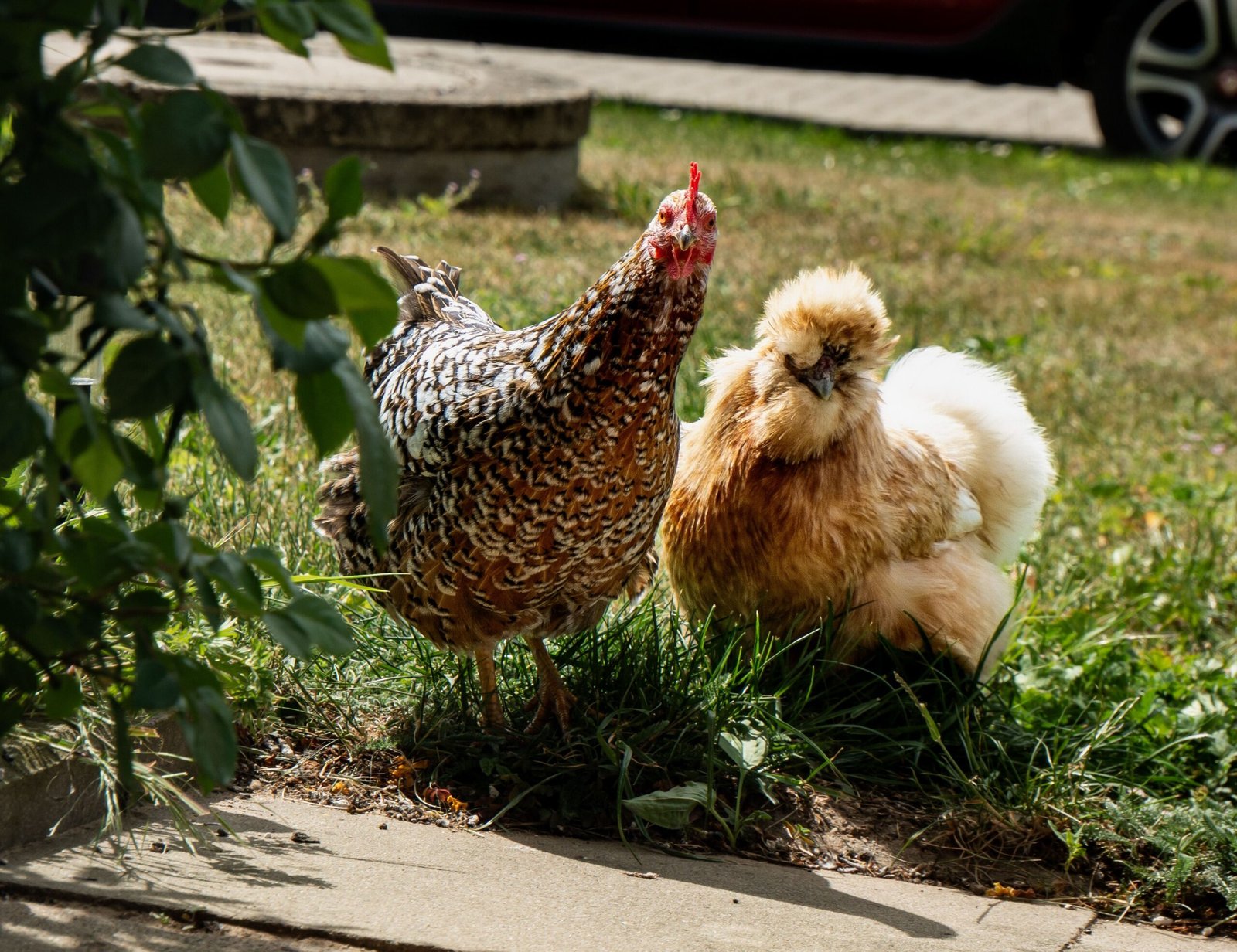
Silkies are recognizable by their unusual feathering, crests, and generally rounded appearance. They are often valued as ornamental and companion chickens, and many keepers choose them partly because of their reputation for manageable behavior.
That reputation should not be confused with silence. A Silkie rooster can crow before sunrise, respond to activity around the property, and vocalize repeatedly during the day. His temperament around people does not reliably predict the loudness or frequency of his crow.
Our article on whether Silkie roosters are quiet explores this distinction in greater detail.
Serama Roosters
Seramas are very small chickens, making them an obvious breed to consider when space is limited. Their compact size may influence the character of their vocalizations, but it should not be taken as proof that they will crow infrequently or remain unobtrusive.
A sharp or high-pitched crow can still be noticeable, especially when the bird calls repeatedly or when surrounding homes are close together. Choosing a very small rooster does not remove the need to plan for early-morning noise.
If you are considering a Serama, the individual bird’s actual crowing behavior is more informative than an unsupported claim that the breed is always quieter than a Silkie.
Cochin Bantam Roosters
Cochin bantams have a rounded body shape and abundant feathering. They are often discussed alongside Silkies by people looking for ornamental backyard chickens with appealing temperaments.
Despite similarities in appearance or general breed reputation, there is no sound basis for assuming that a Cochin bantam will always crow more softly than a Silkie. The two birds may differ in crow pitch and delivery, but their actual noise impact depends on the individual rooster and his surroundings.
Temperament remains relevant when selecting a backyard bird, but it should be evaluated separately from crowing.
Belgian d’Uccle Roosters
Belgian d’Uccles are another small ornamental breed, known for features such as feathered legs and distinctive plumage. They may appeal to keepers who want a compact rooster with a different appearance from a Silkie.
As with other bantams, there is no reliable universal rule that predicts whether an individual d’Uccle will crow more or less than a Silkie. Size and breed characteristics can help you choose a bird that suits your housing preferences, but they do not provide a dependable noise guarantee.
Anyone choosing between these breeds for a residential backyard should give considerable weight to the rooster’s actual vocal behavior and the distance to neighboring homes.
Comparison at a Glance
| Rooster type | What to expect | Can quiet crowing be guaranteed? |
|---|---|---|
| Silkie | Small ornamental breed; individual crowing varies | No |
| Serama | Very small body size; crow may have a distinctive pitch | No |
| Cochin bantam | Compact, heavily feathered breed; individual crowing varies | No |
| Belgian d’Uccle | Small ornamental breed; individual crowing varies | No |
The comparison highlights an important limitation: breed descriptions are useful for understanding appearance, size, and general management, but they are not substitutes for consistent measurements of crowing volume and frequency. Without comparable evidence, naming one breed as the quietest would be misleading.
Does a Smaller Rooster Have a Quieter Crow?
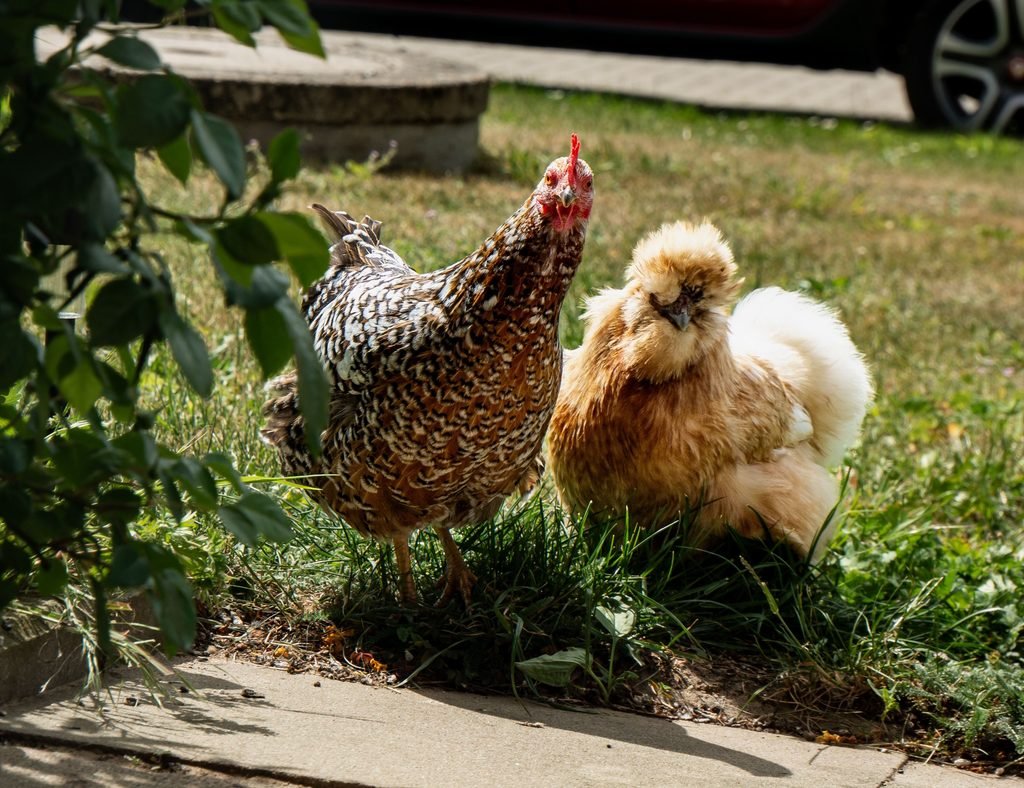
Smaller body size can influence the physical characteristics of a bird’s vocalizations, but it does not follow that every smaller rooster will sound quieter to a listener. Pitch, duration, repetition, distance, and the surrounding environment all influence how noticeable a crow becomes.
A high-pitched call may sound less deep than the crow of a large rooster while still being piercing or distracting. Conversely, a deeper crow may sound more substantial without necessarily occurring as often.
For this reason, the question is not simply whether a Silkie or another bantam is smaller. It is whether the actual bird produces a sound that is manageable in the place where he will be kept.
Crow Volume and Crowing Frequency Are Different
People sometimes describe a rooster as quiet when they mean he does not crow very often. Others use the same word to describe a bird whose individual calls seem relatively soft. These are two different characteristics, and both matter when comparing breeds.
A rooster with a relatively modest-sounding crow can still create a nuisance if he calls frequently throughout the morning. Another bird may crow less often but produce calls that are more noticeable at a distance.
Our guide on how often roosters crow explains why crowing frequency varies and why a fixed daily number should not be assumed for a particular breed.
Why Crowing Pitch Matters
Pitch describes how high or low a sound is perceived to be, while loudness describes how strong it seems to a listener. The two are related to the listening experience but are not interchangeable.
When comparing Silkies with other bantams, you may notice differences in the tone or shape of their crows. One bird may sound sharper, another more drawn out, and another relatively abrupt. These differences can affect personal perception without establishing a consistent breed-wide advantage.
Listening to an actual adult rooster is therefore more useful than relying on descriptions such as soft, squeaky, deep, or quiet. Even then, a recording may not accurately represent how loud the bird will sound in your own backyard.
Why Some Roosters Crow Before Sunrise
Early-morning crowing is not unique to large breeds. Silkie roosters and other bantams can begin calling before daylight because crowing is influenced partly by an internal biological clock.
Researchers demonstrated this in a study published in Current Biology, which found that predawn crowing is controlled by circadian timing, although external cues can also influence vocal behavior. The research on the circadian timing of rooster crowing helps explain why darkness alone does not guarantee silence.
This matters when choosing a rooster for a neighborhood where early calls may be more disruptive than daytime crowing. A small bird can still wake nearby residents if he starts calling while the surroundings are quiet.
Does Temperament Tell You Which Rooster Will Be Quieter?
Not reliably. A rooster that is gentle during handling or calm around people may still crow frequently. Crowing is a normal male chicken behavior rather than a simple measure of aggression, friendliness, or nervousness.
Breed temperament can be useful when considering how a rooster may fit into a flock and how manageable he might be around people. However, descriptions of docility should not be used as evidence that the bird will make less noise.
When selecting between a Silkie and another bantam, assess temperament and crowing as separate factors. A bird may be suitable in one respect without meeting your needs in the other.
Does Keeping More Than One Rooster Change the Comparison?
Yes. Social relationships can affect crowing behavior, which makes it difficult to compare two roosters fairly when they live in different flock arrangements.
A study published in Scientific Reports found that, within the groups examined, the highest-ranking rooster generally initiated predawn crowing and subordinate males followed. The study of rooster social rank and crowing order shows that social position can influence vocal behavior independently of a simple breed comparison.
A Silkie living alone and a bantam living with several other males may therefore have different crowing patterns for reasons unrelated to breed. Our article on whether multiple roosters increase crowing examines that issue separately.
Which Is Better for a Small Backyard?
For a small backyard, neither a Silkie nor another bantam should be chosen on the assumption that he will be quiet. Smaller chickens may be easier to accommodate physically than large breeds, but the available space still needs to support normal movement, roosting, outdoor activity, ventilation, and appropriate social conditions.
The bigger limitation may be noise rather than enclosure size. A compact rooster can still produce noticeable predawn calls, particularly when neighboring homes are close and there are few barriers between the coop and bedroom windows.
Our guide on keeping a rooster in a small backyard covers the combined issues of legal restrictions, housing, neighbors, and usable space.
Can Neighbors Hear a Silkie or Bantam Rooster?
Yes. Neighbors may hear either type of rooster, including when the bird is inside a coop. The distance between properties, the location of the enclosure, surrounding structures, open windows, and background noise all affect how noticeable the crow becomes.
There is no universal distance at which a Silkie or another bantam becomes inaudible. A crow that seems manageable while you are standing beside the enclosure may still be disruptive to someone trying to sleep nearby.
Before choosing a breed specifically for residential keeping, read our guide on whether neighbors can hear a rooster inside a coop. It explains why enclosing the bird does not automatically solve the noise problem.
How to Compare Two Roosters Before Choosing
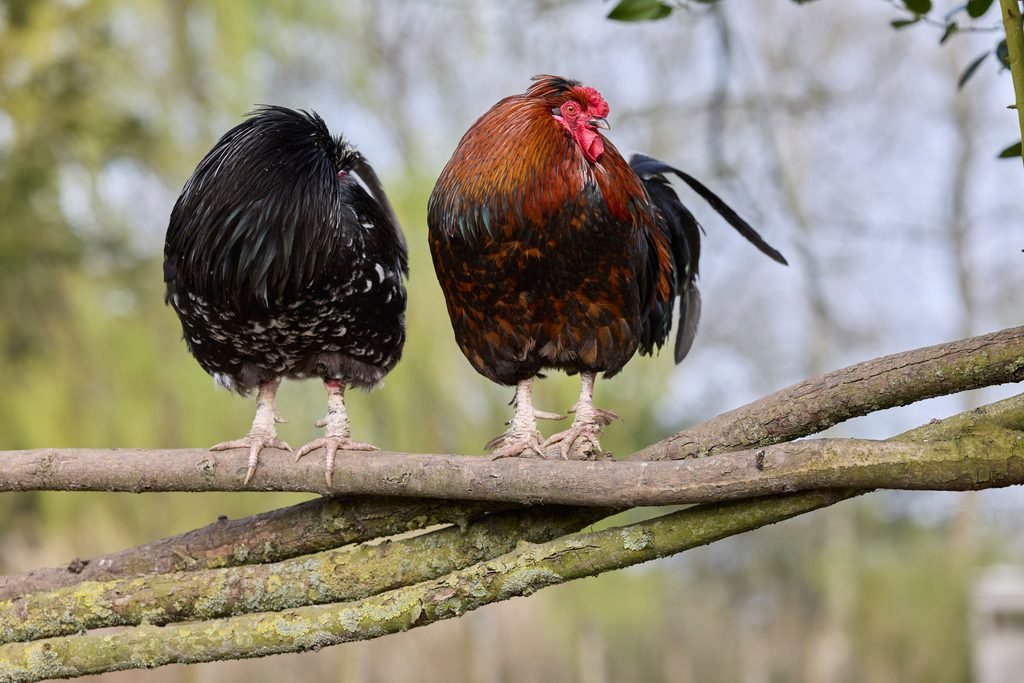
If you have access to adult birds before making a decision, observing their actual behavior can provide more useful information than relying on breed reputation alone. Listen to the character of each crow, note how frequently the bird calls during the observation period, and consider the circumstances in which the calls occur.
A single short visit will not establish a rooster’s normal daily pattern. Crowing changes with time of day, surroundings, social conditions, and individual behavior. A bird that is relatively quiet during an afternoon visit may be much more vocal before sunrise.
Where possible, ask the keeper about the rooster’s established morning routine and whether the bird responds strongly to nearby males or environmental activity. Treat those observations as information about that individual bird, not as a guarantee of future behavior.
Can Coop Design Make Either Breed Quieter to Neighbors?
Thoughtful coop placement and construction can help manage how crowing reaches nearby properties, regardless of whether the rooster is a Silkie, Serama, Cochin bantam, or another breed.
Consider the distance to neighboring bedrooms, the direction of major openings, solid construction, secure doors, and the position of existing buildings or barriers. These factors may influence the sound reaching nearby listeners, although they cannot guarantee silence.
Ventilation must remain a priority. Blocking airflow or sealing a rooster inside a poorly ventilated enclosure is not an acceptable method of controlling noise. Our guide on how to soundproof a rooster coop safely explains how to approach sound reduction without compromising the bird’s housing.
Does a Dark Coop Stop Silkie or Bantam Crowing?
No. Reducing exposure to external light may influence some environmental cues, but it does not reliably stop predawn crowing. Roosters possess an internal timing system, so they can begin calling before the sun rises.
This applies to Silkies as well as other bantams. A breed comparison cannot be solved by assuming that one bird will remain silent in darkness while another will not.
For a fuller explanation, see our article on whether a dark coop stops early crowing.
Should You Choose a Silkie Because It Has a Gentle Reputation?
A Silkie may be an appealing choice if you value the breed’s appearance and the characteristics commonly associated with it. However, the decision should include practical considerations beyond personality descriptions.
Think about the bird’s housing requirements, climate, feather care, flock compatibility, predator protection, and the conditions of your property. The distinctive feathering of Silkies also deserves consideration when planning shelter and outdoor conditions.
Most importantly, do not select a Silkie solely because someone describes the breed as quiet. A rooster’s crowing is an individual characteristic that cannot be reliably predicted from a general reputation for gentleness.
What About Choosing Another Bantam Instead?
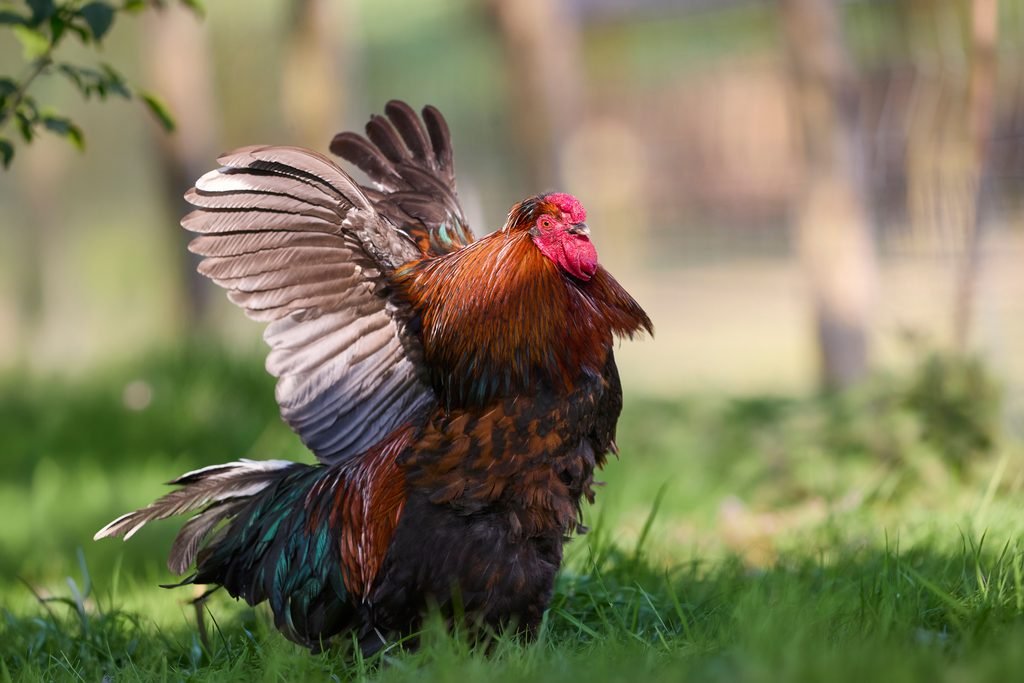
Other bantam breeds may be suitable if their size, appearance, and husbandry requirements fit your plans. A Serama, Cochin bantam, or Belgian d’Uccle may appeal for different reasons, but none should be treated as a guaranteed low-noise alternative.
It is reasonable to compare breed size and management requirements before choosing. It is not reasonable to assume that a particular bantam will be neighbor-friendly without considering the actual bird and the local environment.
Our guide to quiet bantam rooster breeds and what to consider discusses the limits of breed-based noise expectations in more detail.
Local Rooster Rules Still Apply
Even a small rooster may be restricted or prohibited under local poultry regulations. Rules vary between countries, cities, municipalities, councils, and sometimes individual properties or housing arrangements.
Some places distinguish between hens and roosters, while others regulate poultry numbers, housing placement, sanitation, or nuisance noise. A bantam’s small size does not automatically exempt him from rules applying to male chickens.
Check the current requirements for the exact property before acquiring a rooster. If male chickens are prohibited, choosing a Silkie or another bantam does not resolve that restriction.
Frequently Asked Questions
Is a Silkie rooster quieter than a bantam rooster?
A Silkie is itself commonly kept as a bantam, so the more accurate comparison is between Silkies and other bantam breeds. There is no reliable evidence that Silkies consistently crow more quietly than every other bantam.
Which bantam rooster breed crows the least?
There is no dependable scientific ranking establishing which bantam breed crows the least. Individual birds vary, and crowing frequency is influenced by factors beyond breed, including social relationships, biological timing, and environmental cues.
Are Silkie roosters quieter than Seramas?
There is no reliable universal rule establishing that Silkies are quieter than Seramas or vice versa. Both are small chickens, but their actual crowing patterns and the way their calls are perceived can vary between individuals.
Are Cochin bantam roosters quieter than Silkies?
Neither breed can be confidently declared quieter without comparable evidence. A particular Cochin bantam may seem less noticeable than a particular Silkie, but that observation does not establish a rule for the breeds as a whole.
Do bantam roosters crow as early as larger roosters?
Yes. Bantam roosters can crow before sunrise. The biological timing of predawn crowing is not limited to large chicken breeds.
Does a smaller rooster make less noise?
Not necessarily. Small size can influence the character of a vocalization, but pitch, crowing frequency, repetition, and the surrounding environment all affect how noticeable the sound becomes.
Can a Silkie rooster be kept near neighbors?
Only where local rules permit rooster keeping and the property provides suitable housing and noise management. A Silkie can still crow loudly enough to disturb nearby residents, especially during quiet morning hours.
Should I choose a Silkie or another bantam for a quiet backyard?
Choose based on the bird’s actual behavior, suitable housing, breed-specific care requirements, and the conditions of your property. If very low noise is essential, no rooster breed offers a dependable guarantee.
Final Thoughts
In a Silkie vs bantam rooster comparison, neither option can be declared consistently quieter based on reliable breed-wide evidence. Silkies are themselves commonly bantams, and other small breeds can differ in the pitch, character, and frequency of their crows. Those differences are not enough to establish a universal winner.
If you are choosing between a Silkie and another bantam, focus on the individual rooster, the housing you can provide, and the distance to neighboring homes. A gentle temperament or compact body size may be appealing, but neither guarantees quiet mornings.
The best choice is the rooster whose overall needs you can meet responsibly, with realistic expectations about crowing. Where noise restrictions or very close neighbors make regular rooster calls unacceptable, choosing a different bantam breed is unlikely to provide a dependable solution.